
Rise of Kombucha As a Wellness Wonder
For years, the wellness shelf has split cleanly in two: drinks for the body and drinks for the brain. Protein shakes and probiotics on one side; coffees, neuro enhancers, and energy shots on the other. Kombucha snuck through the middle door. It didn’t arrive promising euphoria or instant zen. It arrived as a gut-first ritual, brewed in jars, poured in cafés- quietly useful, almost humble.
But then, the language moved from function to state.
After-meal lightness (“feel lighter after lunch”)
Afternoon clarity (“less 3PM brain fog”)
Calm without caffeine (“no jitters, still focused”)
Consumers aren’t just adding kombucha; they’re swapping it in. The clearest trade-offs in our data: replacing the second coffee to dodge jitters and a late-day crash; choosing it over ginger beer to cut sugar while gaining probiotics; and moving away from ACV drinks to avoid harsh acidity and teeth/heartburn worries.
Journey From Intent To Habit
Most people aren’t just buying on taste anymore, they’re buying on how a drink makes them feel. We see the same story play out in our study, nearly half (47%) of people show repeat, purposeful choices- they reach for beverages that help them feel lighter, calmer, or clearer instead of treating “wellness” as a one-off experiment. Within that conversation, kombucha isn’t a side note; it’s a headline with 30k+ mentions.
The implication for brands is simple
if your product doesn’t solve a felt state, it gets skipped. Kombucha is winning attention because it promises a state change, not just a flavor.
The Gut-Brain Connection

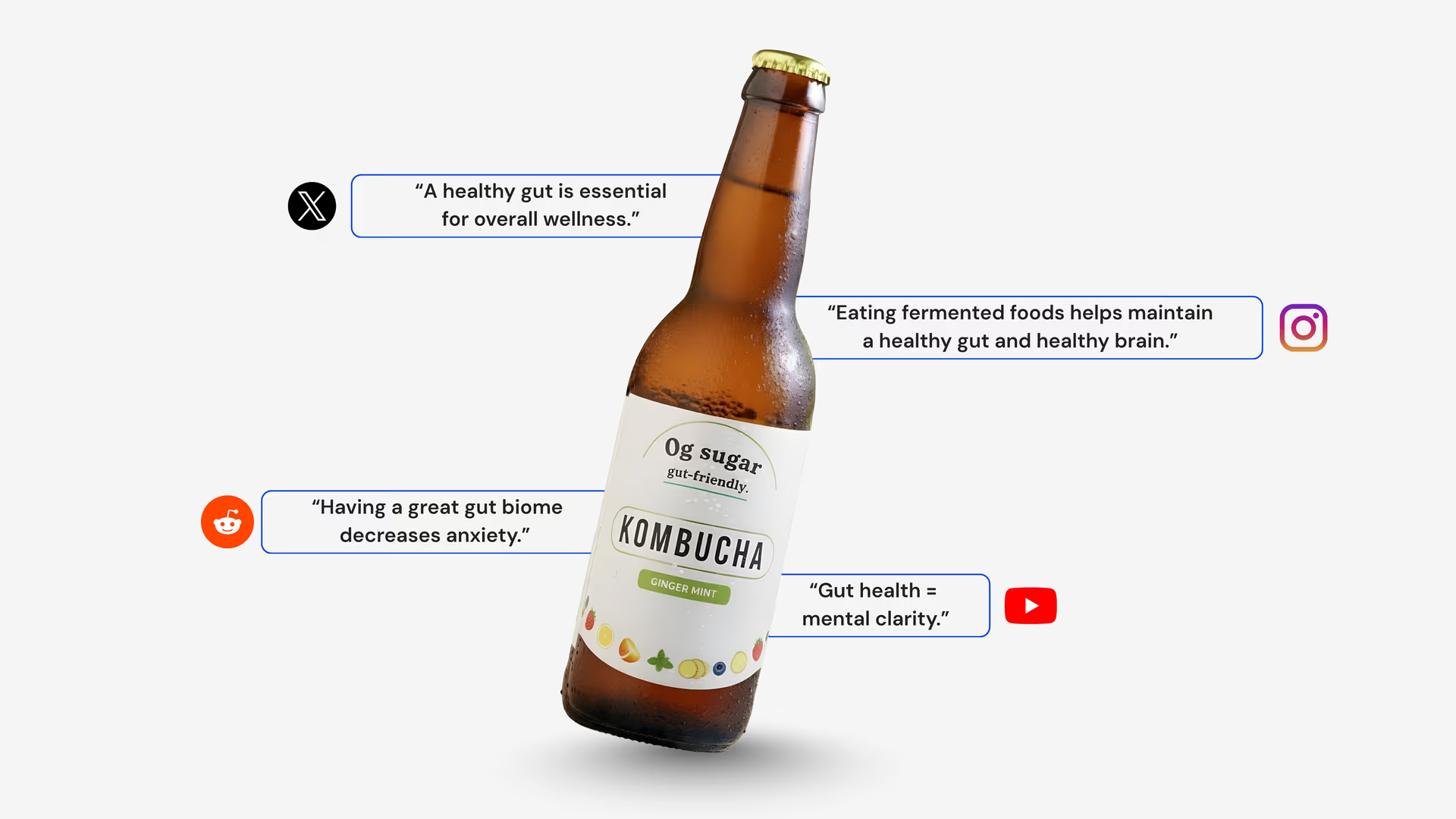
If you listen to real people, the pattern is surprisingly consistent. They try a fermented drink, their digestive system feels steadier, and soon after they notice they can think more clearly and stay even-keeled. They’re not reciting textbook explanations; they’re describing everyday wins: less heaviness after meals, no edgy buzz, able to concentrate again. That lived cause and effect is what gives this space momentum. It’s not a lab claim; it’s a felt chain: a drink that settles you physically often helps you show up better mentally.
Kombucha fits that chain naturally. It’s non-dairy, light by design, and built around live cultures attributes people already associate with a more comfortable gut. In our dataset of millions of public posts, kombucha is named and the language around it repeatedly pairs digestive ease with sharper, calmer afternoons- without needing caffeine. That’s the bridge consumers are already walking across: from a beverage choice to a better-feeling day.
Kombucha Leads The Gut-Friendly Conversation
Across millions of UGC posts analyzed from Twitter (X), Reddit, and YouTube, we finalized a refined dataset of roughly 30,000 plus kombucha mentions. These are not survey responses or prompted answers, they’re spontaneous conversations where people share what they actually drink, why they do it, and how it makes them feel.
Out of these 30,000 posts, nearly 10,000+ Top category Mentions (Wellness) of the entire dataset were about Kombucha being topmost amongst wellness beverages. That’s an unusually high concentration for a single beverage type in the broader wellness-drink universe.
What This Means For Us?
Kombucha isn’t just part of the wellness conversation, it’s leading it. It’s moved from being a niche “functional drink” to becoming one of the most cited, habit-forming choices in the wellness ecosystem. This positions kombucha as both a signal of changing consumer behavior (how people think about beverages) and a springboard for innovation in the next wave of mental well-being drinks.
Among all gut-positive beverages discussed online, Kombucha clearly dominates both volume and sentiment. It’s the drink people talk about when they want something that feels functional yet enjoyable a balance few other categories have achieved. Across our dataset, kombucha mentions not only out-number all other gut-health drinks but also carry a distinctive tone of ritual and repeat use. People describe drinking it as part of their daily rhythm something that helps them feel lighter, calmer, and more balanced without making health feel like homework. Its appeal is built around three pillars that consistently show up in UGC: non-dairy, low sugar, and naturally probiotic. In short, kombucha has gone from niche curiosity to a mainstream behavior marker for people trying to “drink better.”
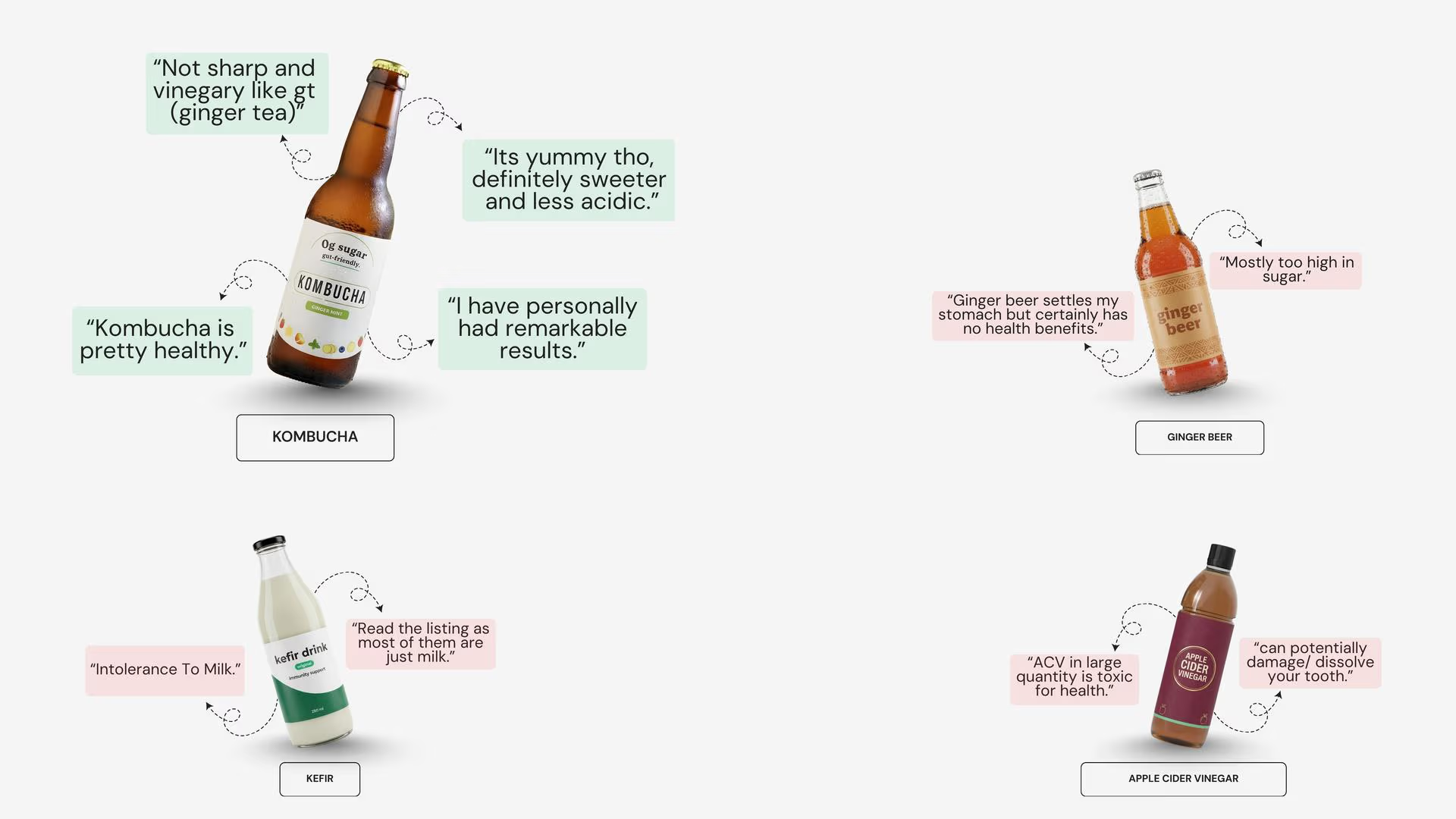
Kefir, though a strong probiotic in its own right, faces barriers that keep it from scaling beyond the health-conscious niche. Its dairy base and occasional aftertaste make it less accessible for lactose-sensitive or plant-based audiences. As wellness moves toward lighter, everyday formats, kefir starts to feel more like a supplement than a drink- something to consume occasionally, not habitually.
Apple Cider Vinegar (ACV) drinks occupy an interesting middle ground: people trust the ingredient, but dislike the experience. Mentions of ACV are peppered with concerns about acidity, stomach discomfort, and tooth enamel erosion. Even when diluted or marketed as “apple vinegar tonics,” these drinks are often described as too harsh to drink daily. The functional benefit gut support, is acknowledged, but it’s offset by the cost of discomfort.
Ginger-based drinks (including ginger tea and beer) fare slightly better on taste, but fail on health credentials. People reach for them to settle the stomach or feel refreshed, yet they quickly point out the high sugar content in commercial options and the lack of probiotic benefit. Ginger earns credit for comfort, but not for continued wellness impact. The result is that ginger drinks are treated as occasional soothers, not as part of a health ritual.
In comparison, kombucha resolves what the others can’t: it delivers digestive comfort, low sugar, and probiotic value in a palatable, repeatable form. It’s functional enough for health seekers, but enjoyable enough for everyday drinkers. That blend of efficacy and experience is exactly why kombucha now leads the gut-health conversation and is emerging as the bridge between physical balance and mental clarity.
The Evolving Flavor Palette Of Kombucha
Taste has become the principal growth driver, shifting the focus from probiotic function to a sensory-first value proposition where wellness meets enjoyment. Conversation mapping reveals six flavor families Citrus, Tropical, Berry/Red Fruit, Spicy/Herbal, Floral/Tea-Forward, and Stone Fruit & Pome with Spicy/Herbal leading decisively (31%), anchored by ginger’s associations with cleansing warmth, digestive comfort, and “real” function; pairings like ginger-yuzu or ginger-mint elevate it from sharp to sophisticated, balancing energy with calm. Citrus follows (12%), led by lemon coded to refreshment, lightness, and cleanliness favored by low-sugar seekers who want a bright, crisp profile.
Tropical ranks third (7%), with pineapple delivering a sunny, uplifting affect that reframes wellness as joyful rather than medicinal. Berry/Red Fruit eases first-time adoption through familiar sweetness, Floral/Tea-Forward adds calming, tea-like sophistication, and Stone Fruit & Pome provide soft, approachable tones ideal for multi-note blends. Net effect: a coherent flavor architecture that mirrors the category’s cultural migration from niche tonic to mainstream ritual of refreshment and balance with ginger, lemon, and pineapple defining the signature palette.
Wellness- The Core Of Appeal
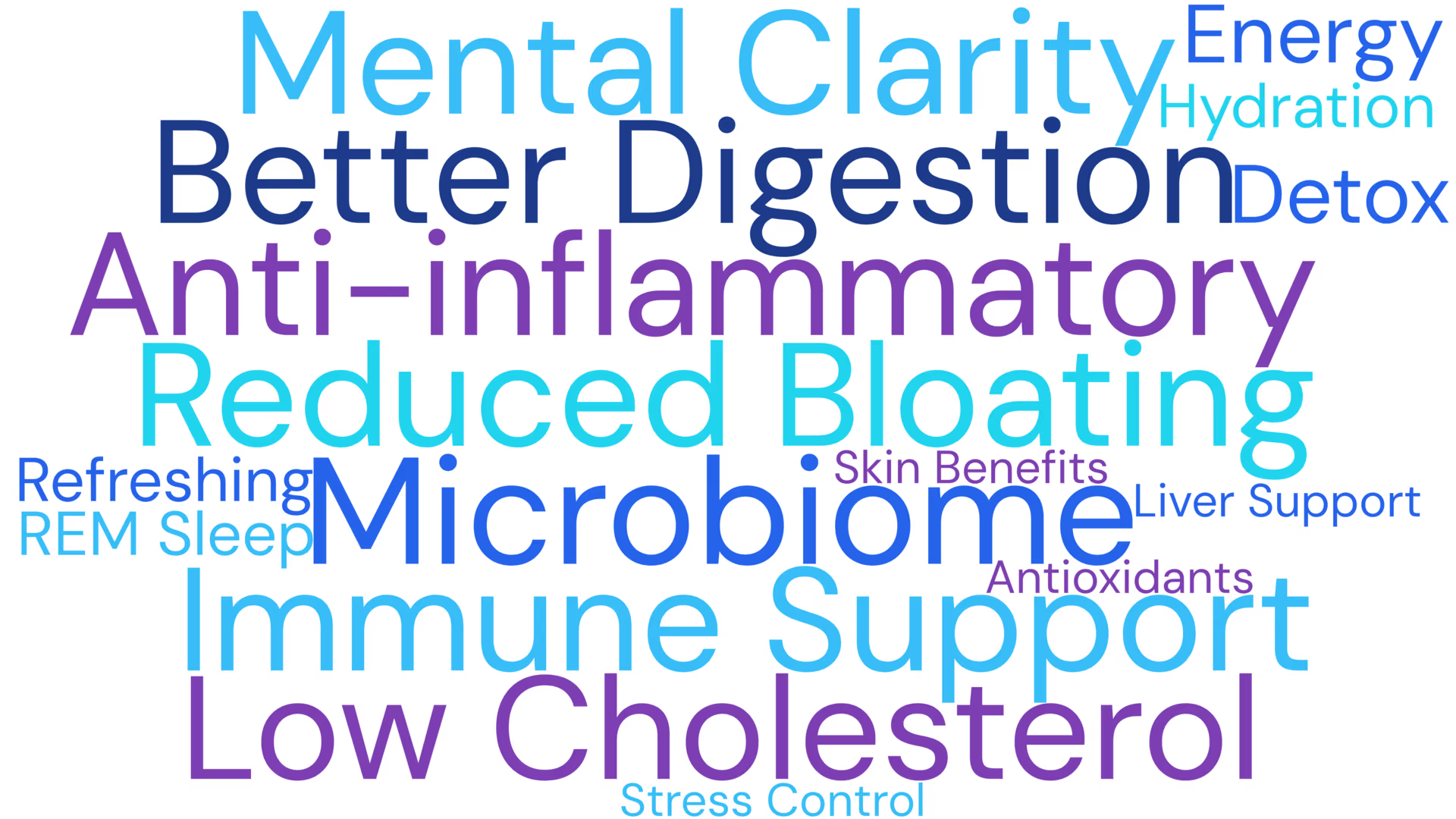
The growth of kombucha isn’t accidental, it’s being powered by a mix of functional benefits, emotional associations, and behavioral shifts that define today’s wellness movement. Gut health, probiotics, and sensory reset the core of kombucha’s appeal. Posts show that consumers increasingly link gut comfort to overall balance and mental ease. With gut health mentions showing frequent spikes across web conversations, kombucha has become the go-to drink that literally “starts wellness from within.”
Mental clarity and stress relief illustrate how kombucha is crossing over from body health to mind management. This suggests that kombucha is increasingly being seen as more than a gut drink, it’s becoming a “light mind” drink. Consumers talk about clearer focus, better balance, and fewer energy crashes, something that was rarely seen in probiotic conversations even a few years ago.
The sleep, emotional regulation, and low-sugar trends reflect adjacent wellness needs: maintaining calm, resting better, and reducing excess. Mentions of sleep & emotional regulation, position kombucha as a calming evening or post-meal beverage. As the non-alcoholic movement mainstreams, kombucha emerges as a social, flavorful, health-positive substitute that elevates choice without compromise.
The Craze Is Real, So Are The Concerns
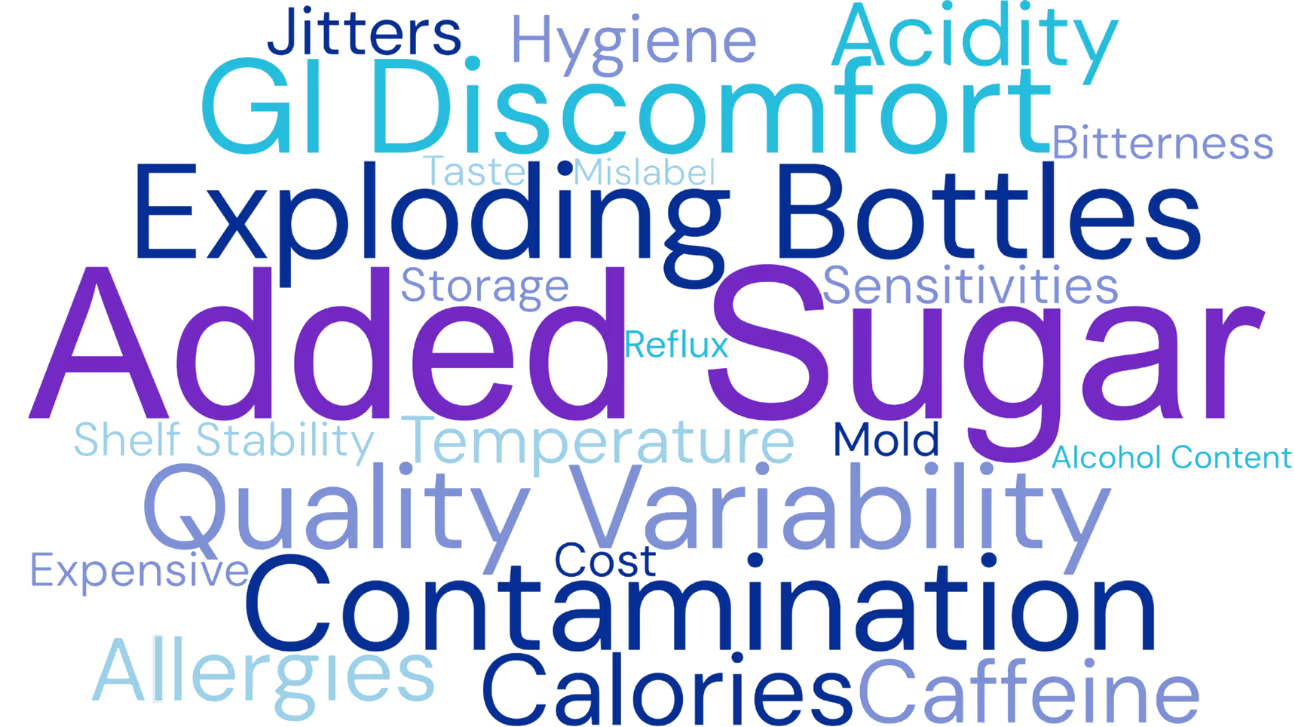
The most visible concern remains homebrew safety. While still significant, retail brands are trying to improve packaging, storage, and consistency, leading to consumer trust in store-bought kombucha becoming strengthened. Similarly, worries about the vinegar-forward taste have eased, a sign that flavor innovation and better formulation are paying off. The product is clearly becoming more approachable to new audiences.
Mentions of price feeling premium have surged, revealing a growing sensitivity to value. As kombucha becomes a mainstream choice rather than a niche indulgence, consumers expect transparency, visible proof that the product’s benefits justify its shelf price. Similarly, trace alcohol (ABV) worries and caffeine or jitter mentions, show that consumers want more clarity about what’s in their bottle. They don’t want assumptions; they want verified safety cues, ideally batch-level.
On the comfort front, topics like acidity/heartburn, fizz/bloat, and packaging or availability hold stable, signaling that these are persistent friction points rather than fleeting complaints. These may not deter the loyal drinker but still act as entry barriers for the curious first-timer.
Turning Friction Into Trust
Every successful wellness category eventually faces the same test..
Today’s kombucha buyer expects more than good ingredients; they expect visible reassurance. The best way to win trust is to show it upfront: verified ABV, transparent sourcing, and packaging that signals freshness and safety. What used to be back-of-pack fine print now needs to live proudly on the front label. Consumers no longer want to “take your word for it”- they want a reason to believe at first glance.
Equally, comfort has become a design challenge. Concerns around acidity, carbonation, and bloat can be reframed through formulation and communication. A light-fizz, low-acid, balanced flavor profile doesn’t just solve for sensitivity, it creates a more approachable entry point for first-time drinkers. When health feels smooth, not effortful, repeat purchase becomes instinctive.
Price perception, another growing tension point, is less about cost and more about clarity. The premium tag can be justified when the value is visible- whether through ingredient transparency, multi-pack convenience, or QR-linked proof of quality. Kombucha is no longer a novelty; it’s a lifestyle choice, and every touchpoint should communicate reliability, not experimentation.
The Blueprint For Kombucha 2.0

Kombucha’s rise has proven one thing: people love the idea of a drink that makes them feel better, not just healthier. But as the category grows, it now needs to balance aspiration with reassurance- to be refreshing, functional, and trustworthy all at once. The next generation of kombucha drinks will win by designing for both experience and evidence. Here’s what that looks like.
Today’s kombucha drinker craves comfort, clarity, and credibility low acid, light fizz, less sugar, and zero caffeine.
Wellness products win when proof looks beautiful. Make transparency part of your branding: batch QR codes that reveal sugar, pH, ABV, and live-culture count; clean label chips on front of pack; a short “crafted for comfort” message that replaces small-print disclaimers. Trust should feel like part of the visual identity, not an afterthought.
How We Conducted This Analysis
BioBrain’s analysis followed a structured five-step process to turn noise into clarity.
Step 1 - We captured over 5 million digital footprints across Reddit, YouTube, and X, refining them into 30K authentic posts on gut health and wellness.
Step 2 - Recency–Relevance–Resonance (RRR) Framework filtered genuine, first-person insights from spam and outdated chatter.
Step 3 - Through Echonomics, we decoded nine core wellness drivers by tracking their volume, momentum, and maturity.
Step 4 - Mapped sentiment shifts connecting gut health to emotional well-being.
Step 5 - Transformed that language into actionable insights, revealing flavor preferences, growth drivers, and an 89% whitespace opportunity for brands.
Decoded: Emerging Signals in the Kombucha Landscape
Our analysis shows that the space is wide open. 89% of kombucha brands still speak the language of ingredients, while consumers have already moved on to the language of experience. The brands that close that gap by showing trust, engineering comfort, and designing for how people actually live will define what modern wellness looks and feels like. The blueprint is already here:
gentle gut → clear mind - proven, approachable, and repeatable.
At BioBrain, we transformed 5M+ digital signals into human-centered intelligence, 30k+ kombucha mentions & 9 wellness drivers, revealing where behavior is truly moving. This isn’t just data; it’s a blueprint for innovation where science meets empathy and clarity becomes the new currency of wellness.
Conclusion
BioBrain's Kombucha Web Intelligence Report explores how wellness, flavor, and trust are converging to redefine the modern beverage landscape. It uncovers how consumer behavior is shifting from functional benefits to emotional well-being and everyday balance.
The analysis highlights kombucha’s role as a bridge between gut health and mental clarity, positioning it as more than a wellness drink a lifestyle ritual. It reveals how transparency, wellness, and comfort have become the new markers of brand credibility. From flavor innovation to ingredient awareness, the report outlines where wellness is moving next.
Designed for leaders in food, beverage, and wellness innovation, it offers actionable direction grounded in real human behavior. Ultimately, it’s a guide to creating products that connect, reassure, and inspire sustained trust.