How Holiday Purchase Behavior Becomes A Signal For Tomorrow's Consumer Priorities
Overview
Christmas is the one moment in the year when gifting becomes emotionally loaded. People aren’t just buying toys- they’re returning to the rituals, emotions, and memories that shaped their childhood. And because these cues surface at scale, Christmas becomes the clearest real-time indicator of what people truly value when they gift.
It is the season where:
Families come together and rebuild shared rituals.
Gifts are chosen for emotional meaning, not utility.
Adults pass down the traditions they once loved.
Cross-generational bonding becomes central to the experience.
In this single, high-volume moment, the entire toy and gifting ecosystem concentrates its strongest cultural signals.
Where LEGO Fits Into This Landscape
Inside this emotionally charged context, LEGO stands out as the most instinctive choice- not because it trends, but because it matches the emotional codes that dominate Christmas.
The data reveals this clearly:
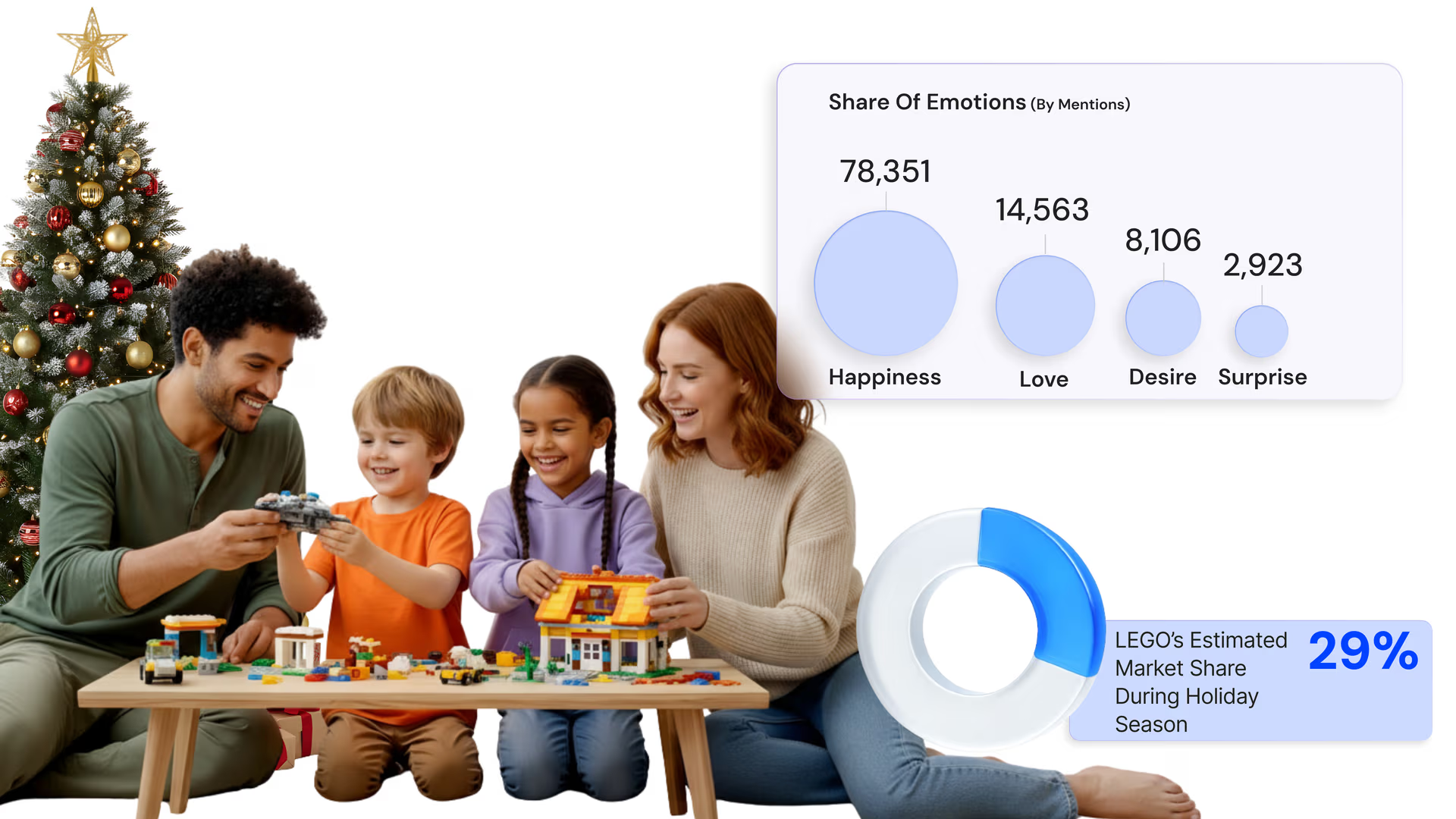
1. 18K+ nostalgia and childhood-memory mentions show how strongly adults reconnect with their past.
2. 24K+ family & social bonding mentions highlight how often LEGO becomes a shared holiday ritual.
3. It turns gifting into a full-circle experience - build it, rebuild it, display it, keep it.
This is why LEGO consistently holds an estimated 29% share of the Christmas gifting market: it works simultaneously for children, resonates deeply with adults, and strengthens family rituals.
And unlike typical toys, LEGO becomes a memory artifact - a physical, lasting expression of joy that stays visible long after the holiday season. This is exactly why nostalgia-led gifting spikes at Christmas, and LEGO’s demand accelerates precisely when emotional motivations peak.
How We Decoded the Cultural and Behavioral Signals Behind LEGO’s Christmas Demand
This study uses BioBrain’s full web intelligence framework to move beyond surface-level buzz and map the real cultural forces shaping Christmas gifting. All insights come from authentic consumer expressions, not prompted surveys.
1. Millions of Raw, Unfiltered Conversations
Across the wider ecosystem, we analysed 12M+ digital data points, isolated 150K+ LEGO-Christmas mentions, from broader toy conversations and filtered 18K+ nostalgia & childhood-memory mentions through the RRR Framework. This ensures that every insight is drawn from organic, emotionally honest consumer behavior.
2. The BioBrain Signal Engine
Our model combines:
- Digital Listening - millions of posts from forums, reviews, communities
- Human-Centric Interpretation- decoding cultural context & emotional cues
- AI-Driven Analytics - pattern recognition, sentiment & behavioral clustering
This hybrid approach ensures that insights are current, contextual, and actionable.
3. RRR Framework: Filtering for Decision-Grade Signals
Every data point was passed through BioBrain’s RRR filter for:
- Recency- signals tied to the real-time holiday season
- Relevance- filtered for gifting, family rituals, nostalgia, and other associated mentions
- Resonance- high-authenticity conversations with strong emotional weight
This removes noise and surfaces the true demand drivers of LEGO’s demand.

Themes & Sentiment Landscape From Millions Of Signals
Our analysis of 150K+ LEGO-Christmas conversations reveals a sharply defined sentiment landscape where emotional motivations and practical considerations coexist. The visual highlights how conversations range from affordability pressures and rising comparisons with alternative toys, to strong advocacy for LEGO’s durability, quality, and long-term value. These tensions show that while consumers scrutinize price and options more during the holiday season, their trust in LEGO’s build quality remains one of the most stabilizing forces in the category.
At the same time, the strongest emotional discussions revolve around how LEGO brings families together and supports children’s creative and developmental growth. These high-resonance themes consistently show some of the highest sentiment scores in the landscape, reinforcing why LEGO becomes a default choice when gifting needs to feel meaningful, enriching, and shared. Together, these signals map a clear picture: holiday purchase decisions are shaped as much by emotional rituals as by practical trade-offs, and LEGO sits at the center of both.
The Four Prominent Behaviors shaping LEGO's Demand Curve
-
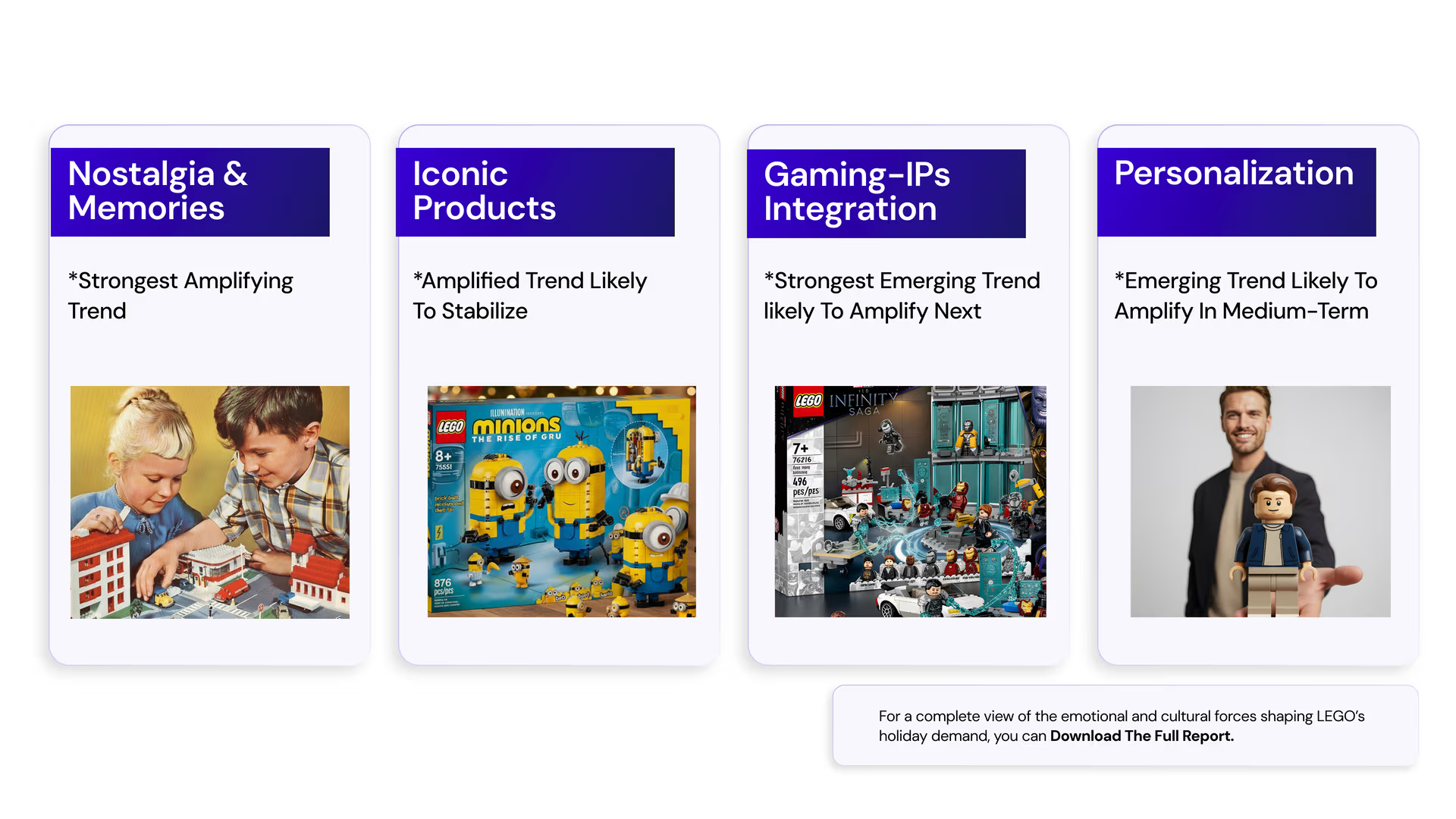
- 1. Nostalgia: The Emotional Re-Entry Point
Christmas triggers one of the strongest emotional responses in the entire gifting landscape, and nostalgia consistently emerges as LEGO’s most powerful accelerator. Adults return to the brand through memories of the sets they built, stories they loved, and rituals they once shared and these cues surface at scale during the holiday season. What makes this behavior commercially significant is its conversion effect: a single nostalgic moment often reactivates dormant fans, pulling them back into the ecosystem through gifting, co-building with their own children, or rediscovering retired or classic themes. This emotional re-entry point becomes the gateway to long-term engagement, making nostalgia not just a sentiment but a recurring commercial engine. -
- 2. The Rise of Display Pieces, Rare Finds & Collector Culture
Holiday conversations show a sharp rise in display-driven and collector-led motivations, signaling a cultural shift in how LEGO is used and valued. Sets are increasingly treated as artifacts- objects meant to be showcased, preserved, or displayed as part of personal identity. Fans talk about hunting iconic builds, securing limited editions, and gifting sets that hold symbolic weight or visual impact. Christmas amplifies this behavior because it concentrates both availability and anticipation: seasonal drops, Winter Village sets, and high-visibility IP builds peak in demand. This shift positions LEGO not simply as a toy, but as a decor category, a fandom collectible, and a long-term asset that carries emotional, aesthetic, and sometimes financial value. -
- 3. How Gaming IPs Are Powering LEGO’s New Demand
Gaming-linked LEGO sets have opened a new pipeline of demand, driven by franchises with deeply loyal, always-on communities. Crossovers like Fortnite, Mario, Minecraft, and Star Wars create a bridge between online play and physical building - converting digital fandom into tactile engagement. Unlike traditional play-driven sets, gaming IP products behave more like cultural extensions of worlds fans already inhabit. Christmas becomes the inflection point for this trend: gamers receive these sets during the holidays and often enter the LEGO ecosystem for the first time through an IP they recognise. This creates a sticky, recurring demand cycle where digital-first users become hybrid consumers who engage in both virtual and physical forms of play. -
- 4. Personalization & Creative Play
One of the fastest-evolving behaviors in the LEGO universe is the rise of identity-led building. Fans increasingly treat LEGO as a medium for personal expression- modifying structures, adjusting colors, customizing minifigures, or rebuilding sets to reflect their own style and interests. This shift marks a transition from prescribed play to self-authored creativity, where the value of a set lies not just in the instructions but in what fans choose to make of it. Christmas accelerates this pattern because personalized builds often begin as gifts: a theme chosen for someone’s interest, a custom minifigure added for personal relevance, or a modded display piece tailored to a hobby or fandom. Over time, these gifts evolve into a year-round creative habit, expanding LEGO’s role beyond product ownership into creative identity. -
Each of these behaviors is unpacked in depth in our full report- including exact mention volumes, data breakdowns, and insights.
BioBrain Opportunity Quadrant: 9 Key Demand Drivers
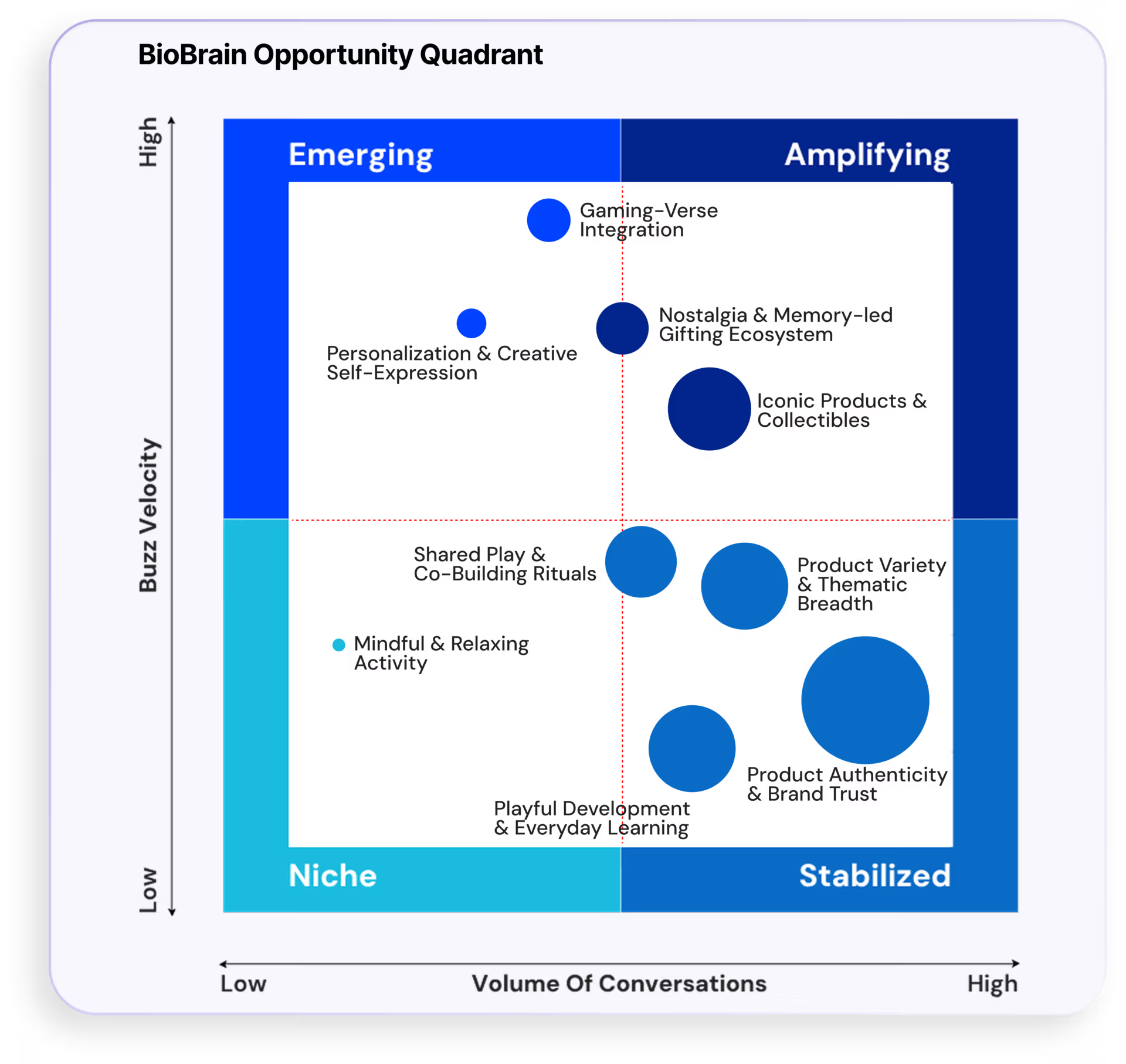
The demand landscape for LEGO during the holiday season is not powered by one dominant force - it’s shaped by a portfolio of behaviors, each with its own velocity, depth, and influence. When mapped on buzz velocity vs. conversation volume, four clear strategic zones emerge that reveal where consumer energy is accelerating, stabilizing, or quietly evolving beneath the surface.
- In the Amplifying zone, cultural forces like Nostalgia & Memory-Led Gifting and Iconic Products & Collectibles show both high momentum and high volume. These drivers are strengthening every Christmas cycle, fueled by adults returning to the brand, families seeking tradition-building gifts, and the rise of display-worthy sets that carry emotional and aesthetic weight.
- Within the Emerging quadrant, two high-potential behaviors- Gaming-Verse Integration and Personalization & Creative Self-Expression show rapid velocity despite smaller volumes. These signals point to the next frontier of LEGO’s demand curve: younger, digitally native audiences entering through gaming IPs, and creators reshaping LEGO into a medium of personal identity and customization.
- Meanwhile, the Stabilized drivers- Product Authenticity & Brand Trust, Product Variety & Thematic Breadth, Shared Play & Co-Building Rituals and Playful Development & Everyday Learning represent the foundational strengths that keep LEGO top-of-mind during the holidays. These themes don’t spike seasonally; they provide the reliability, quality reassurance, and broad appeal that underpin all other growth behaviors.
- Finally, the Niche area reveals softer, slower-moving but still valuable behaviors such as Mindful & Relaxing Activity . These drivers tend to deepen emotional connection rather than expand reach, reinforcing LEGO’s cultural role as a calming, focus-inducing experience or a weekly family ritual.
Across all four zones, what becomes clear is that LEGO’s holiday demand is shaped by multiple engines working simultaneously - some accelerating sharply, others steadily reinforcing its cultural relevance. The interplay of these drivers is what makes LEGO the most anticipated gift under the tree year after year.
For the complete breakdown of each demand driver - including mention volumes and behavioral insights - Download the full intelligence report.
The Billion-Dollar Memory-Gifting Whitespace
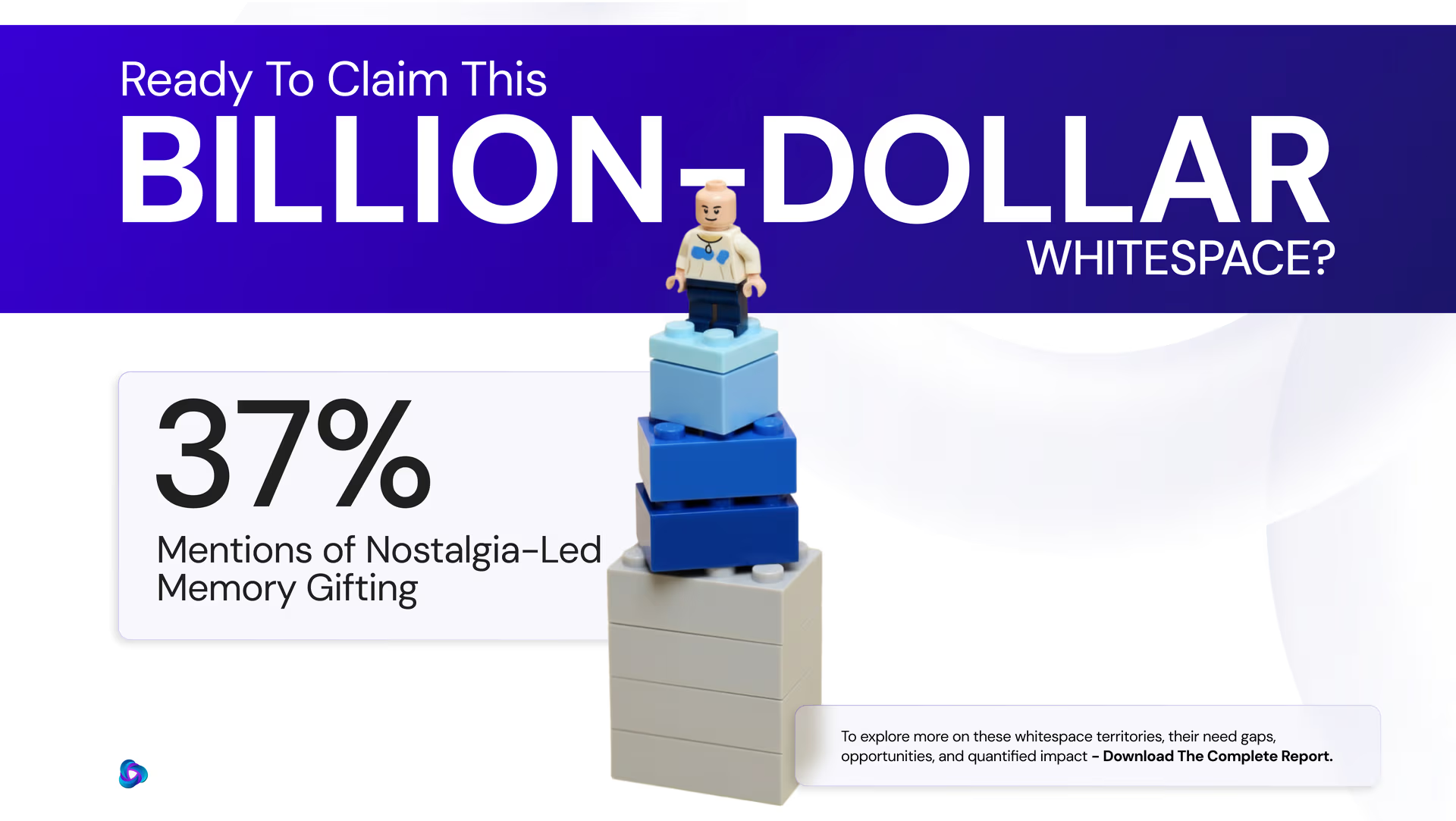
Our analysis reveals a powerful but largely untapped opportunity sitting at the intersection of nostalgia, family rituals, emotional gifting, and cross-generational identity. As Christmas conversations intensify, one pattern becomes unmistakable: consumers aren’t just buying toys - they are buying memories, and the brands that evoke emotional continuity across generations gain disproportionate advantage.
LEGO’s demand spikes show how strongly people gravitate toward gifts that recreate childhood joy, reconnect families through shared rituals, and carry symbolic meaning that lasts beyond the holiday moment. Yet across the broader toy and gifting ecosystem, brands still under-monetize this shift. Most portfolios lean heavily on trend cycles or functional play value, while the strongest commercial signals point toward memory-building products, heritage-driven experiences, and tradition-worthy holiday editions that can be passed down, rebuilt, or displayed year after year.
This is where the billion-dollar whitespace emerges: a rapidly growing consumer desire for gifts that feel emotionally rooted, culturally familiar, and personally significant. Families want seasonal builds that return every December. Adults want gifts that reflect their childhood stories. Gamers want their fictional worlds to live physically. Collectors want artifacts with staying power. Across these needs, there is clear willingness to spend- but limited brand innovation meeting them with intention and scale.
By understanding the emotional and behavioral architecture behind memory-gifting, brands can create products that deepen loyalty, extend lifetime value, and unlock premium positioning. This is no longer a seasonal uplift - it is a structural shift in how consumers define meaningful gifting.
Conclusion
The Christmas gifting season offers one of the clearest windows into how consumers think, choose, and emotionally connect with the products that matter to them. LEGO’s dominance in this space is not driven by chance - it is the result of deep cultural forces, embedded memories, and emergent behaviors that signal where the next wave of category growth will come from. From nostalgia-led gifting and collector culture to gaming universes and personalization, these behaviors illuminate how families, fans, and first-time buyers are reshaping the future of play and meaningful gifting.
For brands across the toy, gifting, and experience economy, this intelligence is a competitive advantage. Understanding the emotional architecture behind these behaviors and the whitespace territories they unlock- allows leaders to build products, rituals, and experiences that consumers will return to year after year. The brands that win this space won’t just sell more; they will become part of families’ traditions.
To access the complete intelligence- including all 9 demand drivers, sentiment architecture, four high-potential whitespace territories, consumer need gaps, quantified data cuts, summaries & drill-downs, download the full report. It delivers the depth required to make confident strategic decisions in a consumer landscape that is evolving faster than ever!