The road to the 2028 U.S. presidential election is already being shaped by intense public debate, growing institutional distrust and a widening divide between political visibility and public approval.
Drawing on 300K+ public conversations and 10K+ U.S. survey responses, this report evaluates 10 prominent political figures across two complementary dimensions
Echonomics - measures how political figures influence public narratives and online discourse. Quantonomics - measures how voters evaluate their electoral strength and potential support.
Together, the findings reveal a defining reality of the emerging 2028 landscape:
The most visible political figures are not necessarily the most positively perceived and the strongest public narratives do not always translate into electoral preference.
Public Conversation Is Dominated by Negativity
More than half of the political conversation analysed was negative.
Public discourse is being shaped largely by polarization, institutional
skepticism and criticism of political leadership rather than
constructive policy discussion.
Sentiment Split
53.8%
Negative
16.1%Positive mentions
Optimism exists, but it remains limited compared with the broader
mood of political conversation.
View on chart
30.1%Neutral mentions
A significant share of mentions remains informational,
observational and non-emotive in tone.
View on chart
53.8%Negative mentions
Conversation is driven by polarization, institutional skepticism
and criticism of political leadership.
Two Ways to Measure Political Strength
Echonomics: Public Impact
Echonomics evaluates how effectively each political figure shapes public conversation through:
Public sentiment
Narrative visibility
Trust and credibility
Narrative ownership
Discussion intensity
Output metric: Normalized Public Impact or NPI
A high NPI indicates that a political figure is associated with stronger and more favorable public narratives. A negative NPI indicates that visibility is being driven primarily by criticism, rejection or polarizing discussion.
Quantonomics: Electoral Preference
Quantonomics evaluates how voters respond to each political figure through:
Candidate preference
Candidate rejection
Electoral visibility
Trust and credibility
Net voter sentimen
Output metric: Normalized Electoral Preference or NEP
A high NEP reflects stronger relative electoral appeal. A negative NEP indicates that rejection outweighs positive voter preference.
POTUS 2028 Scorecard
NPI Scores
Normalized Public Impact
NPI
NEP Scores
Normalized Electoral Preference
NEP
For the complete view of Public Impact (NPI) and Electoral
Preference (NEP), download the report.
Three Profiles That Explain the Emerging Race
1. Donald Trump: Maximum Visibility, Minimum Favourability
Echonomics
Public Impact
NPI Score
−84
Rank
10
Visibility 100
Echonomics rank 10th
Donald Trump
47th President of the United States
Quantonomics
Electoral Preference
NEP Score
−56
Rank
10
Electoral visibility 100
Quantonomics rank 10th
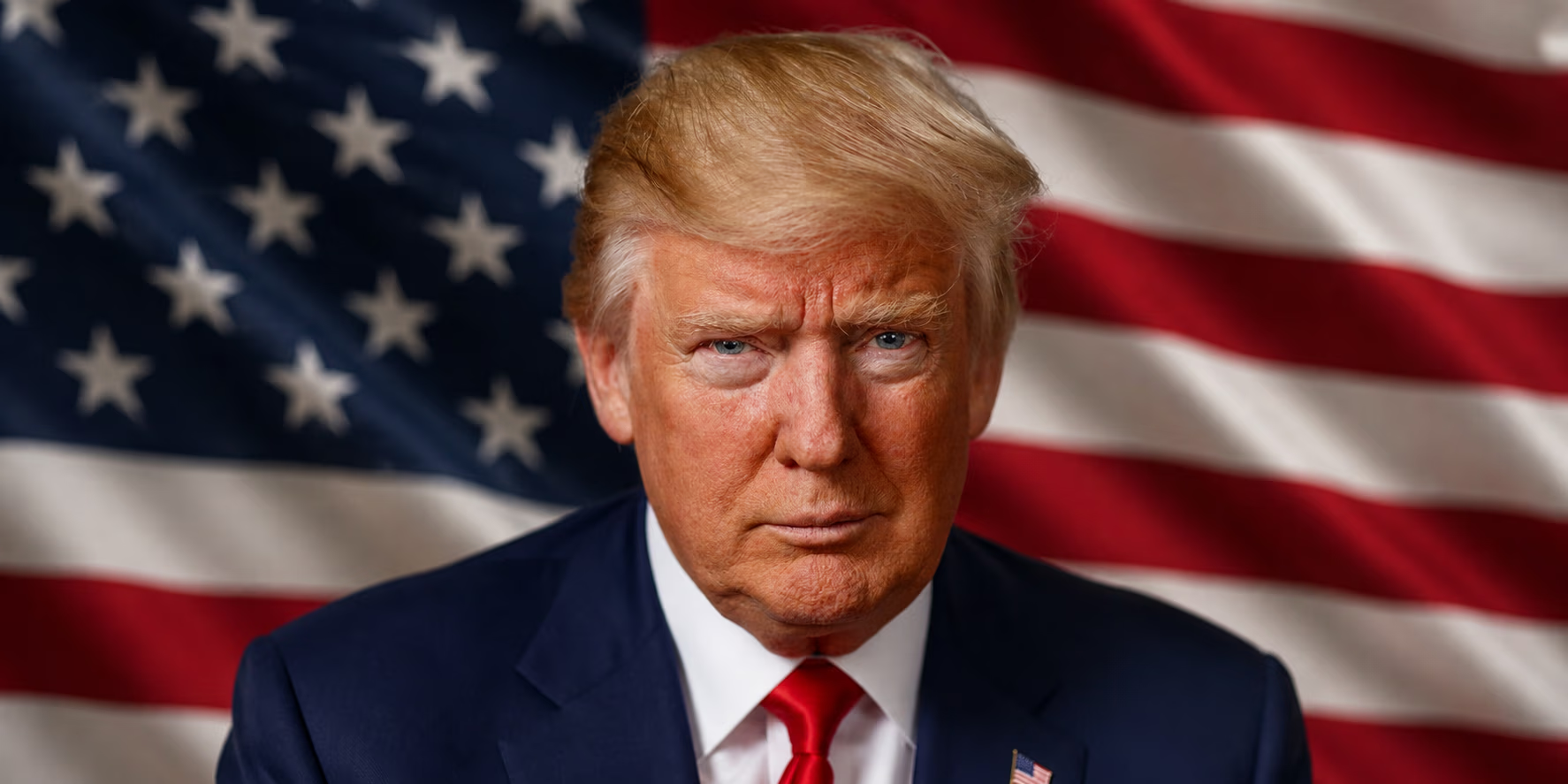
Donald Trump dominates political attention but records the lowest NPI and NEP among the 10 figures analysed.
His electoral score is less negative than his public-impact score, indicating that an established political base may soften some of the rejection visible in public discourse. However, his overall electoral preference remains decisively negative.
Key insight: Visibility can sustain political relevance without producing positive public impact or broad electoral preference.
2. Michelle Obama: Trust Outperforms Attention
Echonomics
Public Impact
NPI Score
+57
Rank
1
Visibility
9
Echonomics rank
1st
Michelle Obama
First Lady of the US (2009–17)
Quantonomics
Electoral Preference
NEP Score
+54
Rank
1
Electoral visibility
10
Quantonomics rank
1st
Michelle Obama achieves the strongest overall performance despite having one of the lowest visibility levels in the study.
Her profile is driven by public trust, credibility, personal appeal and perceived coalition-building potential rather than intense or polarizing attention.
Key insight: A trusted political identity can generate strong public and electoral evaluations even without dominating the conversation.
3. Alexandria Ocasio-Cortez: Narrative Strength Ahead of Electoral Conversion
Echonomics
Public Impact
NPI Score+52
Rank3
Normalized Public Impact +52
Echonomics rank 3rd
Alexandria Ocasio-Cortez
U.S. Representative
Quantonomics
Electoral Preference
NEP Score+41
Rank6
Normalized Electoral Preference +41
Quantonomics rank 6th
Alexandria Ocasio-Cortez holds one of the strongest public-impact positions, supported by positive leadership narratives and high narrative ownership.
However, her NEP trails her NPI by 11 points, suggesting that strong public narratives have not yet converted into equally broad electoral preference.
Key insight: Narrative influence can strengthen a political brand before it expands candidate viability across the wider electorate.
Six Findings Defining the Road to 2028
1. Visibility and favourability are not the same - The candidates receiving the greatest attention often generate the most negative public impact.
2. Trust can outperform political exposure - Michelle Obama leads both rankings despite having limited visibility compared with highly polarizing figures.
3. Public impact does not always convert into electoral preference - Alexandria Ocasio-Cortez and Jon Stewart perform more strongly in public narratives than in voter preference.
4. Alignment creates a stronger political foundation - Kamala Harris, Gavin Newsom and Andy Beshear maintain relatively consistent scores across both measures.
5. Political bases can soften but not erase negative sentiment - Trump, Vance, Biden and Rubio perform less negatively in Quantonomics than in Echonomics, but remain below zero overall.
6. The strongest future contenders will combine trust with reach - The greatest opportunity belongs to political figures who can maintain positive perception while expanding visibility, coalition strength and perceived viability.
What Is Inside the Full Report?
Explore the personalities, narratives and voter dynamics that could shape the 2028 U.S. presidential race, including:
★ Complete profiles of 10 leading political figures
★ Public Impact NPI and Electoral Preference NEP rankings
★ Candidate trust and visibility comparisons
★ Demographic and ideological variations
★ Party-level and education-level differences
★ State-level political narratives
★ Narrative ownership across major political themes
★ Candidate strengths, risks and electoral barriers
★ Strategic implications for the evolving 2028 political landscape
Discover Who Is Building Trust, Who Is Driving Attention and Who Could Convert Both Into Electoral Strength.
POTUS 2028: Public Impact, Electoral Preference & The Leaders Shaping The Race
POTUS 2028 is already being shaped by a widening gap between visibility, public impact, and voter preference. Drawing on 300K+ public conversations and 10K+ survey responses, the report compares how leading political personalities perform across trust, sentiment, influence, and electoral appeal. The findings reveal that the loudest figures do not always hold the strongest positive impact and different voter groups are elevating very different leaders.
Strategy
Overview
The road to the 2028 U.S. presidential election is already being shaped by intense public debate, growing institutional distrust and a widening divide between political visibility and public approval.
Drawing on 300K+ public conversations and 10K+ U.S. survey responses, this report evaluates 10 prominent political figures across two complementary dimensions
Echonomics - measures how political figures influence public narratives and online discourse. Quantonomics - measures how voters evaluate their electoral strength and potential support.
Together, the findings reveal a defining reality of the emerging 2028 landscape:
The most visible political figures are not necessarily the most positively perceived and the strongest public narratives do not always translate into electoral preference.
Public Conversation Is Dominated by Negativity
More than half of the political conversation analysed was negative.
Public discourse is being shaped largely by polarization, institutional
skepticism and criticism of political leadership rather than
constructive policy discussion.
Sentiment Split
53.8%
Negative
16.1%Positive mentions
Optimism exists, but it remains limited compared with the broader
mood of political conversation.
View on chart
30.1%Neutral mentions
A significant share of mentions remains informational,
observational and non-emotive in tone.
View on chart
53.8%Negative mentions
Conversation is driven by polarization, institutional skepticism
and criticism of political leadership.
Two Ways to Measure Political Strength
Echonomics: Public Impact
Echonomics evaluates how effectively each political figure shapes public conversation through:
Public sentiment
Narrative visibility
Trust and credibility
Narrative ownership
Discussion intensity
Output metric: Normalized Public Impact or NPI
A high NPI indicates that a political figure is associated with stronger and more favorable public narratives. A negative NPI indicates that visibility is being driven primarily by criticism, rejection or polarizing discussion.
Quantonomics: Electoral Preference
Quantonomics evaluates how voters respond to each political figure through:
Candidate preference
Candidate rejection
Electoral visibility
Trust and credibility
Net voter sentimen
Output metric: Normalized Electoral Preference or NEP
A high NEP reflects stronger relative electoral appeal. A negative NEP indicates that rejection outweighs positive voter preference.
POTUS 2028 Scorecard
NPI Scores
Normalized Public Impact
NPI
NEP Scores
Normalized Electoral Preference
NEP
For the complete view of Public Impact (NPI) and Electoral
Preference (NEP), download the report.
Three Profiles That Explain the Emerging Race
1. Donald Trump: Maximum Visibility, Minimum Favourability
Echonomics
Public Impact
NPI Score
−84
Rank
10
Visibility 100
Echonomics rank 10th
Donald Trump
47th President of the United States
Quantonomics
Electoral Preference
NEP Score
−56
Rank
10
Electoral visibility 100
Quantonomics rank 10th
Donald Trump dominates political attention but records the lowest NPI and NEP among the 10 figures analysed.
His electoral score is less negative than his public-impact score, indicating that an established political base may soften some of the rejection visible in public discourse. However, his overall electoral preference remains decisively negative.
Key insight: Visibility can sustain political relevance without producing positive public impact or broad electoral preference.
2. Michelle Obama: Trust Outperforms Attention
Echonomics
Public Impact
NPI Score
+57
Rank
1
Visibility
9
Echonomics rank
1st
Michelle Obama
First Lady of the US (2009–17)
Quantonomics
Electoral Preference
NEP Score
+54
Rank
1
Electoral visibility
10
Quantonomics rank
1st
Michelle Obama achieves the strongest overall performance despite having one of the lowest visibility levels in the study.
Her profile is driven by public trust, credibility, personal appeal and perceived coalition-building potential rather than intense or polarizing attention.
Key insight: A trusted political identity can generate strong public and electoral evaluations even without dominating the conversation.
3. Alexandria Ocasio-Cortez: Narrative Strength Ahead of Electoral Conversion
Echonomics
Public Impact
NPI Score+52
Rank3
Normalized Public Impact +52
Echonomics rank 3rd
Alexandria Ocasio-Cortez
U.S. Representative
Quantonomics
Electoral Preference
NEP Score+41
Rank6
Normalized Electoral Preference +41
Quantonomics rank 6th
Alexandria Ocasio-Cortez holds one of the strongest public-impact positions, supported by positive leadership narratives and high narrative ownership.
However, her NEP trails her NPI by 11 points, suggesting that strong public narratives have not yet converted into equally broad electoral preference.
Key insight: Narrative influence can strengthen a political brand before it expands candidate viability across the wider electorate.
Six Findings Defining the Road to 2028
1. Visibility and favourability are not the same - The candidates receiving the greatest attention often generate the most negative public impact.
2. Trust can outperform political exposure - Michelle Obama leads both rankings despite having limited visibility compared with highly polarizing figures.
3. Public impact does not always convert into electoral preference - Alexandria Ocasio-Cortez and Jon Stewart perform more strongly in public narratives than in voter preference.
4. Alignment creates a stronger political foundation - Kamala Harris, Gavin Newsom and Andy Beshear maintain relatively consistent scores across both measures.
5. Political bases can soften but not erase negative sentiment - Trump, Vance, Biden and Rubio perform less negatively in Quantonomics than in Echonomics, but remain below zero overall.
6. The strongest future contenders will combine trust with reach - The greatest opportunity belongs to political figures who can maintain positive perception while expanding visibility, coalition strength and perceived viability.
What Is Inside the Full Report?
Explore the personalities, narratives and voter dynamics that could shape the 2028 U.S. presidential race, including:
★ Complete profiles of 10 leading political figures
★ Public Impact NPI and Electoral Preference NEP rankings
★ Candidate trust and visibility comparisons
★ Demographic and ideological variations
★ Party-level and education-level differences
★ State-level political narratives
★ Narrative ownership across major political themes
★ Candidate strengths, risks and electoral barriers
★ Strategic implications for the evolving 2028 political landscape
Discover Who Is Building Trust, Who Is Driving Attention and Who Could Convert Both Into Electoral Strength.
FAQs
What does the POTUS 2028 report reveal about the upcoming U.S. presidential election?
The POTUS 2028 report provides an early view of the political figures, voter priorities and public narratives that could shape the 2028 U.S. presidential election. It compares 10 prominent political figures across public impact, electoral preference, trust, visibility and candidate viability.
BioBrain's Insights Engine refers to BioBrain's combined AI, Automation & Agility capabilities which are designed to enhance the efficiency and effectiveness of market research processes through the use of sophisticated technologies. Our AI systems leverage well-developed advanced natural language processing (NLP) models and generative capabilities created as a result of broader world information. We have combined these capabilities with rigorously mapped statistical analysis methods and automation workflows developed by researchers in BioBrain’s product team. These technologies work together to drive processes, cumulatively termed as ‘Insight Engine’ by BioBrain Insights. It streamlines and optimizes market research workflows, enabling the extraction of actionable insights from complex data sets through rigorously tested, intelligent workflows.
How are economic concerns influencing voter sentiment ahead of the 2028 election?
Economic anxiety is emerging as an important driver of political perception ahead of 2028. Conversations around inflation, affordability and economic confidence increasingly influence how voters judge leadership competence, credibility and candidate viability. The findings suggest that economic credibility may become as important as ideological alignment.
BioBrain's Insights Engine refers to BioBrain's combined AI, Automation & Agility capabilities which are designed to enhance the efficiency and effectiveness of market research processes through the use of sophisticated technologies. Our AI systems leverage well-developed advanced natural language processing (NLP) models and generative capabilities created as a result of broader world information. We have combined these capabilities with rigorously mapped statistical analysis methods and automation workflows developed by researchers in BioBrain’s product team. These technologies work together to drive processes, cumulatively termed as ‘Insight Engine’ by BioBrain Insights. It streamlines and optimizes market research workflows, enabling the extraction of actionable insights from complex data sets through rigorously tested, intelligent workflows.
How was the POTUS 2028 report conducted?
The study combines analysis of 300K+ publicly available digital conversations with findings from 10K+ U.S. survey respondents. BioBrain’s Echonomics framework measures online public impact, while Quantonomics evaluates survey-based electoral preference, support, rejection and candidate viability.
BioBrain's Insights Engine refers to BioBrain's combined AI, Automation & Agility capabilities which are designed to enhance the efficiency and effectiveness of market research processes through the use of sophisticated technologies. Our AI systems leverage well-developed advanced natural language processing (NLP) models and generative capabilities created as a result of broader world information. We have combined these capabilities with rigorously mapped statistical analysis methods and automation workflows developed by researchers in BioBrain’s product team. These technologies work together to drive processes, cumulatively termed as ‘Insight Engine’ by BioBrain Insights. It streamlines and optimizes market research workflows, enabling the extraction of actionable insights from complex data sets through rigorously tested, intelligent workflows.
Sign up for latest market research updates.
Uncover hidden trends & industry shifts. Get the latest market research insights delivered to your inbox.
Thank you! Your submission has been received!
Oops! Something went wrong while submitting the form.
Sign up for latest market research updates.
Uncover hidden trends & industry shifts. Get the latest market research insights delivered to your inbox.
Thank you! Your submission has been received!
Oops! Something went wrong while submitting the form.












.avif)