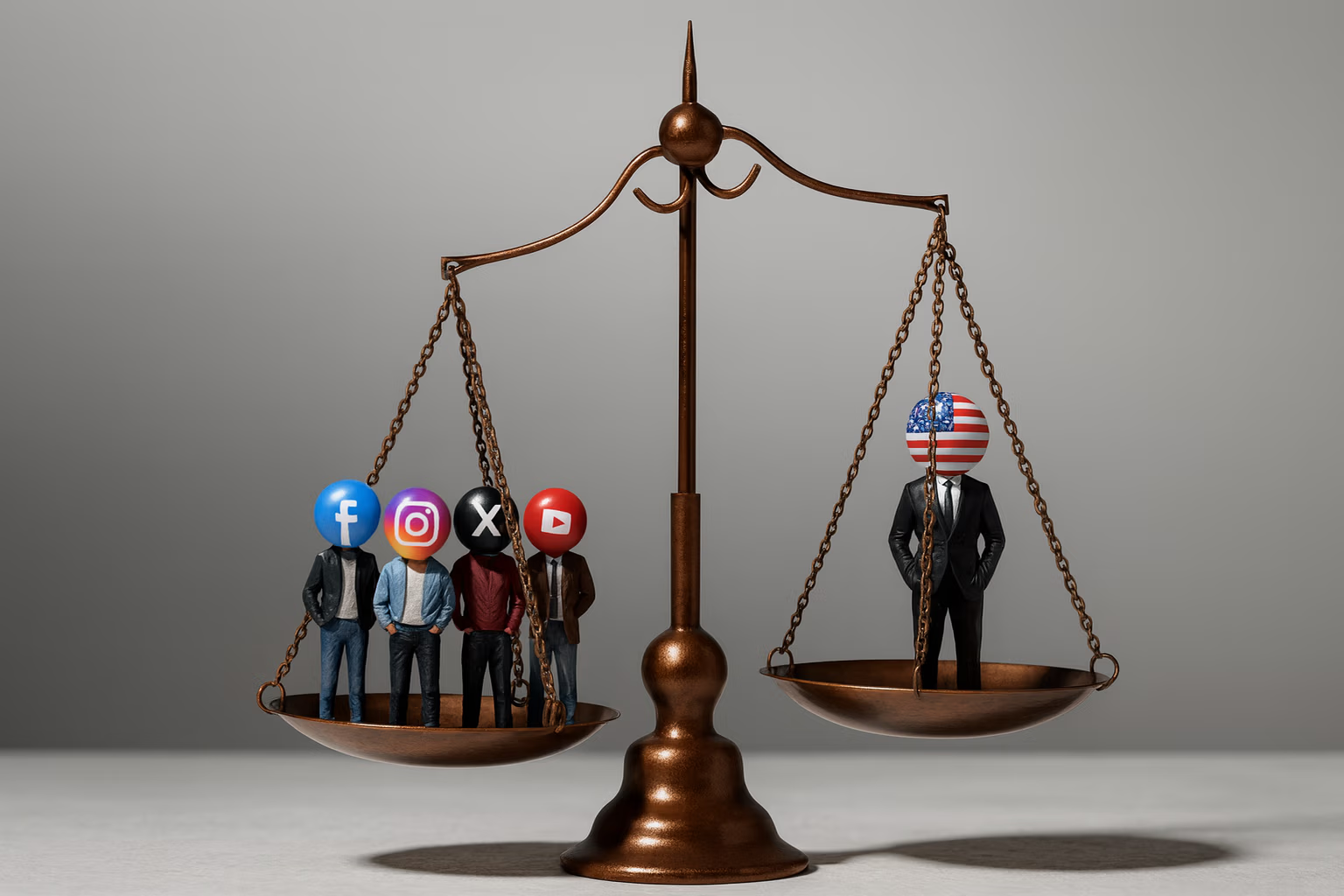
When 9 out of 10 Americans lose faith in institutions, trust doesn’t disappear it migrates. And today, it’s moving online at unprecedented speed.
Distrust has become so widespread that influence itself is now the new infrastructure of trust.
In our multi-method study of consumer sentiments around state of US economy, we captured 502K+ Digital Voices and conducted 10K+ depth surveys, revealing just how dramatically people have shifted away from official narratives and toward peer-driven digital ecosystems that feel more honest, transparent, and emotionally aligned.
This shift didn’t begin when polls confirmed it. People were disengaging long before doubting official narratives, scrutinizing every statement, and gravitating toward digital communities for clarity. Skepticism grew quietly but steadily, setting the stage for a massive behavioural pivot.
A Nation That No Longer Believes the Official Story
By the time the data surfaced, Americans had already mentally checked out of institutional trust. The report reveals that:
94% of respondents expressed clear dissatisfaction with recent government actions, signaling a profound erosion of confidence in institutional decision-making.
72% reported a lack of trust in the nation’s economic management, underscoring widespread concern about policy effectiveness and long-term stability.
38% indicated that no intervention or reform could meaningfully restore their confidence, reflecting a deeply entrenched skepticism toward institutional credibility.
This wasn’t a moment of temporary frustration it had hardened into the new mindset.
People began relying less on structured narratives and more on peer-driven knowledge ecosystems, the kind surfaced through web intelligence and social listening.
Why People Now Trust Strangers More Than Institutions
With the trust economy going peer-to-peer, influence shifted from authority figures to individuals.
People didn’t just read opinions they sought validation through:
Community threads
Influencer recommendations
Reviews and lived experiences
Crowd-sourced problem solving
And the behaviour is quantified clearly:
40% believed in influencer recommendations
60% relied on social channels for suggestions
This new trust economy is built on digital voices, not official institutions.
A Shift That Rewires Real Decisions
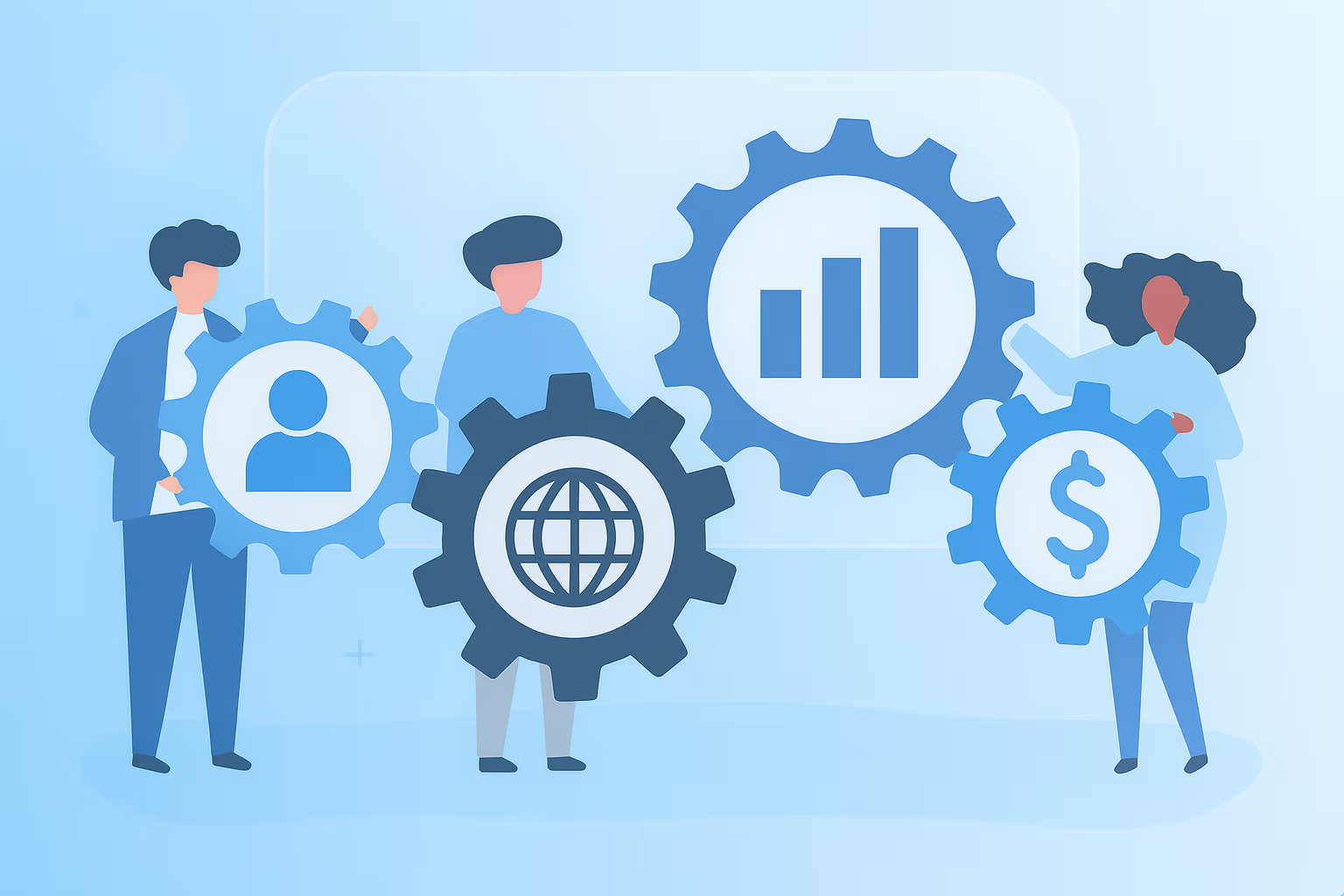
This wasn’t just a psychological change, it reshaped daily life.
People adjusted budgets, delayed purchases, optimized savings, and rationalized subscriptions not based on government signals, but based on what digital communities indicated.
This is exactly where modern market research, consumer insights systems, and research automation become essential. Traditional research alone can’t capture a behavioural revolution of this scale or speed
How Modern Intelligence Decodes This Trust Migration
Today’s insights teams rely on web intelligence rather than traditional social listening, and AI-led agile research pipelines instead of siloed, human-dependent workflows to understand these societal shifts in real time. Digital voices aren’t noise they’re data streams revealing the emotional truth of consumer desire long before formal institutions catch up. Modern intelligence systems catch early signals through web-intelligence-led analysis and then validate them rigorously through primary research methodologies, ensuring both speed and methodological rigor. As AI-led processes enhance the precision, depth, and velocity of this entire cycle, one truth becomes undeniable: this trust collapse marks a lasting transformation people now turn to each other before they turn to institutions. In this new landscape, understanding digital voices isn’t just an analytical advantage; it’s the only way to stay aligned with how society forms belief, makes decisions, and navigates uncertainty.
.avif)