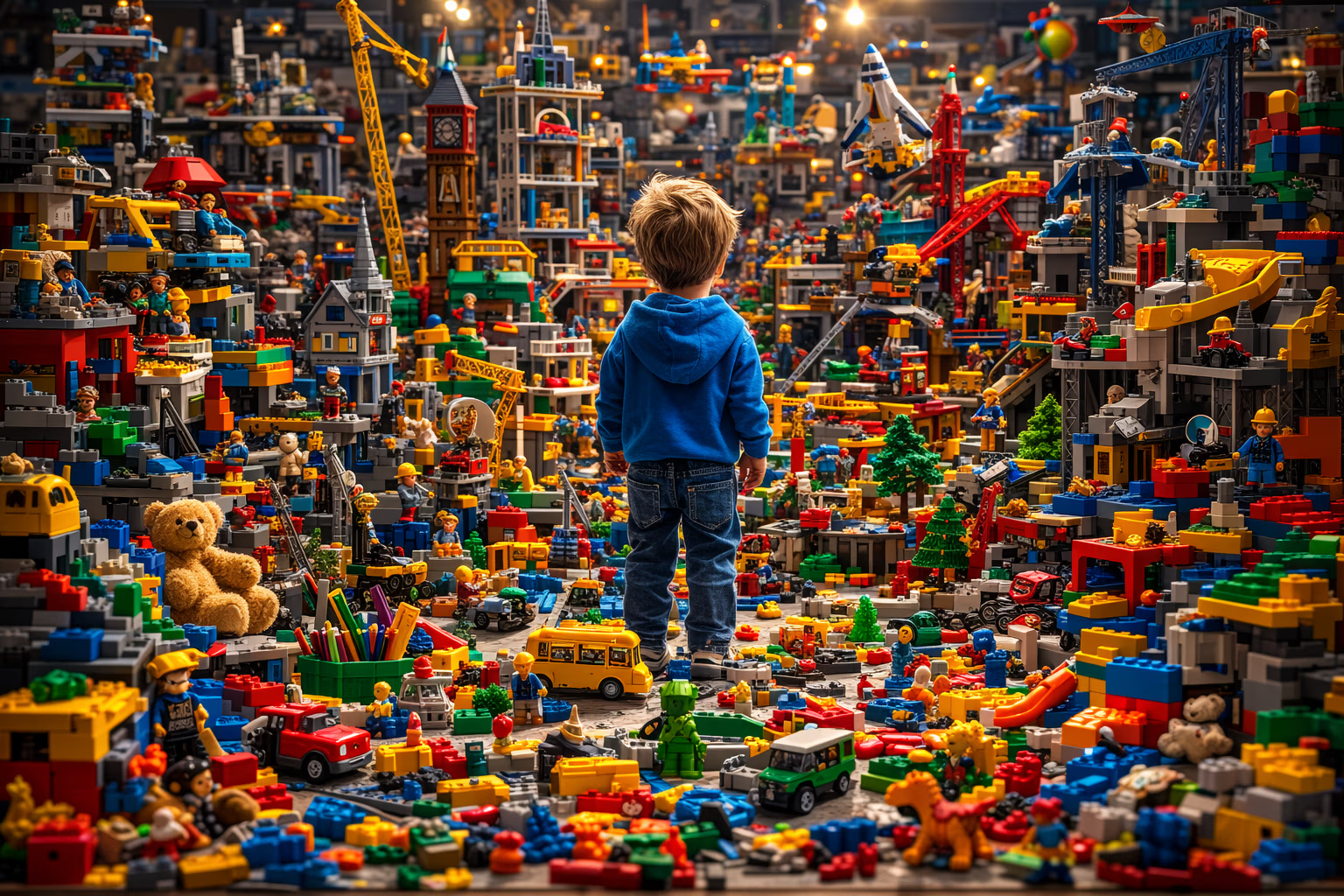
Key Points
LEGO currently commands over 30% of the global "construction toy" market share.
While children (1.5–12 years) drive 60–65% of volume, adults (AFOLs) now represent over 15% of the consumer base.
Insights decoded from 12M+ digital footprints and 150K+ Christmas LEGO conversations.
The Story Behind the World’s Most Iconic Toy Brand
The LEGO Group is one of the most recognized toy companies in the world. Founded in 1932 by Ole Kirk Christiansen in Denmark, LEGO began as a small family business producing wooden toys. Over time, the company introduced the iconic interlocking plastic bricks that would redefine creative play for generations. Today, LEGO designs and manufactures a wide range of construction toys, play sets, and themed collections that encourage imagination, creativity, and problem-solving.
The company’s global headquarters remain in Billund, Denmark, and LEGO products are now sold in more than 130 countries, making it one of the most influential brands in the global toy industry. From simple building blocks to complex themed worlds inspired by movies, gaming universes, and architecture, LEGO has evolved from a children’s toy into a cultural icon enjoyed by both kids and adults.
The Rising Popularity of LEGO Toys
In recent years, LEGO toys have experienced remarkable growth in popularity. This rise is not driven only by product innovation but also by deeper emotional and behavioral shifts among consumers. Increasingly, toys are no longer viewed simply as products they are experiences that create connection, nostalgia, and shared family moments.
Insights from BioBrain Insights’ holiday gifting research show how LEGO has become deeply embedded in modern gifting culture. The study decoded millions of real digital conversations across social platforms, forums, and communities to understand why LEGO consistently appears among the most anticipated holiday gifts. These signals reveal that LEGO’s demand is strongly linked to emotional triggers such as nostalgia, creativity, and family bonding.
Key signals identified in the analysis include:
- 29% estimated market share for LEGO during the holiday gifting season, making it one of the most dominant toy choices during Christmas shopping.
- 24K+ conversations referencing family bonding, highlighting LEGO’s role in shared play experiences between parents and children.
- 28K+ mentions around iconic LEGO products and collectible sets, showing the rise of display pieces and collector culture.
- 12K+ discussions around gaming-linked LEGO builds, reflecting how popular entertainment franchises are driving new interest.
These signals show that LEGO’s popularity is not only about toys it is about experiences, memories, and cultural rituals. The data suggests that when consumers choose LEGO, they are often choosing something that goes beyond entertainment: a shared moment of creativity that connects generations.
The Emotional Drivers Behind LEGO’s Growth

The report reveals that LEGO’s popularity is deeply tied to emotional and social behaviors rather than just entertainment value.
Several key signals stand out:
- Family bonding: Around 16% share of voice in conversations associates LEGO with shared family play and connection between parents and children.
- Nostalgia and memories: Approximately 12% of discussions link LEGO to childhood memories, indicating that many adults now purchase LEGO sets as nostalgic gifts.
- Holiday gifting dominance: LEGO is estimated to hold around 29% share during the holiday toy gifting season, highlighting its strong presence in seasonal purchases.
These insights suggest that LEGO’s growth is fueled not only by product innovation but also by its ability to represent memory, creativity and emotional connection.
Key Trends Driving LEGO Demand
The analysis also identifies several consumer preferences contributing to LEGO’s continued growth:
- Iconic collectible products that appeal to both children and adult fans
- Integration with gaming and entertainment IPs, expanding relevance across media
- Product personalization, allowing consumers to connect emotionally with what they build
These trends show that LEGO is evolving beyond traditional toy categories into a creative hobby, collectible culture, and shared family activity.
A Brand Built on Meaningful Play
What ultimately distinguishes LEGO is its ability to transform a simple building experience into something deeper. Conversations across digital platforms consistently show that LEGO represents imagination, creativity, and meaningful time spent together.
As consumer behavior continues to shift toward experiences and emotional value, LEGO’s unique ability to combine creativity with nostalgia positions it strongly for continued growth. Rather than being just another toy brand, LEGO has become a symbol of shared memories, learning, and timeless play a combination that keeps it at the center of the global toy market.



.avif)