Luxury Retail Trends in Dubai: What Premium Brands Should Research
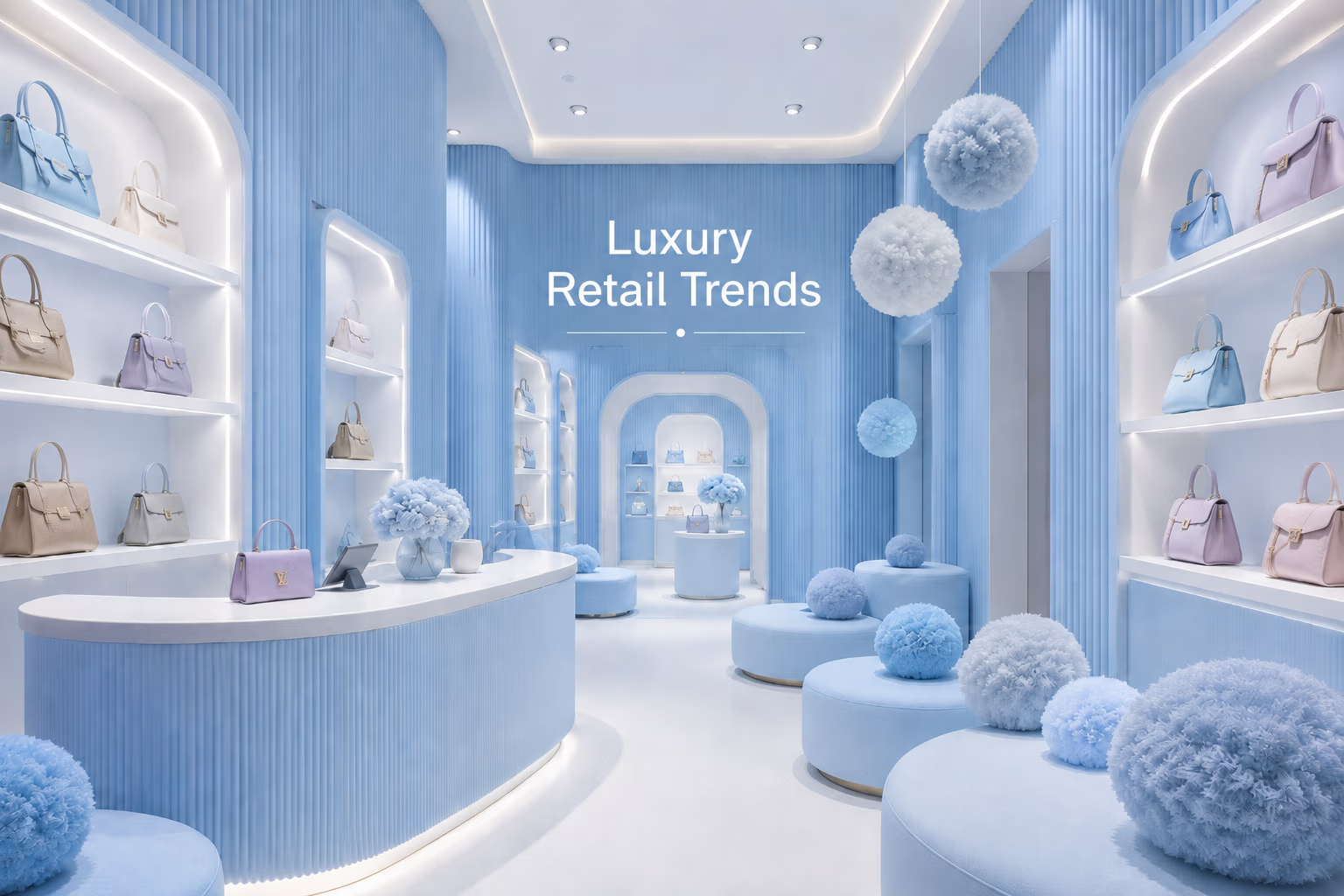
Dubai luxury retail is no longer just about flagship stores, designer collections, and premium mall footfall. It is becoming a sharper, more complex market where wealth, tourism, digital influence, experience, exclusivity, and service expectations all move together.
For premium brands, this makes luxury retail trends Dubai a serious research priority.
Dubai is not only attracting shoppers. It is attracting high-value shoppers who expect speed, discretion, personalization, global access, cultural relevance, and memorable brand experiences. The UAE luxury goods market is estimated at USD 4.41 billion in 2025 and is projected to reach USD 5.68 billion by 2030, growing at a 5.2% CAGR.
That growth is not happening in isolation. Dubai welcomed 19.59 million international overnight visitors in 2025, up 5% from 2024, marking another record year for the city’s tourism sector.
For luxury brands, the signal is clear: Dubai is not simply a retail market. It is a global luxury stage.
Luxury Is Being Powered by Wealth and Movement
The luxury consumer Dubai is not one audience.
There are Emirati shoppers with deep luxury familiarity. There are high-net-worth residents who expect private access and relationship-led service. There are tourists shopping during destination experiences. There are young premium buyers influenced by creators, styling, limited drops, and social visibility.
Dubai’s advantage is that all of these audiences meet in one market.
The UAE is also one of the world’s strongest wealth migration destinations. Henley & Partners’ 2025 wealth migration data shows the UAE with a projected net inflow of 9,800 millionaires, one of the highest inflows globally.
This matters for luxury retail because resident wealth is becoming as important as visitor spending. Dubai is not only a place where luxury is purchased during travel. It is increasingly a place where affluent consumers live, invest, socialize, and build lifestyle routines.
Premium brands must therefore study both tourist luxury behavior and resident luxury behavior. The motivations are different. The service expectations are different. The loyalty potential is different.
Retail Signals Premium Brands Should Track
Dubai Mall alone welcomed more than 111 million visitors in 2024, breaking its earlier record of 105 million visitors in 2023. The UAE luxury fashion market reached USD 1.3 billion in 2025 and is expected to reach USD 1.9 billion by 2034, growing at a 3.70% CAGR.
These numbers show the scale of the opportunity. But numbers alone do not explain why a luxury shopper chooses one brand over another.
That is where retail insights Middle East become essential.
Shopping Behavior- Is Not Linear
Shopping behavior Dubai does not follow a simple path.
A luxury shopper may discover a bag on Instagram, watch a creator styling video, compare availability online, visit a boutique, ask about exclusivity, check resale value, request a private viewing, and then complete the purchase in-store.
Another shopper may enter a mall for dining or entertainment and make a luxury purchase because the boutique experience created desire.
This is the Dubai difference.
Luxury shopping is not just a transaction. It is often part of a larger lifestyle journey: travel, dining, celebration, gifting, business, weddings, hospitality, wellness, or social visibility.
Premium brands should therefore study the full journey, not only the final sale.
The real research question is not simply “what was purchased?” It is “what created confidence before the purchase?”
Digital Influence Is Reshaping Luxury Discovery
Dubai luxury remains highly physical, but discovery is increasingly digital.
Premium shoppers are exposed to luxury through Instagram, TikTok, YouTube, Snapchat, search, online editorials, resale platforms, creator content, WhatsApp sharing, and private communities before they walk into a boutique.
This makes digital influence one of the most important luxury retail trends Dubai brands need to track.
A luxury brand may see high boutique traffic but weak conversion. The problem may not be store design. It could be digital sentiment, creator mismatch, unclear product availability, weak social desirability, price perception, or lack of local relevance.
For premium brands, this is where consumer intelligence becomes more valuable than simple performance reporting. Platforms such as BioBrain Insights help brands connect digital conversations, search behavior, open-text feedback, review sentiment, and research data to understand what luxury consumers are actually responding to.
In a market like Dubai, where shoppers are multicultural, high-intent, and experience-driven, these signals matter. A luxury brand does not only need to know whether a campaign created attention. It needs to know whether that attention created trust, desire, exclusivity, and purchase confidence.
The Luxury Consumer in Dubai Wants Experience, Not Just Status
Status still matters in luxury. But status alone is not enough.
The modern luxury consumer Dubai wants a stronger reason to buy. That reason may be craftsmanship, scarcity, service, heritage, personalization, cultural fit, social proof, investment value, or emotional reward.
Luxury is shifting from “owning the product” to “feeling the value.”
This is why premium brands need to research the occasion behind the purchase.
Is the consumer buying for self-reward?
Is it linked to travel?
Is it for gifting?
Is it for social visibility?
Is it for collection value?
These are not soft insights. They directly affect merchandising, boutique service, campaign messaging, product drops, packaging, clienteling, and loyalty.
Experience Is Becoming the New Differentiator
For some luxury consumers, experience means privacy and speed. For others, it means recognition. For tourists, it may mean availability, convenience, tax-free value, and smooth service. For high-net-worth clients, it may mean private rooms, early access, rare pieces, relationship managers, and after-sales excellence.
Premium brands should research the moments that make a luxury experience feel truly premium:
The strongest luxury brands in Dubai will not only measure footfall. They will measure how the experience changes purchase confidence.
Category-Level Research Is Critical
Luxury is not one category.
Fashion, watches, jewellery, beauty, fragrance, leather goods, and luxury home products behave differently. Each category carries different purchase triggers.
Luxury fashion may be driven by styling, social visibility, exclusivity, and seasonal relevance. Jewellery may be driven by gifting, weddings, trust, craftsmanship, and investment value. Watches may be shaped by collectability, scarcity, resale value, and heritage. Beauty and fragrance may depend on personal experience, creator credibility, product trial, and repeat use.
Premium brands must avoid generic luxury assumptions.
The sharper the category insight, the stronger the retail strategy.
Market Research- Must Separate Residents and Tourists
One of the biggest mistakes premium brands can make is treating Dubai luxury shoppers as one group.
Tourists and residents may shop in the same mall, but their motivations are often different.
Tourists may be driven by destination shopping, gifting, limited time, tax-free value, and global availability. Residents may care more about relationship management, private access, after-sales service, loyalty, brand familiarity, and recognition.
Young premium shoppers may be influenced by creators, styling, identity, and social proof. Collectors may be focused on scarcity, heritage, and resale value. Occasion-led buyers may prioritize consultation, packaging, service, and cultural moments.
This is also why luxury research in Dubai needs a more layered approach. Traditional surveys can explain stated preferences, but digital signals, open-ended feedback, social sentiment, and behavioral data help reveal the deeper motivations behind premium purchase decisions.
Intelligence-led platforms like BioBrain Insights support this shift by helping brands move from scattered customer signals to clearer luxury consumer intelligence — especially when brands need to compare resident behavior, tourist behavior, creator influence, category expectations, and post-purchase sentiment in one connected view.
What Premium Brands Should Research Now
Premium brands in Dubai need research that goes beyond sales, footfall, and campaign reach.
They need to understand what makes luxury feel valuable in this market.
The most important research areas include:
- Luxury purchase motivation: whether shoppers buy for status, self-reward, gifting, investment, rarity, occasion, identity, or cultural relevance.
- Digital-to-store influence: how social content, search behavior, creator trust, reviews, and online product discovery influence boutique visits.
- Service expectations: how much privacy, recognition, consultation, speed, and personalization premium shoppers expect.
- Price-value perception: whether consumers see the product as worth the premium, especially when global luxury prices rise.
- Tourist vs resident behavior: how purchase missions differ between visitors and long-term Dubai consumers.
- Category triggers: what drives conversion in fashion, watches, jewellery, beauty, fragrance, and leather goods.
- Post-purchase loyalty: what makes consumers return, recommend, join events, use after-sales services, or deepen their relationship with a brand.
This is the kind of research that turns retail performance into consumer intelligence.
Luxury Retail in Dubai Is Becoming More Selective
The Dubai luxury market is strong, but it is also becoming more demanding.
More brands are competing for the same high-value attention. Consumers are better informed. Digital influence is stronger. Product comparisons are easier. Service expectations are higher. Shoppers are more selective about what feels truly premium.
This means luxury brands need to understand not only demand, but hesitation.
Why did a shopper browse but not buy?
Why did a tourist choose one boutique over another?
Why did a resident stop engaging with a brand?
Why did a high-value customer buy once but not return?
Why did a campaign create attention but not conversion?
These answers do not live in one dashboard. They sit across survey data, social conversation, reviews, search signals, boutique feedback, CRM behavior, and open-ended customer responses.
That is why the next stage of retail insights Middle East will be built around connected intelligence, not isolated reporting.
Final Thoughts
Dubai luxury retail is entering a more sophisticated phase.
The opportunity remains strong, supported by tourism, millionaire migration, premium malls, global brand presence, and experience-led consumption. But the market is also becoming more selective. Shoppers are more informed. Expectations are higher. Digital influence is stronger. Service quality matters more. And luxury is increasingly judged by the full experience, not just the product.
For premium brands, the future of luxury retail trends Dubai will depend on deeper consumer understanding.
The brands that win will be those that decode the real signals behind shopping behavior Dubai - who buys, why they buy, what makes them trust, what makes them hesitate, what makes them return, and what makes luxury feel truly premium.
This is where BioBrain Insights helps premium and luxury brands move beyond surface-level retail data. By combining market research, digital intelligence, open-text analysis, social and review signals, AI-powered research workflows, and expert validation, BioBrain Insights helps brands understand the modern luxury consumer Dubai with greater speed, clarity, and decision confidence.
In a market as visible, competitive, and experience-driven as Dubai, luxury brands do not just need more data.
They need sharper retail intelligence.