
Research teams across the GCC are under pressure to deliver insights faster than traditional workflows allow. Markets are moving quickly, consumer expectations are changing across digital and physical channels, and business teams no longer want to wait weeks for answers that may already feel outdated by the time a report is delivered.
This is why research automation is becoming a major shift in market research GCC. It is not just about replacing manual work with software. It is about redesigning the research process so that study design, data cleaning, analysis, reporting, and decision support can move with more speed, structure, and reliability.
The timing is important. The GCC artificial intelligence market was valued at $6.22 billion in 2025 and is projected to reach $23.03 billion by 2034, growing at a 14.87% CAGR. The GCC digital transformation market was valued at $25.1 billion in 2025 and is projected to grow at a 23.75% CAGR from 2026 to 2034. The region is also investing heavily in data and analytics capability, with the GCC big data analytics market projected to grow from $4.63 billion in 2025 to $15.7 billion by 2035.
These numbers show a clear direction: brands are moving from slow, project-based research toward faster, technology-supported intelligence systems.
What Research Automation Means
Research automation is the use of technology to streamline repetitive or time-heavy parts of the research process. It can support questionnaire design, survey scripting, sample monitoring, data validation, open-text analysis, dashboarding, report creation, and insight delivery.
It does not mean removing researchers from the process.
Good automation removes unnecessary manual effort so researchers can focus on judgment, interpretation, and business meaning.
A strong automated workflow helps teams answer questions such as:
- Is the questionnaire logically sound?
- Are quotas filling correctly?
- Are poor-quality responses being removed?
- What themes are emerging in open-ended feedback?
- Which segments are behaving differently?
- What should the business do next?
The goal is not only speed. The goal is cleaner execution, fewer errors, better visibility, and more decision-ready insight.
Why Research Automation Matters in GCC Markets
The GCC is a complex research environment. The region includes highly digital consumers, multilingual audiences, expat-national population mixes, young shoppers, premium service expectations, and fast-moving sectors such as retail, fintech, healthcare, tourism, real estate, and ecommerce.
Manual research processes struggle when feedback comes from many sources at once:
- Surveys
- Reviews
- Social conversations
- Call center logs
- App feedback
- Customer complaints
- Online communities
- Open-ended responses
- Retail and service audits
This is where automation becomes valuable. It helps research teams process more signals without drowning in operational work.
It also supports real-time consumer intelligence GCC strategies. Instead of waiting for one final report, brands can track fieldwork progress, quality checks, open-text themes, sentiment shifts, and performance indicators while the study is still active.
That matters in categories where timing is critical. A product launch, campaign reaction, service failure, or pricing backlash can unfold in days, not months.
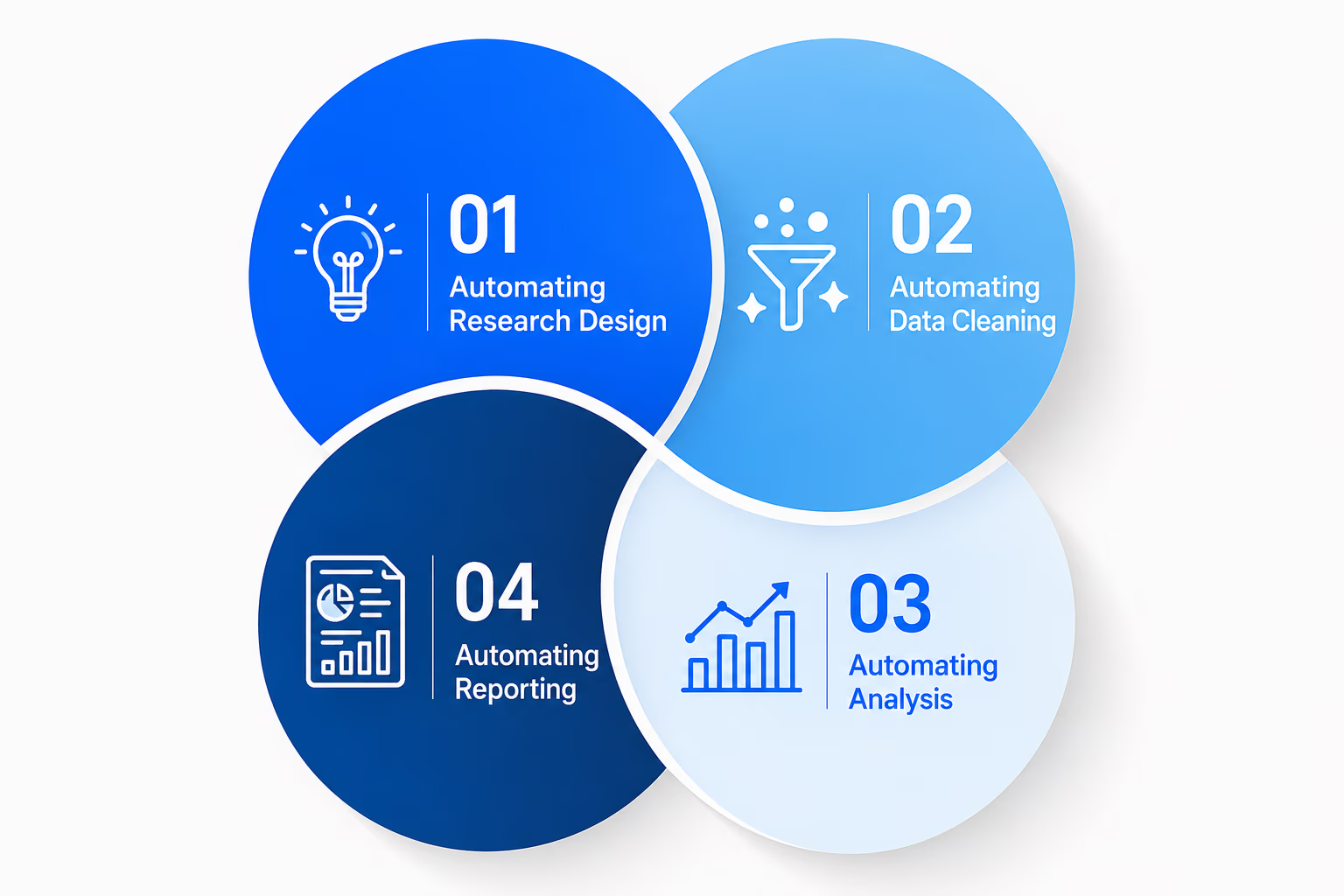
Automating Research Design
Research design is one of the first areas where automation can create value.
Traditionally, questionnaire design involves repeated manual checks: logic, routing, answer options, scale consistency, quotas, language, and survey length. Small errors can create major problems during fieldwork.
Automation can help with:
- Questionnaire structure checks
- Logic and skip-pattern review
- Duplicate question detection
- Survey length estimation
- Mobile-readability checks
- Screening consistency
- Quota design support
- Translation comparison
This is especially useful in GCC projects where surveys may need to work across English, Arabic, Hindi, Urdu, Malayalam, Tagalog, or mixed-language audiences.
However, automation cannot decide whether a question is culturally appropriate or strategically useful. A system may flag a technical issue, but a researcher must judge whether the wording captures the right behavior, avoids bias, and fits the audience.
Best practice: use automation to improve structure, then use human review to protect meaning.
Automating Data Cleaning
Data cleaning is one of the most important areas for automation because poor-quality data can destroy the value of an entire study.
Research teams often need to detect:
- Speeders
- Straight-liners
- Duplicate respondents
- Inconsistent answers
- Gibberish open-ends
- Bot-like behavior
- Low-effort completions
- Contradictory responses
- Fraud patterns
Manual cleaning is slow and often inconsistent. Automated validation can apply quality rules continuously during fieldwork, helping teams remove weak responses earlier and protect the final dataset.
This is especially important for online research, where speed and scale can create false confidence. A study may reach the required sample size quickly, but if a portion of the data is low quality, the final insight becomes risky.
Automated cleaning also improves transparency. Instead of discovering issues after fieldwork closes, teams can monitor quality while data is being collected.
Best practice: define cleaning rules before launch. If quality checks are created after seeing the data, teams may unintentionally bias the final sample.
Automating Analysis
Analysis is where automation becomes more powerful, but also more sensitive.
AI-supported systems can process structured and unstructured data quickly. They can identify patterns in survey responses, cluster open-ended comments, compare segments, classify sentiment, and highlight emerging themes.
This is useful because open-text feedback often contains the richest insight. Respondents explain why they rejected a product, what confused them, what service issue frustrated them, or what made them trust a brand.
Automation can help identify themes such as:
- Price concerns
- Delivery issues
- Service delays
- Trust barriers
- Feature requests
- Product confusion
- Brand preference
- Payment friction
- Customer support problems
But automated analysis can become dangerous when it produces shallow summaries.
For example, “customers want convenience” is not enough. A useful insight would explain whether convenience means faster delivery, easier returns, shorter onboarding, WhatsApp support, fewer payment steps, or clearer product information.
The real value comes when automation identifies patterns and researchers interpret what those patterns mean for business decisions.
Best practice: treat automated analysis as the first layer, not the final answer.
Automating Reporting
Reporting is often one of the most time-consuming parts of research. Teams spend hours building charts, formatting slides, summarizing tables, and manually transferring findings into decks.
Automation can help generate:
- Live dashboards
- Auto-updated charts
- Standardized tables
- Segment cuts
- Fieldwork summaries
- Quality reports
- Open-text theme summaries
- Draft report structures
This can reduce repetitive work and help stakeholders access insights faster.
The global real-time analytics market is projected to grow from $1.09 billion in 2025 to $5.26 billion by 2032, at a 25.1% CAGR, showing broader demand for faster decision systems. Research reporting is moving in the same direction: from static final decks to dynamic intelligence views.
However, automated reporting should not replace storytelling. A dashboard can show what changed. A researcher must explain why it changed, whether it matters, and what action should follow.
Best practice: automate charts and reporting mechanics, but keep interpretation human-led.
The ROI of Research Automation
The return on investment from automation comes from more than saving time.
It can improve research ROI across four areas:
- Speed: Projects can move faster from brief to fieldwork to insight delivery.
- Quality: Automated checks reduce avoidable errors and weak responses.
- Scale: Teams can handle larger datasets, more markets, and more open-ended feedback.
- Consistency: Standardized workflows reduce variation across studies and teams.
The business impact is straightforward. Faster research helps brands respond earlier. Cleaner data improves confidence. Better reporting reduces delays. More scalable analysis helps teams listen to more consumer signals without expanding manual workload at the same pace.
But ROI depends on implementation. Automation delivers value only when workflows are designed carefully and stakeholders trust the output.
A poorly implemented automated system may create more problems than it solves. It can produce incorrect classifications, overconfident summaries, or reports that look polished but lack real insight.
Human Guardrails: The Non-Negotiable Layer
The biggest misconception about automation is that it removes the need for researchers. In reality, it increases the importance of research judgment.
Human guardrails are essential because automated systems can misread context, language, culture, tone, and business relevance.
Strong guardrails include:
- Clear research objectives: Automation should be guided by the business question, not run blindly across all data.
- Source traceability: Findings should link back to real data, not unsupported summaries.
- Human validation: Researchers must review themes, quality flags, sentiment, and conclusions.
- Segment-level interpretation: GCC audiences should not be blended into misleading averages.
- Bias checks: Automated outputs should be reviewed for language, sample, and model bias.
- Privacy safeguards: Customer and respondent data must be handled responsibly.
- Limitations: Every automated output should clarify what the data can and cannot prove.
These guardrails matter because research is used to make decisions. If the automation is wrong, the decision risk becomes bigger, not smaller.
Risks of Research Automation
Research automation has clear benefits, but it also brings real risks.
The main risks include:
- Overreliance on automated summaries
- Weak understanding of cultural context
- Poor handling of multilingual responses
- Misclassification of sentiment
- Hidden bias in data or models
- Treating speed as proof of quality
- Ignoring respondent experience
- Weak privacy controls
- Lack of transparency in outputs
These risks are especially relevant in GCC markets because language and context are complex. Arabic dialects, English-Arabic mixing, expat languages, cultural politeness, sarcasm, and category-specific phrasing can all confuse automated systems.
For example, a respondent may say, “It is okay, but I would not use it again.” A basic sentiment system may classify this as neutral, but the business meaning is negative. A customer may complain about “service,” but that could refer to staff behavior, delivery speed, refund support, call center response, or app navigation.
Automation needs context to become intelligence.
Best Practices for GCC Research Teams
To use automation effectively, GCC research teams should follow a practical framework.
1. Automate the Repetitive, Not the Judgment
Use automation for scripting checks, quota monitoring, cleaning, coding, charting, and theme detection. Keep research design, interpretation, and recommendations human-led.
2. Build Quality Rules Before Fieldwork
Define what counts as a bad response before data collection begins. This improves fairness and avoids cleaning decisions that are influenced by expected results.
3. Design for Multilingual Research
Automated tools should be tested across relevant languages and dialects. Translation quality, tone, and cultural meaning must be reviewed carefully.
4. Keep Evidence Traceable
Every major insight should be supported by source data, respondent quotes, segment cuts, or documented analysis logic.
5. Combine Automation with Continuous Signals
Use automated workflows not only for surveys, but also for reviews, complaints, open-text responses, and social or web signals.
6. Review Outputs with Business Context
A theme is not useful until it is connected to a decision. Researchers should explain what the finding means for product, pricing, messaging, CX, or growth strategy.
The Future: From Automated Research to Intelligence Systems
The next stage of AI market research platform GCC development will not be about faster decks alone. It will be about integrated research systems that connect study design, data quality, analysis, reporting, and live consumer signals.
This is where market research becomes closer to an intelligence function.
Instead of asking for one-off answers, brands will increasingly build systems that monitor customer feedback, campaign reactions, product reviews, sentiment shifts, competitor movement, and open-ended responses continuously.
That is the real promise of automation: not less research, but better-connected research.
Final Thoughts
Research automation is changing how insight teams work across the GCC. It can reduce manual effort, improve data quality, accelerate analysis, and make reporting more responsive. But automation only creates value when it is paired with strong methodology, human judgment, and clear guardrails.
The future of market research GCC will not be fully manual or fully automated. It will be hybrid.
Machines will handle scale, speed, and pattern detection. Researchers will protect context, meaning, and business relevance.
In a region where consumer behavior changes quickly, the winning teams will not be those that automate everything. They will be the ones that automate wisely - and turn faster signals into better decisions.



.avif)