

Consumer voice has become one of the most powerful market signals in the UAE and GCC.
Every review, complaint, social post, survey comment, app rating, support ticket, forum discussion, and open-ended response carries a signal. Some signals show frustration. Some show trust. Some show unmet needs. Some show early demand. Some show the reason customers are about to switch.
This is where sentiment analysis UAE and sentiment analysis GCC become important. They help brands move beyond surface-level feedback and understand what consumers are actually expressing at scale.
Traditional research tells brands what consumers say in structured formats. Social listening UAE captures public digital conversation. Customer satisfaction survey UAE programmes measure direct experience. Real-time consumer intelligence GCC connects all of these sources into a stronger system.
The goal is not just to know whether sentiment is positive or negative. The goal is to understand what sentiment means for pricing, service, loyalty, product strategy, brand trust, and market demand.
What Sentiment Analysis Means
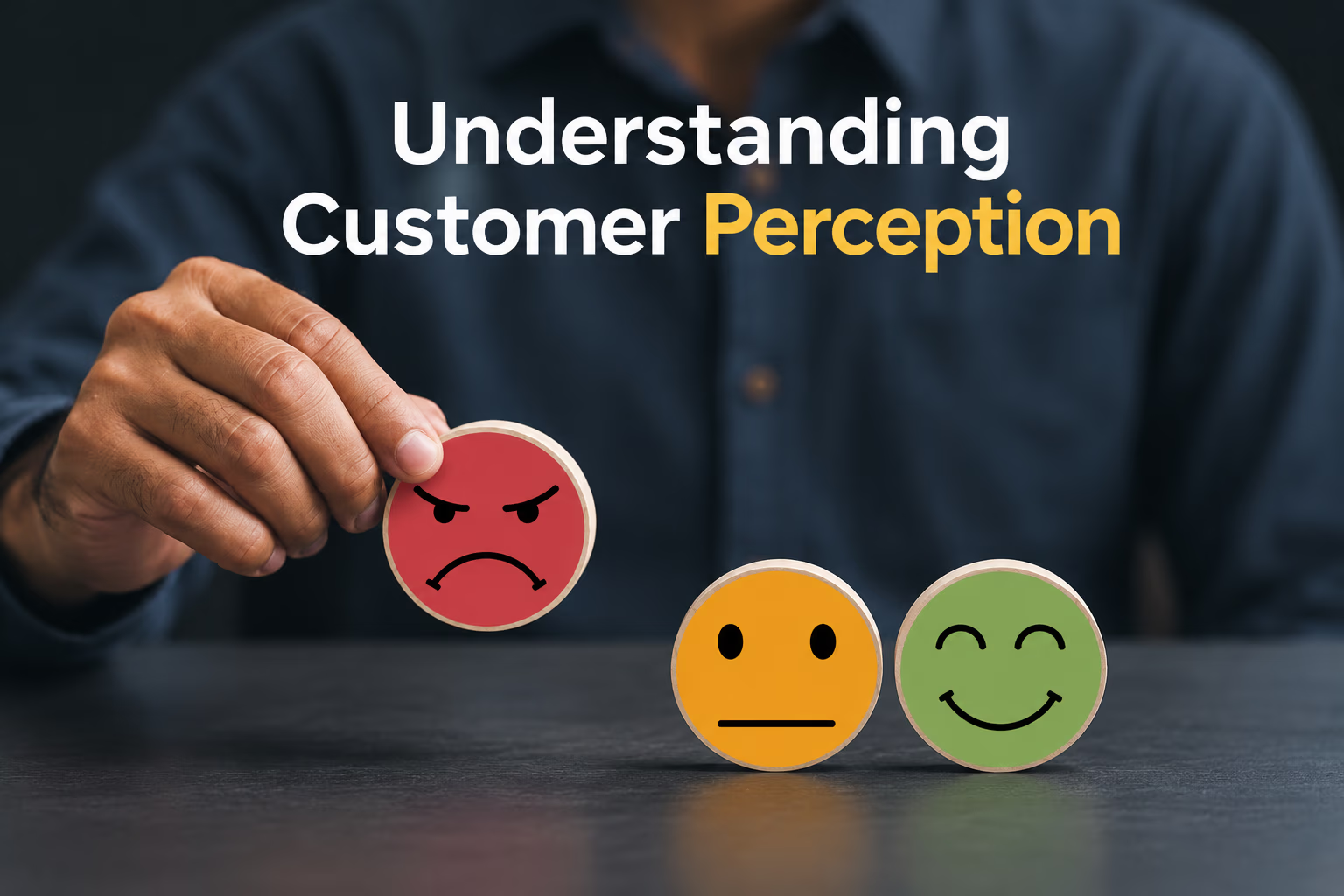
Sentiment analysis is the process of identifying emotional tone, opinion, attitude, and intent within consumer language.
At a basic level, it classifies feedback as positive, negative, or neutral. At a stronger level, it identifies the reason behind that sentiment.
For example, a negative restaurant review may be about price, delivery delay, taste, service, packaging, hygiene, app experience, or refund handling. These are very different business problems.
A useful sentiment system should answer:
- What are consumers feeling?
- What topic is driving that feeling?
- Which segment is expressing it?
- Which channel is it coming from?
- Is the issue growing or fading?
- Does it connect to sales, churn, loyalty, or satisfaction?
- What action should the brand take?
Sentiment analysis becomes powerful when it turns language into structured evidence.
Why Sentiment Analysis Matters in UAE and GCC
The UAE and GCC are fast-moving, digitally active, multilingual, and experience-led markets. Consumers compare quickly, complain publicly, reward convenience, and expect high service standards.
This makes consumer voice more visible and more valuable.
In the UAE, brands operate in a market shaped by nationals, expatriates, tourists, premium consumers, value seekers, Arabic speakers, English speakers, South Asian communities, and highly digital users. Across the wider GCC, consumer expectations are shaped by economic transformation, tourism growth, e-commerce adoption, food delivery, fintech, banking innovation, healthcare demand, retail competition, and rising service expectations.
A single survey cannot capture all of this movement alone.
Sentiment analysis GCC helps brands detect the emotional layer behind market behavior. It shows not only what consumers buy, but what they praise, question, reject, recommend, and warn others about.
From Social Listening to Market Signals
Social listening UAE is often the starting point. It tracks brand mentions, hashtags, reviews, comments, platform conversations, and public consumer discussions.
But social listening becomes more valuable when it moves beyond monitoring.
Monitoring says: “People are talking about us.”
Market intelligence says: “This topic is increasing, this emotion is negative, this segment is affected, and this issue may damage retention.”
That shift is important.
A brand may see rising negative comments about delivery fees. On its own, that is feedback. But when combined with order frequency, cart abandonment, customer satisfaction survey UAE results, and competitor offers, it becomes a market signal.
It may show price sensitivity.
It may show trust erosion.
It may show service fatigue.
It may show a competitor opening.
Sentiment should not sit in a dashboard. It should move into decisions.
Consumer Voice Sources and What They Reveal
The Difference Between Sentiment and Satisfaction
Sentiment and satisfaction are connected, but they are not the same.
A customer satisfaction survey UAE programme asks consumers to rate their experience. It measures direct feedback through structured questions. It can track CSAT, NPS, CES, loyalty, complaint resolution, and service quality.
Sentiment analysis reads the language consumers use across many channels. It captures emotion, context, intensity, and theme.
Satisfaction tells you the score.
Sentiment tells you the story behind the score.
For example, a bank may have stable satisfaction scores but rising negative sentiment around fraud alerts, loan rates, app downtime, or call centre delays. A retail brand may have decent ratings but negative language around delivery consistency. A hotel may have strong reviews overall but recurring complaints about check-in delays.
When satisfaction and sentiment are used together, brands get a clearer picture.
Surveys provide measurement discipline.
Sentiment provides emotional context.
Behavioral data shows the business outcome.
What Brands Should Measure
Sentiment analysis should not only classify tone. It should measure what matters commercially.
Brands should track:
- sentiment polarity
- topic volume
- emotion intensity
- complaint themes
- praise themes
- emerging issues
- competitor comparison
- product feature mentions
- service quality signals
- price sensitivity
- trust and safety concerns
- purchase intent language
- churn or cancellation signals
- segment-level differences
- channel-level differences
- language-level differences
The most useful sentiment analysis UAE projects are not built around vanity metrics. They are built around decision signals.
A spike in negative comments is not enough. Brands need to know what caused it, where it came from, which customers are affected, whether it is new or recurring, and what action can reduce risk.
Sentiment Signals and Business Meaning
Category Use Cases in UAE and GCC
Sentiment analysis GCC becomes stronger when applied by category.
In retail and e-commerce, it can reveal delivery problems, product quality issues, return friction, discount expectations, and marketplace comparison.
In banking and fintech, it can show concerns around fraud, fees, app experience, loan rates, customer support, and digital trust.
In food and beverage, it can identify taste preferences, delivery reliability, packaging issues, pricing pressure, health concerns, and brand loyalty triggers.
In real estate, it can track buyer confidence, rent pressure, community perception, developer trust, service quality, and location demand.
In healthcare, it can reveal patient experience gaps, appointment friction, insurance concerns, communication quality, and trust in providers.
In hospitality and tourism, it can monitor guest experience, service expectations, booking friction, destination appeal, and value perception.
The same sentiment score can mean different things in different categories. A negative banking sentiment may signal trust risk. A negative food delivery sentiment may signal operational friction. A negative real estate sentiment may signal affordability pressure.
Context gives sentiment its meaning.
Multilingual Sentiment Needs Cultural Intelligence
UAE and GCC sentiment analysis cannot rely on simple English-only models.
The region includes Arabic, English, Hindi, Urdu, Malayalam, Tagalog, and other language communities. Even within Arabic, tone, dialect, sarcasm, politeness, and intensity can differ by market.
A direct translation may miss meaning.
For example, a consumer may express dissatisfaction indirectly. Another may use sarcasm. A review may sound neutral in literal translation but carry strong frustration in context. A phrase may be common in one market but emotionally different in another.
This is why sentiment analysis UAE must combine technology with regional understanding.
A strong system should account for:
- Arabic and English language use
- local expressions
- mixed-language feedback
- dialect nuance
- sarcasm and indirect criticism
- cultural context
- category-specific vocabulary
- platform-specific tone
Without cultural intelligence, sentiment analysis becomes shallow.
Building Real-Time Consumer Intelligence GCC
Real-time consumer intelligence GCC is the next step beyond isolated sentiment tracking.
It connects multiple sources into one decision system:
- social listening UAE data
- sentiment analysis GCC outputs
- customer satisfaction survey UAE results
- reviews and ratings
- support tickets
- app feedback
- CRM signals
- transaction trends
- competitor mentions
- open-ended survey responses
This gives brands a faster and more reliable view of market movement.
For example, if a food delivery brand sees rising complaints about fees, lower CSAT among repeat users, more cart abandonment, and stronger competitor praise, the signal is no longer just sentiment. It is a business warning.
If a bank sees stable usage but rising concern around fraud and app reliability, it can act before trust declines further.
If a retailer sees positive sentiment around quality but negative sentiment around delivery, the brand can protect positioning while fixing operations.
Real-time intelligence helps brands respond before problems become revenue loss.
From Consumer Voice to Market Action
Common Mistakes Brands Should Avoid
The first mistake is treating sentiment analysis as a simple positive-negative score. A score without theme, cause, segment, and action is incomplete.
The second mistake is relying only on public data. Public conversation is valuable, but it should be combined with surveys, reviews, support data, and behavioral signals.
The third mistake is ignoring language nuance. In the UAE and GCC, multilingual feedback needs cultural interpretation, not only automated translation.
The fourth mistake is separating sentiment from business decisions. Sentiment must connect to pricing, product, service, trust, communication, and retention.
The fifth mistake is reacting only to spikes. Some of the most important signals are slow-building patterns: repeated complaints, declining enthusiasm, softer recommendation language, or growing competitor comparison.
Strong sentiment analysis is not noise tracking. It is market signal detection.
Future of Sentiment Analysis in UAE and GCC
The future of sentiment analysis UAE and GCC will be faster, more integrated, and more predictive.
Brands will not only ask consumers how they feel. They will track how sentiment changes across channels, how it differs by segment, and how it connects to real spending behavior.
AI will make it easier to classify themes, detect emotion, summarize large volumes of open text, and identify early changes. But human market research expertise will remain essential. Technology can process language quickly. Researchers must still define the right questions, interpret context, validate findings, and connect signals to strategy.
The future is not just more data. It is better signal quality.
Final Thoughts
Consumer voice is no longer soft feedback. In UAE and GCC markets, it is a strategic signal.
Sentiment analysis helps brands understand what consumers praise, reject, question, fear, compare, and recommend. Social listening UAE shows what is being expressed publicly. Customer satisfaction survey UAE programmes show what customers report directly. Behavioral data shows what people actually do.
The real advantage comes from connecting these signals.
For brands operating across the region, BioBrain Insights brings GCC-focused market research authority to this challenge - helping teams turn consumer voice, sentiment analysis GCC, and real-time consumer intelligence GCC into sharper market decisions.
The brands that win will not wait for consumer behavior to change on the balance sheet. They will read the voice of the market before the market moves.


.avif)