Retail in the GCC is no longer just about where people shop. It is about how they compare, when they switch, what they trust, which channels influence them, and why some brands become habits while others disappear from the basket.
Across the UAE, Saudi Arabia, Qatar, Kuwait, Bahrain, and Oman, shoppers are becoming more digital, more selective, more value-aware, and more experience-driven. They want convenience, but not confusion. They want speed, but not mistakes. They want premium experiences, but only when the value feels clear. For brands, this makes retail consumer insights GCC more important than ever.
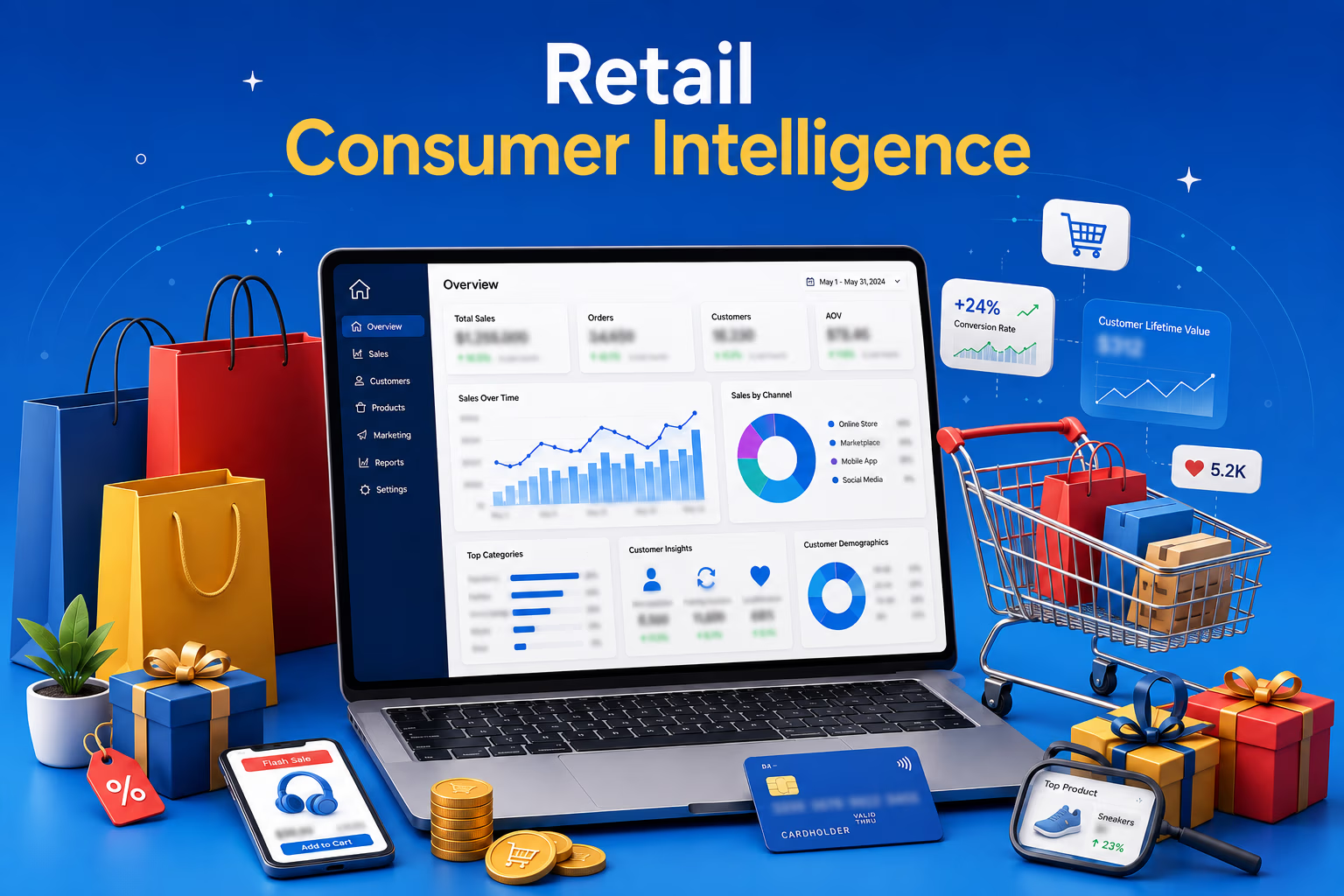
Retail consumer intelligence brings together shopping behavior, basket data, online retail signals, store experience, loyalty patterns, social commerce activity, category performance, pricing response, and customer sentiment. It helps retailers and FMCG companies understand not just what consumers bought, but what shaped the decision before the purchase happened.
What Is Retail Consumer Intelligence?
Retail consumer intelligence is the process of collecting and analyzing consumer signals across retail channels to understand shopper needs, motivations, barriers, and purchase behavior.
It can include:
- Store visits
- Online browsing
- Basket size
- Product switching
- Promotion response
- Customer reviews
- Search behavior
- Delivery expectations
- Loyalty program activity
- Social commerce engagement
The purpose is not just reporting. The purpose is sharper decision-making.
Retail insights help brands answer practical questions: Which shoppers are becoming more price-sensitive? Which categories are gaining momentum? Which products are losing relevance? Where does the customer journey break? Which offers drive repeat purchase? Which channels influence discovery?
In GCC markets, this matters because the consumer base is diverse. A Dubai shopper, a Riyadh household, a Doha luxury buyer, and a Kuwait grocery customer may all behave differently. Strong intelligence helps brands see those differences before competitors do.
Shopping Trends UAE: Convenience Meets Premium Expectation
Shopping trends UAE are shaped by a unique mix of digital comfort, tourism, expatriate diversity, luxury retail, mall culture, and fast-service expectations.
Consumers in the UAE are not choosing between physical retail and online retail. They are moving between both. A shopper may discover a product on Instagram, compare prices online, visit a mall to experience it, and then purchase through an app. Another may use quick commerce for groceries but still prefer in-store shopping for luxury, fashion, electronics, or beauty.
This makes the UAE a blended retail market. The winning brands are not just online or offline. They are integrated.
For retailers, retail analytics Dubai should focus on the full journey: discovery, search, visit, comparison, checkout, delivery, return, and repeat purchase. Dubai shoppers often expect retail to feel smooth, premium, fast, and personalized. Weak links in the journey can break conversion.
The UAE retail consumer is also highly exposed to global standards. If a customer has experienced faster delivery, better packaging, better loyalty rewards, or smoother service elsewhere, that becomes the new benchmark.
Online Retail Is Becoming the Default Research Layer
Online retail is not only a sales channel. It is a research layer for consumers.
Before buying, shoppers search, compare, read reviews, watch videos, check prices, inspect ratings, look for delivery promises, and validate product claims. Even when the final purchase happens in-store, digital influence often shapes the decision.
This is especially important for categories such as electronics, fashion, grocery, personal care, home products, baby care, food delivery, and beauty. Shoppers want proof before they commit.
For FMCG companies, online retail data is becoming a powerful signal. Search terms, product page views, cart abandonment, substitutions, repeat purchase, promo response, and reviews can reveal what traditional sales data cannot.
A sales report may show that a product dropped. Retail consumer intelligence can show why: price, pack size, stock availability, poor reviews, weak images, unclear claims, bad delivery experience, or stronger competitor promotion.
Ecommerce Trends in GCC: The Purchase Journey Is Shorter
Ecommerce trends in GCC show that the buying journey is becoming faster and more compressed. Consumers can move from discovery to checkout in minutes, especially when mobile payments, wallet options, saved addresses, and fast delivery are already in place.
Saudi Arabia’s payment shift is one of the clearest signs. Electronic payments reached 85% of total retail payments in 2025, up from 79% in 2024. That level of cashless adoption changes retail behavior. It supports faster checkout, app-based shopping, subscriptions, quick commerce, and social-led purchases.
In the UAE, e-commerce continues to grow with strong logistics, digital identity, instant payment systems, and mobile-first shopping behavior. The market reached USD 12.30 billion in 2026 and is expected to reach USD 21.01 billion by 2031.
For retailers, the message is clear: if the digital journey is slow, unclear, or unreliable, shoppers have fewer reasons to stay.
Digital Retail Behaviors Brands Should Track
Social Commerce Is Changing Retail Discovery
Social commerce is becoming one of the most important trends in GCC retail because it blends entertainment, influence, and shopping.
Consumers discover products through creators, short videos, live content, product demonstrations, community recommendations, comments, and peer reviews. In beauty, fashion, food, wellness, electronics, and lifestyle categories, social platforms can create demand before shoppers ever visit a website or store.
But social commerce is not just about influencer reach. It is about trust.
Consumers increasingly ask: Does this recommendation feel real? Are people actually using the product? Are the reviews credible? Is the price justified? Can I buy easily? What happens if I want to return it?
For retail insights, brands should measure not only impressions and clicks but also creator credibility, comment sentiment, save/share behavior, product questions, social-to-site conversion, and repeat purchase after social discovery.
The brands that win through social commerce will not be the loudest. They will be the ones that feel most believable.
FMCG Companies Face a More Selective Shopper
FMCG companies in the GCC are operating in a market where everyday demand remains strong, but shoppers are becoming more selective. The UAE and Saudi consumer basket reached USD 56.2 billion in 2026, supported by FMCG growth of 7.3%. Snacking, beverages, and ambient foods showed strong performance, while shoppers continued to look for value across channels.
This creates a sharper battleground.
Consumers may still buy familiar brands, but they are more willing to compare private label, promotions, larger packs, smaller packs, healthier alternatives, and convenience-led formats. Value matters, but so does quality. Speed matters, but so does availability. Health matters, but taste and price still influence repeat purchase.
For FMCG brands, retail consumer intelligence should track:
- Category switching
- Pack-size preference
- Promotion impact
- Health claim response
- Flavor and format trends
- Out-of-stock substitution
- Private label competition
- Channel-specific purchase patterns
The key question is not only “What sold?” It is “What did the shopper choose instead, and why?”
Luxury Retail Trends: Premium Is More Selective
Luxury retail trends in the GCC remain powerful, especially in Dubai, Riyadh, Doha, and other high-spending urban centers. But luxury consumers are becoming more intentional. They want exclusivity, personal service, cultural relevance, investment value, craftsmanship, and experiences that feel tailored.
Dubai remains a major luxury retail hub because it combines tourism, malls, resident wealth, global brands, and high-end service culture. Saudi Arabia is also becoming increasingly important as luxury retail expands alongside entertainment, tourism, fashion, and lifestyle transformation.
But luxury retail is not immune to changing behavior. Aspirational buyers may become more selective. High-net-worth consumers may expect deeper personalization. Younger luxury shoppers may discover brands through social media before visiting stores.
Retail analytics Dubai and broader GCC luxury intelligence should measure appointment behavior, category interest, clienteling impact, local collection response, event participation, and post-purchase engagement.
Luxury growth is not only about selling expensive products. It is about understanding emotional value.
Retail Analytics Dubai: From Footfall to Full-Journey Intelligence
Retail analytics Dubai has moved far beyond counting mall traffic. Footfall still matters, but it is only one part of the story.
A high-traffic store can still underperform if conversion is weak. A strong online product page can still fail if delivery fees are too high. A promotion can lift sales but reduce margin. A luxury event can create buzz but may not build loyalty.
Modern retail analytics connects multiple data points:
- Footfall
- Dwell time
- Conversion rate
- Average transaction value
- Basket composition
- Customer frequency
- Loyalty activity
- Online-to-offline behavior
- Stock availability
- Returns and complaints
- Customer feedback
This is where retail consumer intelligence becomes powerful. It helps brands see the journey as one connected system, not separate channel reports.
Trends in GCC: Trust, Speed, Value, and Localization
Several trends in GCC retail are becoming clear.
First, trust is now a core purchase driver. Consumers want safe payments, authentic products, clear return policies, reliable delivery, and honest reviews.
Second, speed has become an expectation. Quick commerce is expected to grow from USD 4.59 billion in 2026 to USD 12.43 billion by 2031, showing how fast delivery is becoming part of daily life.
Third, value is more complex. Consumers may buy premium, but they want proof. They may buy discounted, but they still expect quality.
Fourth, localization matters. GCC markets share similarities, but the UAE, Saudi Arabia, Qatar, Kuwait, Bahrain, and Oman each have different consumer patterns. Retail strategy cannot rely on one regional assumption.
GCC Retail Trends and What They Mean
How Brands Can Use Retail Consumer Insights
Retail consumer insights GCC should help brands make practical decisions. It should guide assortment, pricing, merchandising, store layout, digital experience, promotions, loyalty, and product innovation.
For example, if shoppers abandon carts after seeing delivery fees, the problem is not product demand. It is purchase friction. If a product gets traffic but low conversion, the issue may be price, images, claims, reviews, or competitor comparison. If a category grows in one city but not another, local preferences may be shaping demand.
Good retail intelligence connects behavior with context.
It helps brands understand:
- Who is buying
- Who is hesitating
- Who is switching
- Who is returning
- Who is influenced by social content
- Who responds to promotions
- Who prefers premium
- Who needs reassurance before buying
The goal is not more dashboards. The goal is better decisions.
Final Thoughts
Retail consumer intelligence in the GCC is becoming essential because shopping behavior is moving faster than traditional reporting can explain. Consumers now move between malls, apps, marketplaces, quick commerce platforms, social content, and physical stores with ease - and they expect every channel to feel connected, reliable, and worth their time.
For brands, the next phase of retail growth will depend on reading shopper signals earlier and more accurately. Shopping trends UAE, ecommerce trends in GCC, luxury retail trends, online retail behavior, social commerce influence, and FMCG performance all need to be tracked together, not in isolation.
This is where BioBrain Insights becomes relevant as a consumer intelligence layer for GCC retail teams. By connecting survey data, retail analytics, digital behavior, category signals, and consumer feedback, BioBrain Insights helps brands understand what shoppers are choosing, comparing, questioning, and expecting next.
In a market where consumers are more selective, more digital, and more demanding, retail insight is no longer just a reporting function. It is the new competitive edge.
.avif)