TL;DR
- Concept research helps brands test ideas before launch and understand whether they are clear, relevant, believable, unique, and desirable.
- It helps teams prioritize ideas, refine value propositions, identify target audiences, improve messaging, and reduce launch risk.
- Common approaches include idea screening, product concept testing, claim testing, pricing research, packaging concept research, and service concept research.
- Key metrics include appeal, clarity, relevance, uniqueness, believability, purchase intent, and value perception.
- Effective concept research combines consumer scores with open-ended feedback to understand not just what consumers think, but why.
Every successful product begins as an idea. But not every idea deserves to become a product.
That is where concept research becomes powerful.
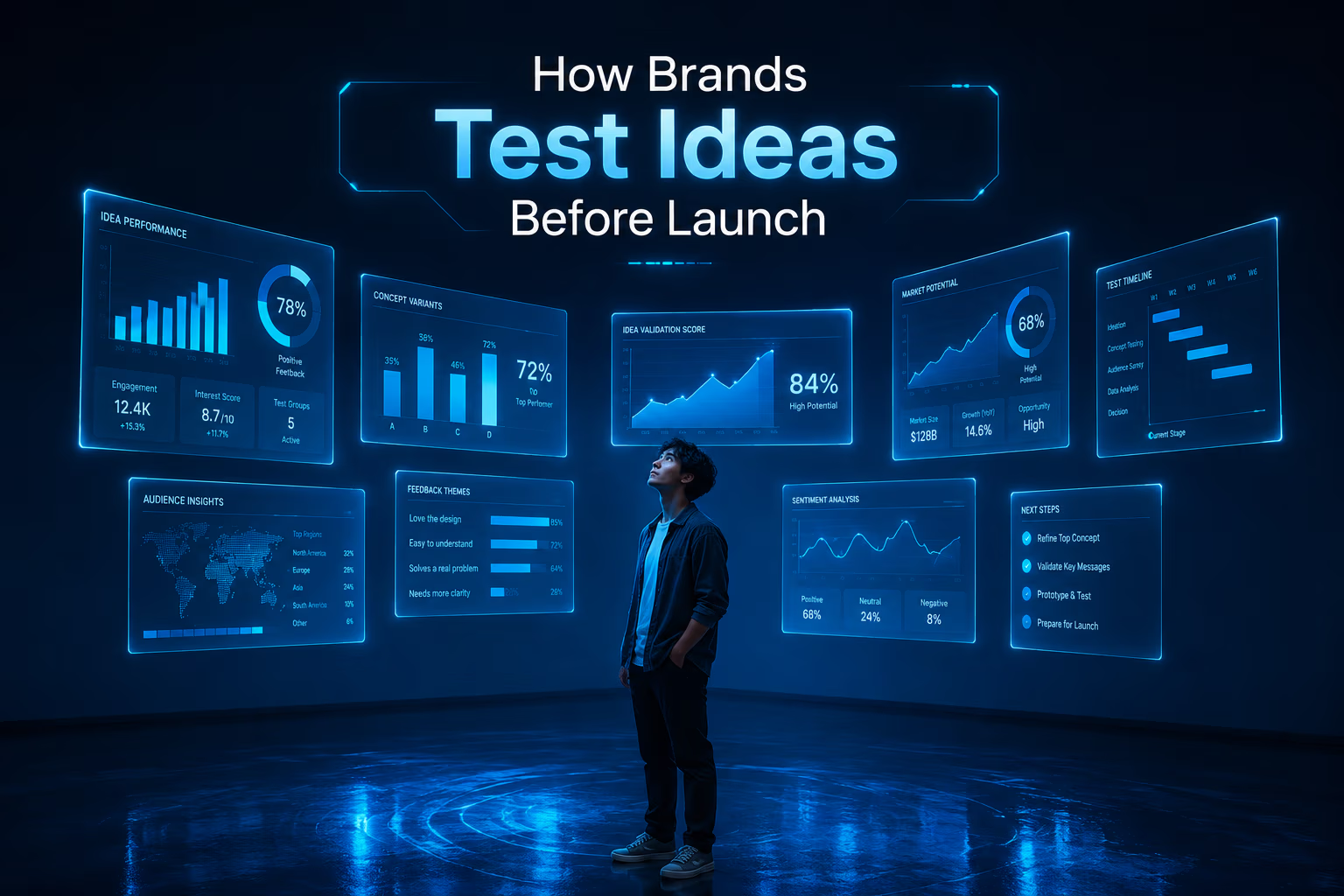
Concept research helps brands test ideas before they invest in development, production, marketing, distribution, or launch. It shows whether a product idea, service offer, campaign message, feature, packaging direction, or brand proposition is clear, relevant, believable, different, and desirable to the target audience.
In simple terms, concept research answers one critical question:
Will this idea work in the real market?
For brands, this question matters because product launches are expensive, competition is intense, and consumer attention is limited. A concept that sounds exciting inside a meeting room may not connect with real buyers. A product idea may feel innovative to the team but confusing to customers. A campaign message may look creative but fail to communicate value. Brands need to understand the market research study types.
Concept research turns early ideas into evidence.
It helps brands move from assumption to validation before launch.
What Is Concept Research?
Concept research is a market research method used to evaluate an idea before it is fully developed or launched.
A concept can be:
- a new product idea
- a service offer
- a feature
- a campaign message
- a brand positioning statement
- a pricing proposition
- a packaging direction
- a subscription model
- a product benefit claim
- a market entry idea
The purpose is to understand how the target audience reacts to the idea.
Concept research measures whether people understand the idea, find it relevant, believe the promise, see it as different, and feel motivated to buy, try, use, or recommend it.
It is often used in new product development, innovation research, consumer insights, brand strategy, advertising research, and product concept testing.
Why Concept Research Matters Before Launch
Concept research matters because ideas are risky until they are tested.
A brand may spend months building a product, only to discover that consumers do not understand the benefit. A company may invest in packaging, production, and advertising, only to find that the idea is not different enough from competitors. A team may fall in love with a concept internally, while real buyers see it as confusing, overpriced, or unnecessary.
It helps prevent these mistakes and gives brands evidence before major investment decisions.
What Concept Research Helps Brands Decide
It does not guarantee success, but it reduces guesswork and gives teams the evidence needed to refine, prioritize, or reject ideas before they become costly mistakes.
How Concept Research Works
It usually begins with a clear description of the idea. This description is called a concept statement or concept stimulus.
A strong concept stimulus may include:
- product or service name
- target audience
- consumer problem
- key benefit
- reason to believe
- features
- usage occasion
- pricing direction
- visual or prototype
- packaging mock-up
- campaign message
Respondents are then asked to evaluate the concept through structured questions, rating scales, comparisons, and open-ended feedback.
The goal is not only to know whether people like the idea. The deeper goal is to know why they like it, what they misunderstand, what they doubt, what they compare it with, and what would make it stronger.
Key Metrics Used in Concept Research
It becomes useful when the right metrics are measured.
The most common metrics include appeal, clarity, relevance, uniqueness, believability, purchase intent, value perception, and improvement areas.
Core Concept Research Metrics
- A concept with high appeal but low believability may need stronger proof.
- A concept with high relevance but low uniqueness may need sharper positioning.
- A concept with high clarity but low purchase intent may not solve a strong enough problem.
This is why concept research must go beyond a single score.
Types of Concept Research
There are different types of concept research depending on the stage of development and the decision the brand needs to make.
1. Early Idea Screening
Early idea screening is used when a brand has multiple ideas and needs to decide which ones deserve further development.
For example, a food brand may test five snack concepts and identify which two have the strongest consumer appeal.
This stage helps teams avoid wasting resources on weak ideas.
2. Product Concept Testing
Product concept testing evaluates a specific product idea before development or launch.
It measures whether the product promise, features, benefits, and value proposition connect with consumers.
This is useful for FMCG, technology, healthcare, financial services, retail, beauty, telecom, and digital products.
3. Message and Claim Testing
Message and claim testing evaluates how consumers respond to different benefit statements, campaign claims, or product promises.
For example, a brand may test whether “long-lasting freshness” performs better than “24-hour odor control.”
This helps brands communicate the idea more clearly and persuasively.
4. Pricing Concept Research
Pricing concept research tests whether the idea feels worth the expected price.
It helps brands understand perceived value, affordability, premium potential, and price sensitivity.
This is especially important when the product is new, unfamiliar, or positioned as premium.
5. Packaging Concept Research
Packaging concept research tests how design, claims, color, format, and visual hierarchy affect interest and understanding.
A product can have a strong idea but weak packaging. Concept research helps brands identify whether the pack communicates the idea quickly and clearly.
6. Service Concept Research
Service concept research evaluates new service ideas, subscription models, customer experience features, loyalty programmes, or digital service offers.
It is useful for banking, telecom, healthcare, hospitality, SaaS, e-commerce, and mobility brands.
Concept Research Methods and Best Uses
For faster insights, many research teams now combine structured surveys with open-ended analysis, AI-supported coding, and Web Intelligence. This helps teams understand both measurable scores and consumer language around the idea.
Example of Concept Research
Imagine a skincare brand wants to launch a new sunscreen positioned around “daily city protection.”
The concept may say:
“A lightweight sunscreen designed for daily city life, combining SPF protection with anti-pollution skincare benefits. It feels non-greasy, works under makeup, and is made for consumers who want sun protection without a heavy texture.”
Concept research would test:
- Is the idea appealing?
- Is “daily city protection” clear?
- Do consumers believe the anti-pollution benefit?
- Is the product different from regular sunscreen?
- Would people use it every day?
- What price feels acceptable?
- Which audience is most interested?
- What claims need proof?
- What concerns do people have?
The research may reveal that the idea is strong among urban working women but weaker among younger consumers who see sunscreen as seasonal. It may also show that “anti-pollution” is interesting but needs proof, while “non-greasy under makeup” drives higher purchase intent.
This gives the brand direction before product development and launch.
How Brands Use Concept Research Before Launch
It can support several launch decisions.
1. Deciding Which Idea to Develop
When teams have multiple ideas, concept research helps prioritize the strongest ones based on consumer evidence.
2. Refining the Value Proposition
Research shows which benefit matters most and which part of the idea needs clearer communication.
3. Identifying the Right Audience
A concept may not appeal to everyone. Research helps identify the segments with the strongest need, interest, and purchase intent.
4. Improving Product Features
Consumer feedback can reveal missing features, unnecessary complexity, or areas that need improvement.
5. Strengthening Claims and Messaging
Concept research shows which claims are clear, credible, and persuasive.
6. Reducing Launch Risk
By testing before launch, brands can avoid investing in ideas that lack demand, clarity, or differentiation.
Common Mistakes in Concept Research
It can fail when it is poorly designed.
- Writing a concept that sounds like advertising instead of a clear idea. If the concept is too polished, exaggerated, or vague, consumers may react to the wording rather than the actual idea.
- Testing with the wrong audience. A premium baby product should not be tested with general consumers who are not parents or caregivers.
- Focusing only on purchase intent. Purchase intent is important, but it must be read alongside relevance, believability, clarity, uniqueness, and barriers.
- Ignoring open-ended feedback. Numbers show what happened, but consumer explanations show why.
- Treating concept research as approval research. The goal is not to confirm that an internal idea is good. The goal is to find out whether the market sees value in it.
How to Make Concept Research More Effective
To make it more useful, brands should follow a disciplined process.
- Define the business decision. Are you choosing between ideas, refining one concept, testing claims, or preparing for launch?
- Write a clear concept. Avoid jargon, exaggeration, and internal language.
- Recruit the right audience. The sample should reflect the consumers or buyers who would realistically consider the product.
- Measure both scores and explanations. Use rating scales for structure and open-ended feedback for depth.
- Compare results by segment. A concept may be average overall but excellent for a specific high-value audience.
- Turn findings into action. The output should say what to keep, what to change, what to remove, and whether the idea should move forward.
Why Is Concept Research Important?
It is important because it helps brands test ideas before launch. It measures whether consumers understand, believe, need, and want the idea. It reduces launch risk, improves product development, sharpens messaging, identifies the right audience, and helps brands decide whether an idea should move forward.
Final Thoughts
Concept research is one of the most important steps in building better products, services, campaigns, and brand ideas.
It helps brands test ideas before they become expensive decisions. It reveals whether the concept is relevant, clear, believable, unique, and strong enough to create purchase intent. It also shows where the idea needs improvement before product development or launch.
The best concept testing does not only generate scores. It captures consumer language, market signals, barriers, motivations, and improvement opportunities. This is where modern research approaches, faster insights, open-ended analysis, and Web Intelligence can give brands a clearer view of how an idea may perform in the real world.
For teams that want to turn early ideas into evidence-backed decisions, BioBrain Insights helps connect market research, AI-supported analysis, consumer feedback, and Web Intelligence into sharper concept understanding, so brands can test smarter before they launch.