
Market research is not one single activity. It is a system of study types that helps brands make better decisions before they spend money, launch products, change packaging, enter markets, or reposition their offer.
The strongest brands do not guess what consumers want. They test ideas, study behavior, refine products, evaluate packaging, and use evidence before making high-risk decisions.
That is why understanding market research study types is important. Different business questions need different customer research methods. A concept problem cannot be solved with only packaging research. A product development issue cannot be answered by broad consumer trend data alone. Each type of marketing research has a role.
Among the different types of marketing research, four study types are especially important for product, brand, and growth decisions:
- Concept Research
- Product Development Research
- Consumer Behavior Research
- Packaging Research
Together, these methods of market research help brands move from idea to product, from product to purchase, and from purchase to repeat demand.
Why Market Research Study Types Matter
Market research reduces decision risk. It helps businesses avoid building products nobody needs, designing packaging people ignore, using messages that fail to persuade, or misreading how consumers actually behave.
Relevant research matters because the cost of wrong assumptions is high.
Key market signals show why brands need sharper research:
- New product launches contribute a major share of business revenue and profit, but success depends on more than launch spending.
- Many companies still do not speak directly with end users during product development.
- Consumer preferences are shifting across branded and private-label choices, making old assumptions weaker.
- Packaging now affects not only shelf appeal, but sustainability perception, trust, usability, and product value.
The lesson is simple: brands need the right study type at the right decision stage.
Market Research Study Types and Their Role
1. Concept Research
Concept research is used before a product, service, campaign, or business idea is fully developed. It helps brands understand whether an idea has enough relevance, clarity, uniqueness, credibility, and purchase potential.
A concept can be a product idea, service offer, feature, campaign message, brand proposition, pricing idea, or new market opportunity.
Concept research answers questions such as:
- Does the idea solve a real consumer need?
- Is the concept easy to understand?
- Does it feel different from existing alternatives?
- Is the promise believable?
- Which audience finds it most relevant?
- What is confusing or weak?
- What would make the idea stronger?
- Does the concept create purchase intent?
This is one of the most useful techniques of market research because it prevents brands from investing too early in weak ideas.
How Concept Research Works
Concept research usually shows respondents a short concept description, visual, product idea, message, or prototype. Consumers then evaluate the concept across key metrics.
Common concept research measures include:
- overall appeal
- relevance
- uniqueness
- believability
- clarity
- purchase intent
- expected usage
- value perception
- reasons for interest
- reasons for rejection
Open-ended feedback is especially important. A score may show whether the concept performs well, but consumer language explains why.
When to Use Concept Research
Use concept research when:
- testing a new product idea
- comparing multiple early concepts
- refining a value proposition
- validating customer need
- testing campaign claims
- identifying strongest target segment
- choosing which idea should move into development
Concept research is strongest when it happens early, before internal attachment becomes too strong.
2. Product Development Research
Product development research helps brands build, improve, and optimize products based on consumer evidence.
It is not limited to finished products. It can be used at every stage: idea, prototype, formulation, feature design, usability, beta testing, launch readiness, and post-launch improvement.
This study type answers a more practical question than concept research: how should the product be designed so it works better for the user?
Product development research is critical because a product can have a strong idea but weak execution. Consumers may like the promise, but reject the product because of poor usability, unclear features, weak performance, inconvenient format, bad onboarding, or low perceived value.
What Product Development Research Measures
Product development research can measure:
- feature importance
- product performance
- ease of use
- satisfaction
- pain points
- product fit
- usability friction
- unmet needs
- prototype reaction
- sensory experience
- expected frequency of use
- willingness to pay
- improvement priorities
For digital products, this may include task completion, drop-off points, onboarding friction, navigation, interface clarity, and feature adoption.
For physical products, it may include taste, texture, durability, scent, format, size, ingredients, design, quality, or performance.
Product Development Research Methods
Useful marketing research techniques for product development include:
- interviews
- prototype testing
- usability testing
- product trials
- diary studies
- in-home usage tests
- surveys
- conjoint analysis
- MaxDiff
- A/B testing
- beta feedback
- customer journey research
The best method depends on the product stage. Early development needs depth. Later development needs measurement. Launch readiness needs validation.
3. Consumer Behavior Research
Consumer behavior research studies how people think, choose, buy, use, switch, recommend, and reject.
This is one of the most important types marketing research teams use because it reveals the real forces behind demand.
Consumer behavior research goes beyond preference. It studies context.
A customer may say they prefer quality, but buy based on price. Another may say they value sustainability, but choose convenience. A shopper may like a brand but still switch because of availability, delivery speed, promotions, trust, or habit.
This is why consumer behavior research matters. It separates what people say from what they actually do.
What Consumer Behavior Research Explores
Consumer behavior research helps brands understand:
- purchase motivations
- category habits
- decision triggers
- barriers to buying
- switching behavior
- competitor comparison
- price sensitivity
- emotional drivers
- channel preference
- product usage
- repeat purchase behavior
- brand trust
- loyalty and churn risks
It can also reveal cultural, social, psychological, and situational factors that influence decisions.
For example, a consumer may not buy a premium product because of price. But deeper research may show that the real barrier is lack of proof, unclear value, or fear of wasting money.
Methods Used in Consumer Behavior Research
Common methods include:
- surveys
- ethnographic research
- interviews
- focus groups
- shopper observation
- purchase journey mapping
- segmentation studies
- behavioral data analysis
- social and review analysis
- customer satisfaction tracking
- mobile diaries
- online communities
This is where market research different types work together. Surveys can measure behavior at scale. Interviews can explain motivation. Observation can reveal actions consumers may not report accurately. Behavioral data can show actual patterns.
4. Packaging Research
Packaging research studies how packaging affects attention, comprehension, trust, purchase intent, usability, and brand perception.
For many categories, packaging is not decoration. It is a decision tool.
A package must work quickly. It must stand out, communicate the product clearly, show the right claims, create trust, support price perception, and reduce hesitation. In e-commerce, packaging also affects unboxing, damage perception, sustainability, and repeat purchase.
Packaging research has become more important because consumers now judge packs through multiple lenses:
- design appeal
- brand recognition
- claim clarity
- sustainability
- material quality
- convenience
- shelf impact
- delivery suitability
- product protection
- readability
- premium feel
- trust signals
A good product can underperform if its packaging fails to communicate value.
What Packaging Research Measures
Packaging research can measure:
- shelf standout
- pack appeal
- brand fit
- message clarity
- claim credibility
- purchase intent
- product understanding
- visual hierarchy
- ease of use
- sustainability perception
- competitive differentiation
- willingness to pay
- emotional response
In physical retail, shelf testing matters. In e-commerce, thumbnail visibility, product image clarity, and unboxing experience matter. In both cases, the pack must help the consumer decide faster.
Packaging Research Methods
Useful methods include:
- package concept testing
- monadic testing
- sequential monadic testing
- shelf testing
- eye tracking
- online mock shelf tests
- qualitative interviews
- unboxing studies
- sustainability perception research
- claim testing
- competitive pack comparison
Packaging research is strongest when it tests both design and decision behavior. A pack may look attractive but fail to explain the product. Another may look simple but win because it communicates value clearly.
How Study Types Support the Product Journey
A brand launching a new product may begin with concept research, then move to prototype testing, then study behavior and usage, then test packaging before launch. After launch, customer feedback and behavior research can identify what needs improvement.
The smartest research systems do not ask one question once. They build evidence across the full decision path.
Choosing the Right Market Research Study Type
The right study type depends on the decision.
Use concept research when the idea is still being shaped.
Use product development research when the product needs improvement.
Use consumer behavior research when the brand needs to understand decision drivers.
Use packaging research when the product must compete visually, physically, or digitally.
A useful way to choose is to ask:
- Are we testing an idea?
- Are we improving a product?
- Are we trying to understand consumers?
- Are we preparing for shelf or digital launch?
- Are we trying to reduce risk before investment?
- Are we explaining poor performance after launch?
The method should follow the business problem, not the other way around.
Common Mistakes Brands Should Avoid
- The first mistake is using one research type for every question. A survey alone cannot solve every product, packaging, or behavior problem.
- The second mistake is testing too late. If research only happens after the product is final, it becomes validation theatre instead of decision support.
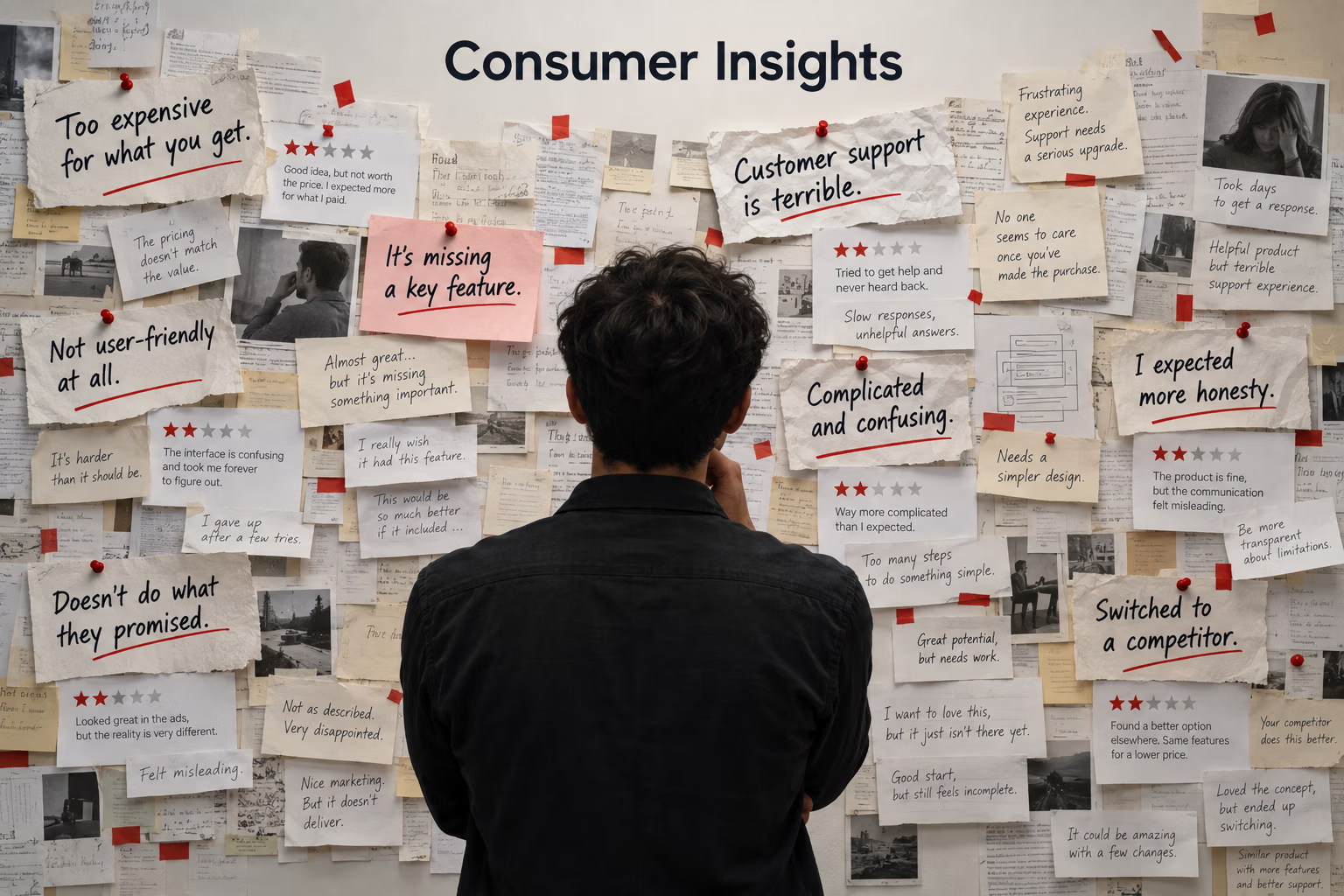
- The third mistake is ignoring open-ended feedback. Ratings are useful, but consumer language often reveals what needs to change.
- The fourth mistake is studying the wrong audience. Concept, product, behavior, and packaging research all depend on relevant respondents.
- The fifth mistake is treating research as a report instead of a decision tool. Good research must clearly show what to do next.
Final Thoughts
Market research study types help brands make sharper decisions at every stage of growth.
Concept research tests whether an idea deserves attention. Product development research improves what the brand builds. Consumer behavior research reveals how people actually decide. Packaging research shows whether the product can communicate, stand out, and convert.
Together, these methods of market research turn uncertainty into structured evidence.
The best brands do not wait for the market to reject weak ideas. They use research earlier, smarter, and more systematically.
In a competitive market, insight is not just about knowing the consumer. It is about knowing what to build, what to change, what to communicate, and what to launch with confidence.