
Saudi Arabia is not just a large consumer market. It is a market being rebuilt in real time.
For brands, this makes the Kingdom exciting - and difficult. A few years ago, many companies looked at Saudi Arabia mainly through population size, income potential, and category expansion. Today, that is not enough. The Saudi consumer is being shaped by new payment habits, entertainment spending, tourism growth, local pride, retail modernization, women’s participation, youth influence, and rising expectations for quality and convenience.
That is why consumer research in Saudi needs a sharper lens. Brands cannot rely on broad GCC playbooks or recycled regional assumptions. They need to understand how Saudi consumers make decisions today: where they spend, what they trust, what they compare, what they reject, and what makes them loyal.
The shift is visible in the numbers. Saudi Arabia’s population reached 35.3 million in 2024, with Saudi nationals making up 55.6% and non-Saudis 44.4% of the total population. The same data shows a strong working-age structure, with 74.7% of the population in working ages - an important signal for consumption, employment-linked spending, mobility, digital services, housing, and family formation.
For brands, this means Saudi Arabia is not one audience. It is a large, young, working-age, digitally shifting, locally rooted, and increasingly experience-driven market.
What Consumer Research Means in Saudi Arabia
Consumer research is the process of studying how people think, choose, spend, compare, and behave. In Saudi Arabia, it helps brands answer practical questions:
- What makes consumers trust a brand?
- Which products feel worth paying more for?
- Where does the customer journey break?
- How do Riyadh, Jeddah, Dammam, and secondary cities differ?
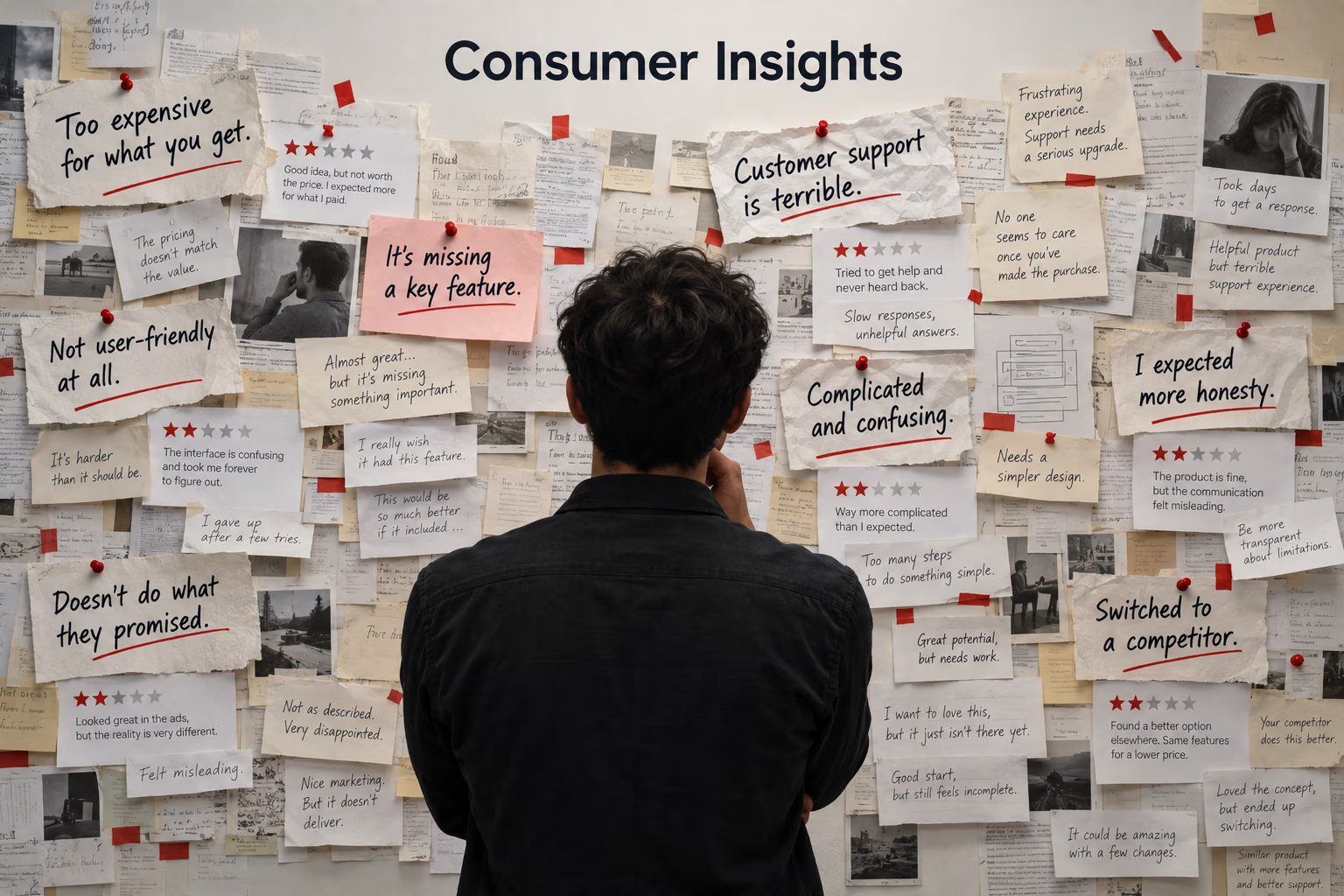
Strong consumer insights Saudi Arabia do not just describe what people say. They explain what those answers mean for pricing, product design, retail strategy, customer experience, communication, and market expansion.
The New Saudi Consumer: Five Shifts Brands Must Track
1. Spending Is Becoming More Digital, Not Just Higher
One of the biggest changes in consumer behavior Saudi Arabia is the shift from cash-heavy transactions to digital payments.
Saudi Arabia reached a major payment milestone in 2024: electronic payments accounted for 79% of total retail transactions, up from 70% in 2023, according to the Saudi Central Bank.
This is not just a payments story. It changes consumer research.
When payments become digital, brands can study purchase journeys more clearly. They can better understand frequency, basket size, category switching, repeat behavior, channel preference, and friction in checkout or delivery.
It also raises new research questions:
- Which payment methods create trust?
- Where do users abandon transactions?
- Do consumers prefer cards, wallets, BNPL, or bank transfers?
- How does payment convenience affect loyalty?
- What role does security perception play?
For fintech, retail, ecommerce, food delivery, travel, and services, payment behavior is now a core consumer insight layer.
2. Consumer Spending Is Expanding Across Channels
Saudi consumer spending is showing strong momentum. Argaam reported that consumer spending in Saudi Arabia rose 11% to SAR 1.57 trillion in 2025, while ecommerce sales through Mada cards reached SAR 325.2 billion, a 65% increase compared with 2024.
This gives brands two important signals.
First, Saudi consumers are spending more across formal channels. Second, ecommerce is no longer a side behavior. It is becoming a mainstream part of how people shop, compare, and pay.
But higher spending does not automatically mean easier conversion. Consumers may still be selective. They may compare prices, check reviews, wait for offers, evaluate delivery reliability, or switch brands quickly after a poor experience.
Brands need research that studies:
- What consumers buy online vs offline
- Which categories are most promotion-sensitive
- How reviews influence purchase
- What causes cart abandonment
- How delivery and returns affect trust
- Whether consumers buy directly or through marketplaces
This is where consumer trends Saudi Arabia become more useful when linked to actual decision journeys, not just macro growth.
3. Tourism and Entertainment Are Creating New Demand Occasions
Saudi Arabia’s consumer economy is increasingly experience-led.
Vision 2030’s 2025 annual reporting highlights tourism growth, with 123 million tourists in 2025 and $81 billion in tourism spending. It also notes 5,937 licensed tourism facilities, showing how tourism infrastructure is becoming part of the broader consumer market.
The U.S. International Trade Administration also notes that Saudi Arabia surpassed its original 100 million visitor target ahead of schedule and continues to position travel, tourism, and entertainment as priority sectors.
This changes how brands should think about demand.
A restaurant may serve local families, domestic tourists, business travelers, and international visitors. A mall may no longer be only a shopping center; it may be a leisure destination. A beauty, fashion, or hospitality brand may need to understand occasion-based behavior: weekday vs weekend, Riyadh Season vs normal months, domestic tourists vs residents, families vs young adults.
Consumer research should ask:
- What occasions drive spending?
- Who plans the outing?
- What makes an experience worth sharing?
- How do consumers choose between malls, events, restaurants, and entertainment venues?
- What role do family, friends, creators, and reviews play?
Saudi Arabia’s consumer market is increasingly built around experiences, not only products.
4. Business Formation Is Changing the B2B and SME Consumer Base
A fresh way to study Saudi consumption is to look beyond end consumers and include small businesses, entrepreneurs, and new commercial activity.
Vision 2030 progress data shows commercial registrations increased from 1.6 million in 2024 to 1.8 million in 2025, with gains in technology, entertainment, and financial services.
This matters because new businesses create new buyer segments.
They need banking, payments, software, delivery services, marketing, insurance, staffing, logistics, retail space, and professional services. For B2B and SaaS brands, Saudi consumer research should not only study large enterprises. It should also study SME owners, founders, freelancers, franchise operators, and digitally enabled merchants.
Research questions include:
- What tools do SMEs trust?
- What makes business owners switch providers?
- Which pain points exist in onboarding, payments, compliance, or logistics?
- How do small businesses discover vendors?
- What support do new entrepreneurs expect?
This is a less generic but highly valuable layer of consumer insights Saudi Arabia.
5. Local Identity and Trust Are Becoming Decision Filters
Saudi consumers are not simply becoming more global. They are becoming more selective about what feels relevant, credible, and locally aligned.
This is visible across food, fashion, entertainment, beauty, tourism, retail, financial services, and technology. Brands that understand local pride, Arabic communication, family context, service expectations, and cultural tone are better positioned than brands that only translate global campaigns.
The key is balance.
Consumers may expect world-class quality, but still respond strongly to local relevance. A brand may look modern, but if the message feels generic, imported, or culturally flat, it may fail to build trust.
This is why communication testing is critical in Saudi Arabia. Brands should test:
- Arabic wording and tone
- Visual cues
- Claims and credibility
- Family vs individual appeal
- Religious and cultural sensitivities
- Local pride and heritage cues
- Influencer and creator fit
In Saudi Arabia, relevance is not decoration. It is a trust signal.
Research Methods That Work in Saudi Arabia
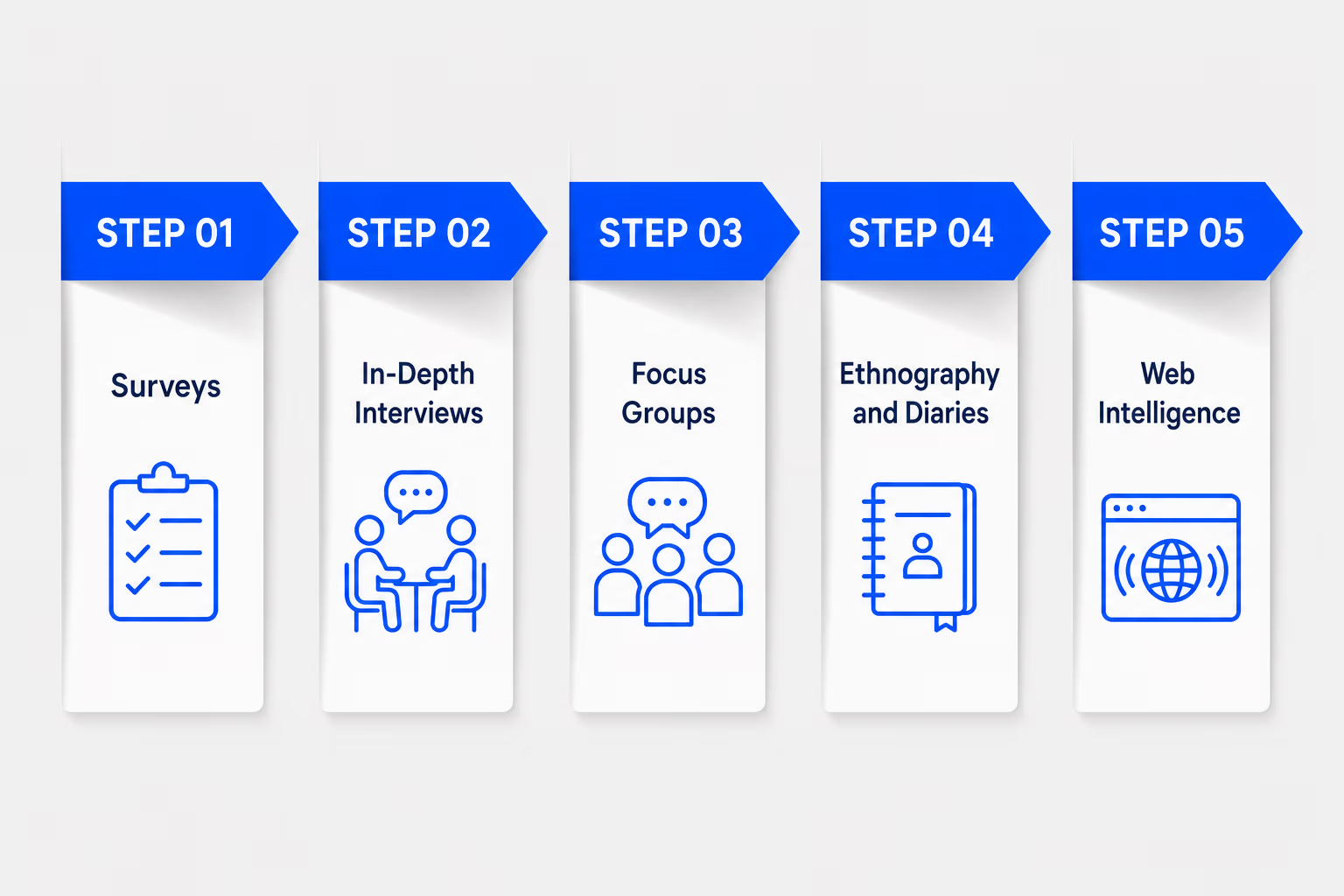
A strong consumer research Saudi Arabia program should combine methods instead of relying on one tool.
Surveys
Surveys are useful for measuring awareness, satisfaction, purchase intent, pricing, category usage, and brand perception at scale.
But they must be short, mobile-first, and carefully screened. A good Saudi survey should control for city, age, gender, income, nationality, category usage, and digital behavior.
In-Depth Interviews
IDIs help uncover trust barriers, emotional drivers, and decision journeys. They are especially useful in banking, healthcare, real estate, premium services, education, and B2B categories.
For example, a healthcare brand may use IDIs to understand whether patients prioritize doctor reputation, appointment availability, insurance coverage, privacy, or communication quality.
Focus Groups
Focus groups are useful for testing ads, packaging, product concepts, and category language. In Saudi Arabia, groups should often be segmented by age, gender, city, lifestyle, and category familiarity to avoid blended feedback.
Ethnography and Diaries
Ethnography observes real behavior. Digital diaries can track how consumers order food, shop online, visit malls, use wallets, attend events, or compare brands over time.
This is powerful because people often describe ideal behavior, while observation reveals real habits.
Web Intelligence
Tracks open-web signals like reviews, search behavior, forums, social conversations, creator content, and complaint threads to identify emerging consumer needs, trust shifts, competitor movement, and category trends.
Strong Web Intelligence filters out spam, bots, duplicates, promotions, and irrelevant noise to turn digital chatter into usable consumer insight.
The AI Insights Layer
AI can help Saudi research teams process large volumes of unstructured data from surveys, interviews, reviews, social media, call centers, ecommerce platforms, and customer support channels.
AI-assisted analysis can support:
- Open-text coding
- Sentiment classification
- Theme detection
- Complaint clustering
- Review mining
- Competitive monitoring
- Trend detection
- Interview summarization
But AI cannot work alone.
Saudi consumer language can include Arabic, English, Arabizi, local slang, cultural references, and sarcasm. Automated sentiment tools can misread meaning if context is weak.
The strongest model combines AI speed with human research judgment. AI organizes signals quickly; researchers validate meaning and connect findings to decisions.
Quality Risks Brands Must Avoid
Saudi research can become misleading when methodology is weak.
Common risks include:
- Treating Riyadh as representative of all Saudi Arabia
- Ignoring Jeddah, Dammam, Makkah, Madinah, and secondary cities
- Mixing nationals and expats without segmentation
- Using unnatural Arabic translations
- Running surveys that are too long for mobile users
- Overrelying on online-only samples
- Treating social media buzz as representative demand
- Ignoring gender, age, family role, and income differences
- Reporting findings without business implications
The best research starts with a clear definition of the audience and the decision being made.
What Brands Should Do Next
Saudi Arabia rewards brands that learn continuously.
Modern brands should track:
- Spending behavior by channel
- Digital payment confidence
- Ecommerce and delivery expectations
- Youth and family decision journeys
- Local relevance in messaging
- Tourism and entertainment-driven occasions
- Service gaps across physical and digital touchpoints
- SME and entrepreneur needs
- Sentiment shifts across reviews and social platforms
The goal is not to collect more data. The goal is to build a clearer view of why consumers act, what they expect, and where the next opportunity sits.
Final Thoughts
Saudi Arabia is changing too fast to be understood through broad GCC assumptions. Digital payments, ecommerce, tourism, entertainment, local identity, and a growing working-age population are creating new consumer signals that brands need to read continuously.
This is also where modern market research is evolving - from one-time studies to intelligence systems that combine real consumer data, AI-assisted analysis, sentiment intelligence, and expert validation. Platforms like BioBrain Insights reflect this shift by helping brands move faster from scattered signals to clearer, decision-ready consumer understanding.
In a market as ambitious as Saudi Arabia, the winning brands will be the ones that study real behavior, decode local context, and turn insight into action before the opportunity becomes obvious to everyone else.

.avif)