Consumer voice in the UAE and GCC is no longer hidden inside formal feedback forms. It is everywhere.
It appears in product reviews, app ratings, Google reviews, Reddit-style discussions, Q&A platforms, forums, delivery comments, customer support chats, open-ended survey responses, influencer comment sections, marketplace feedback, and everyday digital conversations. A complaint can become visible before a company’s dashboard catches it. A weak experience can spread faster than an internal escalation. A positive moment can turn into proof of trust.
That is why sentiment analysis UAE and GCC-focused Web Intelligence are becoming critical for brands that want to move faster than the market.
For years, many companies treated online consumer voice as noise. They tracked mentions, counted engagement, and watched brand tags. But consumer intent does not always live in brand mentions. People often reveal what they truly want, fear, reject, or desire in unprompted conversations across the wider web.
This is where Web Intelligence changes the game.
Instead of simply watching what is loud, it helps brands identify what is meaningful. It turns scattered consumer language into signals: rising frustrations, emerging needs, unmet expectations, competitive gaps, message risks, product tensions, and category shifts.
In fast-moving GCC markets, the brands that win will not be the ones collecting the most comments. They will be the ones detecting the right signals early.
Why Sentiment Analysis Matters in the UAE and GCC
The GCC is one of the most digitally active regions in the world. The UAE had 12.5 million social media user identities in October 2025, equal to 110% of the total population. Saudi Arabia had 38.6 million social media user identities in the same period, equal to 111% of its population. Globally, social media user identities reached 5.66 billion by October 2025.
These numbers show the scale of digital conversation. But scale alone is not the point.
The real value lies in what people reveal through everyday expression. A shopper complaining about delivery delays is not only sharing frustration. They may be signaling a service gap. A fintech user questioning app security may be revealing a trust barrier. A hotel guest praising staff warmth may be pointing to an experience driver. A patient discussing appointment delays may be showing where healthcare journeys break down.
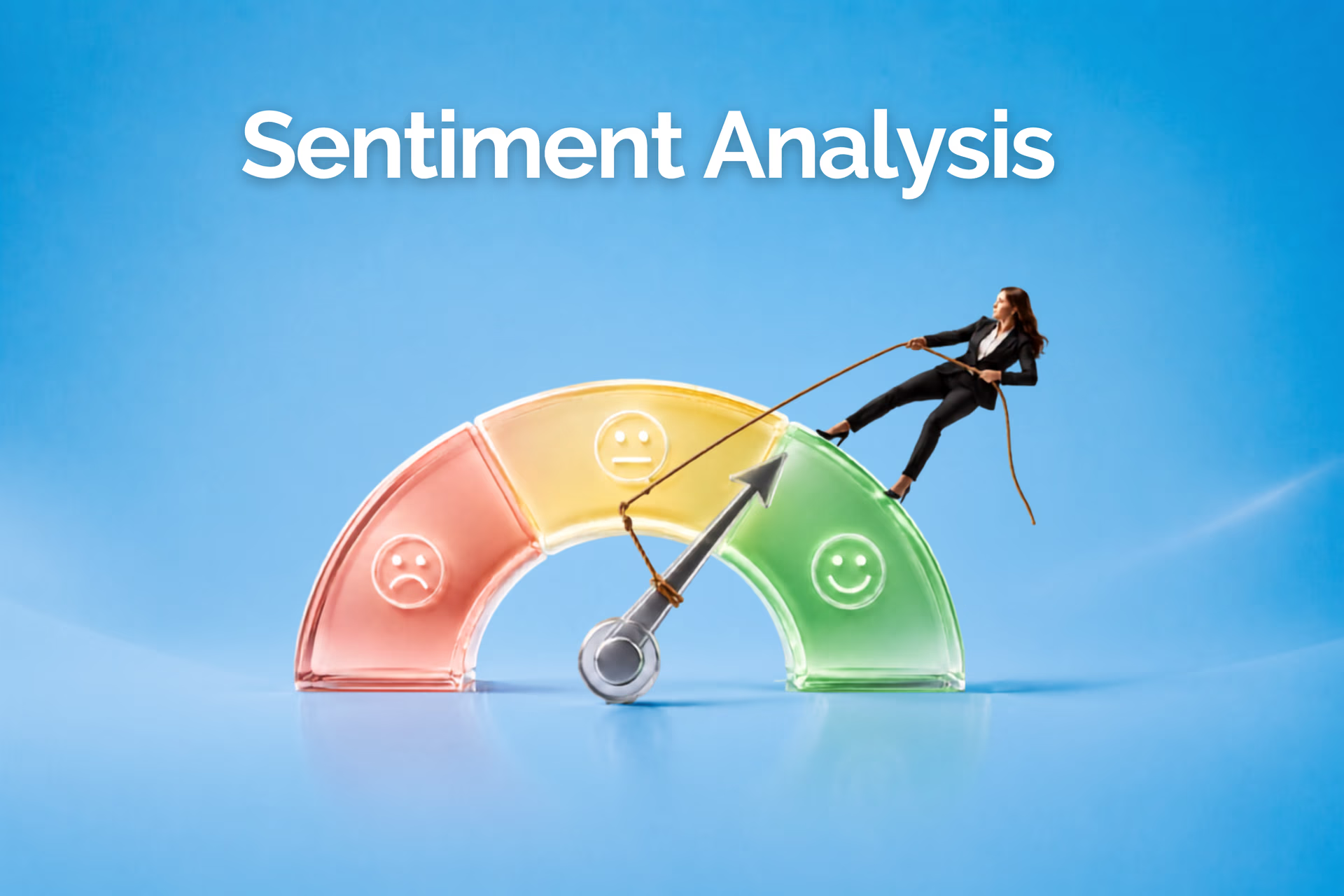
Sentiment analysis GCC helps brands classify this emotional layer. But classification is only the first step. Positive, negative, and neutral labels are useful, but they are not enough. Brands need to know what is driving the emotion, how intense it is, where it is appearing, and whether it is gaining momentum.
A small number of high-resonance conversations can matter more than thousands of shallow mentions. That is why Web Intelligence is becoming more valuable than basic online monitoring. It looks for signal density, not just volume.
Digital and Consumer Voice Signals Brands Should Track
Web Intelligence Goes Beyond Monitoring
Traditional online monitoring often answers surface-level questions: How many people mentioned us? Was the campaign positive or negative? Which hashtag performed better? What was the engagement rate?
Those questions matter, but they do not go far enough.
Web Intelligence asks deeper questions. What consumer tensions are emerging? Which conversations are recent enough to matter? Which comments are relevant to the business decision? Which signals have emotional depth and behavioral meaning? Which needs are forming before they appear in survey data or sales numbers?
This is especially important in the UAE and GCC because consumer feedback is scattered across platforms, languages, and cultural contexts. A single audience may speak in English, Arabic, Hindi, Urdu, Tagalog, Malayalam, or mixed-language formats. Emotion can appear through slang, sarcasm, emojis, local phrases, or indirect expression.
Basic keyword tracking can miss this nuance.
For example, “expensive but worth it” should not be treated as simple price negativity. It may signal accepted premium value. “Fast delivery, but support is useless” contains both a positive operational signal and a negative service recovery issue. “Not bad” may be neutral, mildly positive, or culturally understated depending on context.
Good Web Intelligence does not flatten these signals. It interprets them.
Sentiment Analysis and Customer Satisfaction Surveys Work Better Together
A customer satisfaction survey UAE helps brands measure structured feedback. It can track CSAT, NPS, satisfaction ratings, service scores, loyalty intent, and post-experience evaluation. It is useful because it gives comparable data across time.
But surveys have limits. Not everyone responds. Some customers leave quietly. Some only share feedback when they are extremely happy or extremely upset. Others give a rating but explain the real issue in the open-ended comment.
This is where sentiment analysis and Web Intelligence add depth.
Sentiment analysis captures emotion in natural language. Web Intelligence expands the view across the wider web, where people speak without being prompted by the brand. Together, they help companies understand both the score and the story.
This matters because 2026 CX data shows that 73% of consumers will switch to a competitor after multiple bad experiences, while 56% rarely complain after a negative experience and simply leave. That means many warning signs may never appear in complaint systems.
A brand that relies only on survey scores may miss silent dissatisfaction. A brand that relies only on digital conversations may miss structured representation. The strongest insight comes when both are connected.
Sentiment Analysis, Surveys, and Web Intelligence
Why Real-Time Consumer Intelligence Matters
The GCC market moves quickly. A delivery delay, app update, pricing issue, campaign backlash, product launch, service disruption, or competitor offer can shift consumer perception in days.
This is why real-time consumer intelligence GCC is no longer optional for customer-facing brands.
In retail, it can reveal whether shoppers feel a promotion is valuable or misleading. In fintech, it can uncover trust concerns around fees, fraud, onboarding, or app reliability. In tourism, it can show which guest experience moments are shaping reviews. In healthcare, it can surface patient concerns around waiting times, communication, or billing clarity. In FMCG, it can show how consumers react to taste, packaging, pricing, or product quality.
The value is not only in knowing sentiment. The value is in detecting change.
If negative sentiment around “refund delays” starts rising across multiple channels, that is not just feedback. It is a risk signal. If conversations around “clean ingredients” begin accelerating in a category, that is not just chatter. It may be an innovation opportunity. If consumers start comparing a competitor more favorably, that may point to a positioning gap.
In this sense, consumer voice becomes an early market sensor.
From Noise to Signal: Recency, Relevance, and Resonance
The biggest challenge with online consumer data is not lack of information. It is too much information.
Brands can drown in thousands of comments, posts, reviews, and mentions without knowing what truly matters. Volume can be misleading. A loud topic may not be strategically important. A smaller conversation may carry stronger insight because it reveals emerging need, emotional intensity, or behavior change.
That is why a signal framework matters.
Recency helps identify what is current and gaining momentum. Relevance ensures that the conversation connects to the decision being made. Resonance prioritizes authentic consumer voice, emotional depth, and behaviorally meaningful signals over empty engagement.
This approach is especially useful in the GCC because trends can move fast, but not every spike is a real trend. Some are temporary reactions. Some are campaign-driven bursts. Some are low-context chatter. Others are early signs of lasting market movement.
Brands need to know the difference.
What Brands Should Measure
Sentiment becomes useful when it is connected to business decisions. A dashboard showing “negative sentiment increased” is not enough. The real question is: why did it increase, who is affected, where is it happening, and what should the brand do next?
Brands should measure sentiment by topic, channel, segment, location, language, competitor comparison, and velocity.
Topic sentiment shows whether price, service, quality, delivery, support, trust, availability, packaging, or communication is driving perception. Channel sentiment shows whether issues are visible in reviews, surveys, forums, support chats, or marketplace feedback. Segment sentiment reveals whether specific audience groups experience the brand differently.
Competitor sentiment is especially powerful. Consumers often compare brands naturally. “This app is easier.” “Their delivery is faster.” “That hotel feels more premium.” “This brand is cheaper but lower quality.” These statements reveal positioning in the language of the market.
Key Sentiment Metrics for UAE and GCC Brands
The Future of Sentiment Analysis in the GCC
The future of sentiment analysis UAE and GCC markets will be more multilingual, more predictive, and more connected to business decisions.
AI will make it easier to process large volumes of open-text feedback. But AI alone is not enough. In markets with mixed languages, cultural nuance, slang, sarcasm, and platform-specific behavior, human validation remains important. The strongest insight comes from AI-scaled analysis combined with expert interpretation.
Brands will increasingly use Web Intelligence to identify emerging behaviors before they show up in surveys or sales data. They will use sentiment analysis to track experience quality, customer trust, competitor movement, product acceptance, and reputation risk. They will use satisfaction surveys to validate whether the signals seen online reflect broader customer experience.
The companies that benefit most will be those that treat consumer voice as a live strategic input, not a report that arrives after the market has already moved.
Final Thoughts
The UAE and GCC are markets where consumer voice moves quickly, publicly, and across many channels. Reviews, support chats, open-ended survey responses, forums, app ratings, and unprompted digital conversations can reveal expectation, trust, frustration, loyalty, and risk before traditional metrics catch up.
Sentiment analysis GCC helps brands understand the emotional direction of the market. A customer satisfaction survey UAE adds structure to experience measurement. Web Intelligence goes further by filtering the wider web for recent, relevant, and resonant signals that can shape stronger strategy, innovation, and customer experience decisions.
For brands that want to move beyond scattered feedback and turn consumer voice into decision-ready market signals, BioBrain Insights helps connect Web Intelligence, quality data, AI-enabled open-text analysis, real-time dashboards, and expert research thinking into insights built for fast-moving GCC markets.