The UAE is one of the most sophisticated consumer markets in the Middle East, but it is also one of the easiest to misread. High digital adoption, tourism inflows, premium retail, expat diversity, multilingual communities, and fast-changing service expectations make consumer understanding more complex than standard surveys alone can capture. For brands, consumer research UAE is no longer just about asking people what they like. It is about understanding how different customer groups discover, compare, trust, buy, complain, recommend, and switch.
This matters because the UAE is a near-universal digital market. DataReportal’s Digital 2026 UAE report states that the country had 11.3 million internet users at the end of 2025, with 99.0% internet penetration, and 23.0 million cellular mobile connections, equal to 202% of the population. That means most consumer journeys are digitally influenced, even when the final purchase happens in a store, clinic, hotel, showroom, or bank branch.
UAE is also home to more than 200 nationalities, with expatriates outnumbering UAE nationals. This makes broad averages dangerous. A single “UAE consumer” profile can hide major differences between Emiratis, Arab expats, South Asian expats, Western professionals, tourists, blue-collar workers, young digital users, high-net-worth residents, and family households.
That is why strong consumer insights research must be segmented, culturally aware, multilingual, and carefully validated.
What Is Consumer Research in UAE?
Consumer research is the process of studying customers, shoppers, users, patients, residents, tourists, or prospects to understand their needs, motivations, behavior, expectations, and barriers.
In the UAE, it helps brands answer practical questions such as:
- Who is the real target customer?
- What drives purchase or rejection?
- Which price point feels acceptable?
- How do consumers compare brands online and offline?
- Which service gaps reduce loyalty?
- How do nationality, language, income, and city affect behavior?
- Which UAE consumer trends are temporary, and which are becoming long-term shifts?
Good consumer research does not simply collect opinions. It explains what those opinions mean for product design, pricing, customer experience, communication, retail strategy, and market expansion.
For example, a retailer may know that footfall is high but conversion is weak. Customer insights UAE can reveal whether the issue is pricing, stock mix, staff behavior, layout, payment friction, or competitor offers. A fintech company may see app downloads but poor onboarding. Research can identify whether users distrust security, find verification difficult, or do not understand the product clearly enough.
Why UAE Consumer Behavior Requires Local Understanding
Consumer behavior UAE is shaped by three forces working together: diversity, digital maturity, and service expectations.
First, diversity changes how brands must define audiences. In some categories, Emirati consumers may be the priority segment. In others, South Asian expat households, Western professionals, tourists, or Arabic-speaking expats may drive demand. If these groups are blended into one sample, the data may look clean but produce weak conclusions.
Second, digital maturity changes how people make decisions. Consumers may discover a product through Instagram, compare prices on a marketplace, check Google reviews, visit a mall, ask friends on WhatsApp, and finally purchase through an app. Research must capture the full journey, not just one touchpoint.
Third, service expectations are high. In retail, hospitality, banking, healthcare, restaurants, mobility, and luxury, consumers often compare experiences against global standards. Slow delivery, confusing interfaces, weak staff training, or unclear pricing can quickly damage trust.
This is why UAE research must move beyond generic questions. It needs sharper screeners, shorter mobile-first surveys, qualitative depth, and better interpretation of digital signals.
Core Methods Used in UAE Consumer Research
Different research questions need different methods. The strongest studies often combine quantitative, qualitative and digital intelligence approaches.
1. Surveys for Measurable Consumer Signals
Surveys are useful when brands need structured answers from a larger audience. They can measure awareness, satisfaction, purchase intent, price sensitivity, feature preference, brand perception, and customer experience.
Common UAE survey use cases include:
- Brand awareness tracking
- Product concept testing
- Price sensitivity research
- Customer satisfaction measurement
- Usage and attitude studies
- Market sizing
- Ad and claim testing
In the UAE, surveys should be designed for mobile-first behavior. With mobile connections exceeding the population, long desktop-style questionnaires can reduce response quality.
Better surveys use:
- Shorter question paths
- Clear language
- Localized answer options
- Proper quota controls
- Attention checks
- Duplicate detection
- Open-end quality review
A well-built survey can quantify what customers think. A poorly designed one can create false confidence.
2. In-Depth Interviews for Motivation and Trust
In-depth interviews, or IDIs, are one-on-one conversations used to explore deeper motivations, emotions, barriers, and expectations. They work especially well for complex, premium, sensitive, or high-value decisions.
IDIs are useful for:
- Healthcare decision journeys
- Real estate buying motivations
- Financial services trust
- Luxury purchase behavior
- B2B decision-making
- Brand repositioning
- App onboarding barriers
For instance, a real estate developer may use IDIs to understand whether buyers care more about location, payment plans, developer reputation, community amenities, rental yield, or long-term capital appreciation. In a market where Dubai residential prices rose around 60% from 2022 to early 2025, and Fitch expected supply pressures from 210,000 units planned for delivery over two years, understanding buyer motivation becomes critical.
IDIs reveal the “why” behind behavior that surveys may only measure.
3. Focus Groups for Language, Reactions, and Social Influence
Focus group discussions bring small groups of consumers together to explore reactions to products, ads, packaging, service concepts, or brand ideas.
They are useful for:
- Testing campaign messages
- Exploring category language
- Understanding group reactions
- Comparing concept routes
- Evaluating packaging and claims
- Identifying emotional triggers
In the UAE, focus groups require careful recruitment. Mixing very different nationalities, income groups, or language preferences can weaken the discussion. For some topics, separate groups for Emiratis, Arab expats, South Asian expats, or Western residents may produce cleaner insight.
Focus groups are valuable when brands need to hear how consumers discuss a category in their own words. However, they should not be treated as statistically representative. Their strength is depth, not measurement.
4. Ethnography and Observational Research
Ethnography studies what consumers actually do in real contexts. This matters because people often behave differently from what they say in surveys.
Examples include:
- In-store shopper observation
- Home usage studies
- Mobile diaries
- App usage diaries
- Restaurant journey observation
- Customer service shadowing
- Retail shelf interaction studies
For example, a grocery shopper may say price is the deciding factor, but in-store observation may show that shelf placement, packaging visibility, family preference, and promotions influence the final choice. A healthcare patient may say appointment speed matters most, but journey research may show that language comfort and follow-up communication drive trust.
Ethnography is especially useful in UAE categories where lifestyle, family roles, service expectations, and cultural habits shape decisions.
Sector Use Cases for Consumer Research in UAE
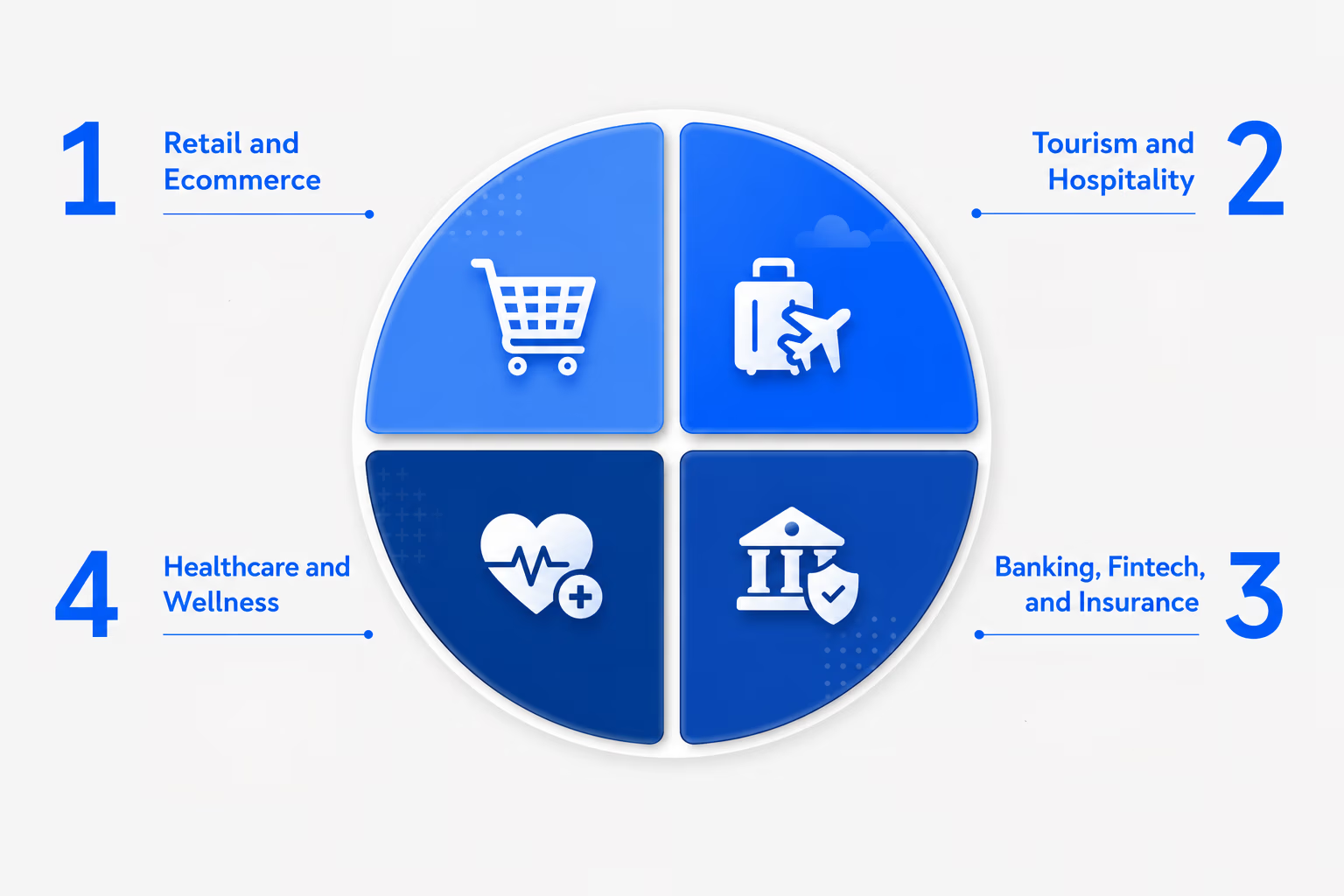
Retail and Ecommerce
The UAE ecommerce market is projected to reach $17.2 billion by 2027, growing at an estimated 8.4% CAGR from 2023 to 2027, according to Dubai Chambers.
This makes digital shopping behavior a major research priority. Brands need to understand product discovery, checkout friction, delivery expectations, review influence, return behavior, subscription appetite, and marketplace competition.
Retailers also need to connect online and offline behavior. A customer may discover a brand on social media, compare it online, visit a mall, and buy later through an app.
Tourism and Hospitality
Tourism heavily influences UAE demand, especially in Dubai and Abu Dhabi. For hotels, restaurants, attractions, airlines, mobility services, and luxury retailers, consumer research must separate tourists from residents.
Tourists may drive seasonal spikes, premium spending, and experience-led demand. Residents may drive repeat purchase, loyalty, referrals, and long-term brand value. If both groups are blended, insight can become misleading.
Banking, Fintech, and Insurance
Financial services research often focuses on trust, security, onboarding, product clarity, fees, claims experience, and digital usability.
A fintech app may generate interest but lose users during verification. An insurance product may appear affordable but fail because consumers do not understand exclusions. Research helps identify where confidence breaks.
Healthcare and Wellness
Healthcare research in the UAE studies provider choice, patient trust, appointment booking, insurance friction, telemedicine adoption, clinic experience, and follow-up quality.
Language clarity matters strongly here. A patient may judge a provider not only by medical quality, but also by empathy, convenience, privacy, communication, and speed.
Data Quality Challenges in UAE Consumer Research
The biggest challenge in UAE consumer research is not collecting responses. It is making sure the responses are meaningful.
Common risks include:
- Blending tourists, residents, nationals, and expats into one sample
- Overrepresenting digitally active respondents
- Poor translation that changes meaning
- Low-quality panel responses
- Duplicate or rushed completions
- Social desirability bias
- Treating Dubai-only findings as UAE-wide truth
- Misreading social media noise as representative sentiment
To reduce these risks, research teams should use clear screeners, quota controls, multilingual review, quality checks, and transparent reporting of limitations.
For high-stakes decisions, methodology matters as much as findings.
AI-Assisted Analysis in UAE Consumer Research
AI is becoming useful in consumer research because UAE brands manage large volumes of multilingual and unstructured data.
AI can support:
- Open-ended survey coding
- Social listening
- Review analysis
- Sentiment classification
- Interview transcript summarization
- Complaint clustering
- Theme detection
- Trend monitoring
But AI should not be treated as a shortcut to truth.
UAE conversations often mix English, Arabic, Hindi, Urdu, Malayalam, Tagalog, and informal expressions. Sarcasm, cultural context, service expectations, and brand slang can confuse automated sentiment models.
The strongest approach combines AI-assisted speed with human validation. Machines can process patterns quickly, but researchers still need to check meaning, remove noise, and connect insights to business decisions.
How UAE Brands Should Research Customers Better
Modern UAE brands should treat consumer research as an ongoing intelligence system, not a one-time report.
A stronger approach includes:
- Segmenting audiences by nationality, income, city, language, and customer type
- Separating residents, tourists, nationals, and expats where relevant
- Combining surveys with interviews, focus groups, and digital intelligence
- Designing mobile-first research experiences
- Tracking reviews, complaints, and social signals
- Validating AI outputs with human expertise
- Updating insights as market conditions change
The goal is not to collect more data. The goal is to understand what matters, for whom, and why.
Final Thoughts
Consumer research in the UAE is becoming more important because the market is becoming more complex. Digital access is nearly universal, ecommerce is expanding, tourism shapes demand, real estate remains highly dynamic, and population diversity creates highly varied expectations.
Brands that rely on broad assumptions risk misreading the market. They may target the wrong segment, use weak messaging, price incorrectly, or miss service gaps that damage loyalty.
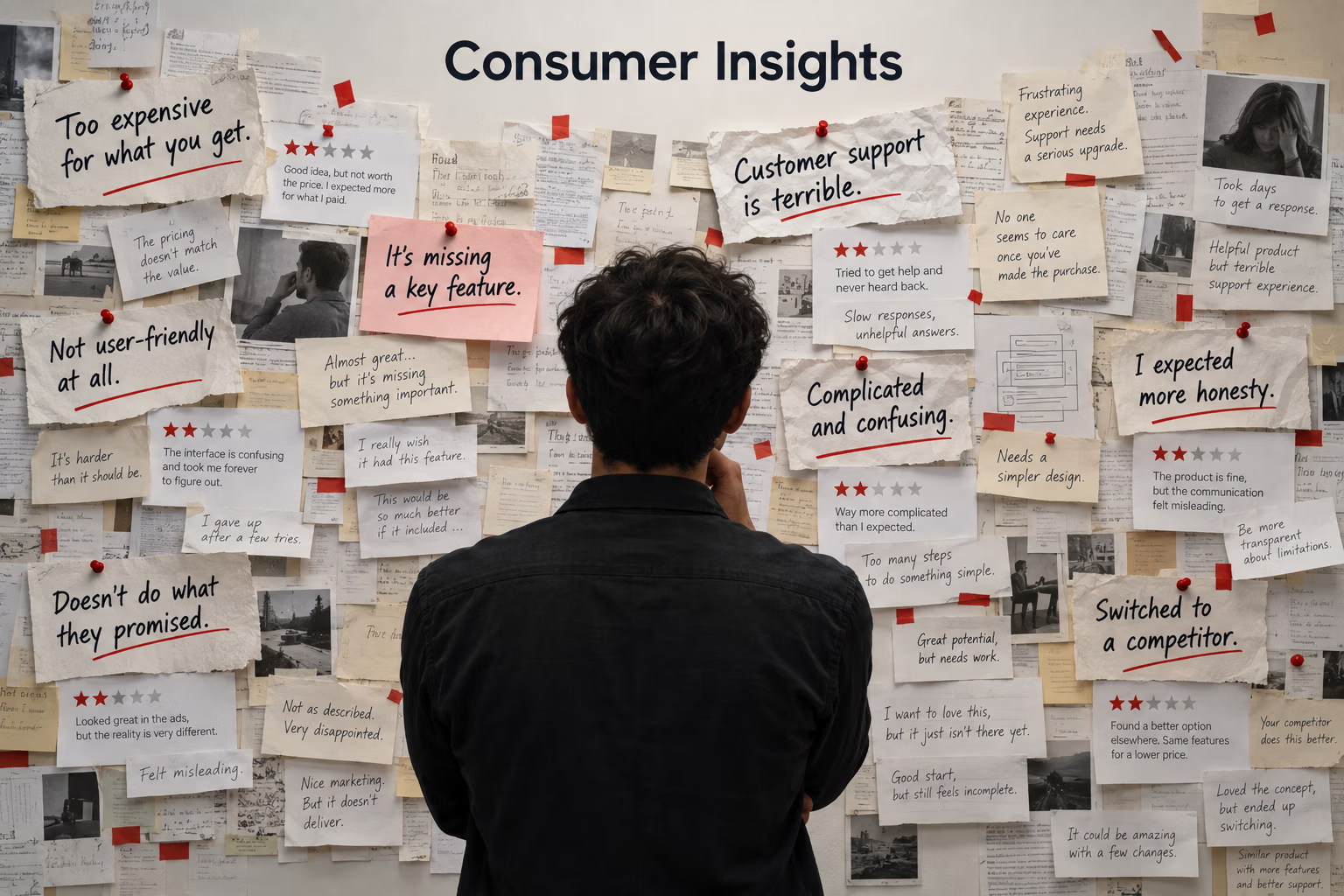
Strong consumer insights UAE research helps brands understand what customers say, what they do, what they expect, and what prevents them from choosing a brand.
In the UAE, the advantage belongs to companies that listen carefully, segment intelligently, validate data rigorously, and turn customer understanding into better decisions.
.avif)