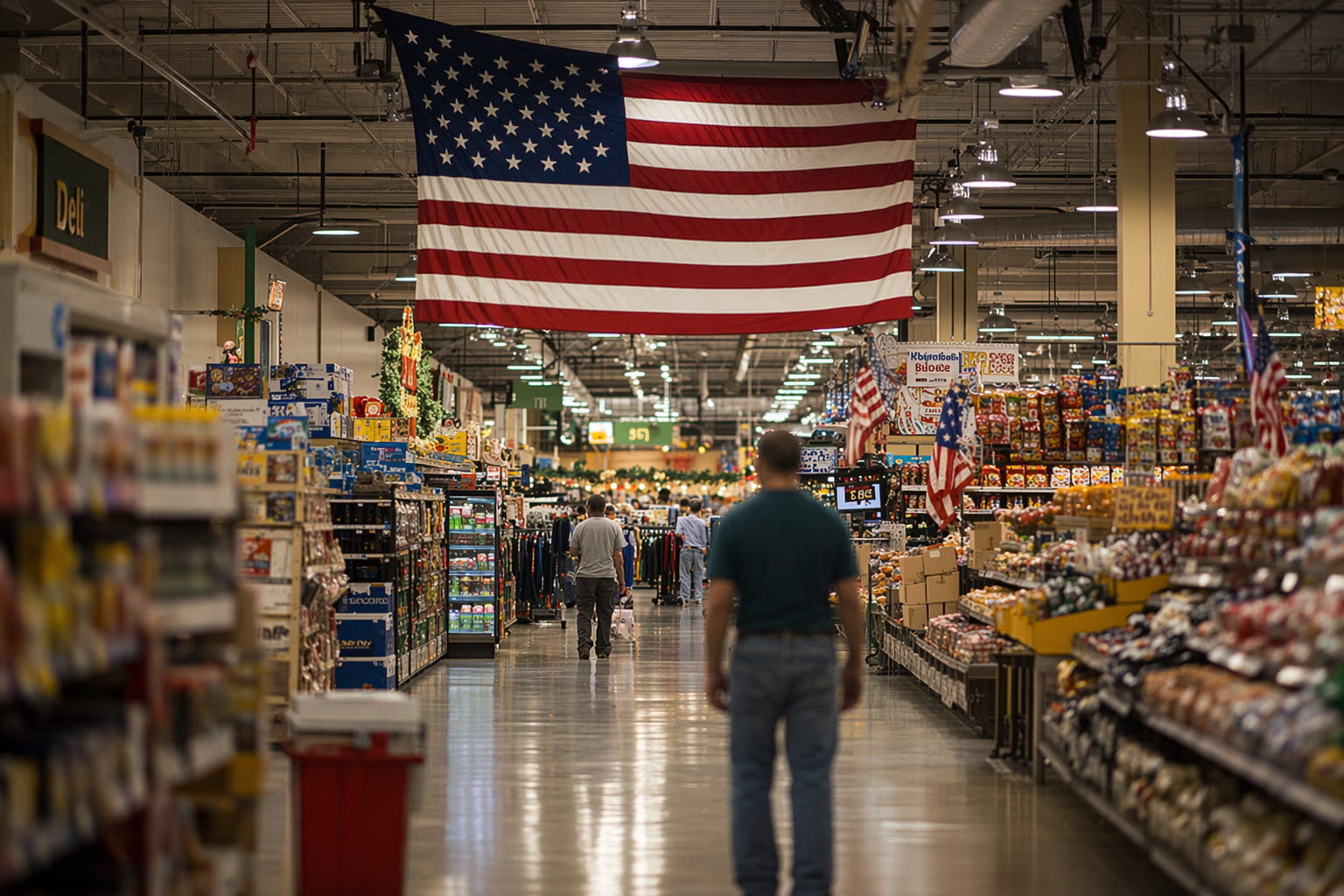
Across the United States today, the dominant consumer mood is not panic - but caution.
Americans are adjusting, recalibrating, and preparing for uncertainty. Conversations across the web show that people are not simply reacting to inflation or economic headlines; they are actively reshaping their financial habits, spending priorities, and expectations from institutions.
The US Grand Consumer Study 2025-26 analyzes 502,000+ public digital conversations and 10,000 consumer surveys to understand how Americans are navigating the current economic environment.
These signals reveal a clear pattern:
Trust is thin, but coping is strong.
Consumers may be uncertain about the economy, but they are actively adjusting their behaviors to maintain stability.
The study identifies 23 distinct themes shaping US consumer sentiment, ranging from financial stress and housing concerns to digital behaviors and long-term planning.
In this article, we examine eight of the most influential themes shaping consumer thinking today.
Economic Anxiety and Uncertainty
Economic uncertainty forms the backbone of today’s consumer discourse.
According to the study, economic anxiety represents the single largest share of conversations, accounting for roughly 32% of total discussions, with a Net Sentiment Index (NSI) of −62, indicating strongly negative sentiment.
Consumers are reacting to multiple pressures simultaneously:
- Rising cost of living
- Global economic instability
- Uncertainty around policy decisions
- Concerns about long-term economic growth
These concerns influence how people interpret nearly every other economic signal- from employment data to housing prices.
The result is a consumer environment defined less by immediate crisis and more by persistent uncertainty about the future.
Financial Stress and Debt Concerns
Financial pressure remains one of the most discussed topics among American consumers.
The study shows that financial stress and debt concerns account for roughly 17% of consumer conversations, with a Net Sentiment Index of −57, indicating significant negativity.
Consumers frequently mention:
- Rising credit card balances
- Accumulating fixed expenses
- Challenges in managing monthly budgets
- Difficulty saving while managing debt
These pressures influence everyday financial decisions. Many households are prioritizing debt reduction and cash-flow preservation, often delaying discretionary purchases until financial conditions improve.
Housing Market Pressures
Housing concerns have emerged as another major theme influencing consumer sentiment.
High interest rates, rising home prices, and affordability constraints are forcing many Americans to reconsider housing decisions.
Instead of relocating or upgrading homes, consumers are:
- Delaying home purchases
- Postponing renovations
- Remaining in current homes longer than planned
Housing uncertainty has ripple effects across other sectors as well, including retail spending, lifestyle decisions, and mobility patterns.
Distrust in Government Actions
A notable insight from the report is the level of skepticism toward institutions.
The study finds strong negativity around trust in government actions, with a sentiment score reaching −86, making it one of the most negative themes in the entire analysis.
Consumers frequently express concerns about:
- Economic policy effectiveness
- Government responses to inflation
- Regulatory decisions impacting jobs and industries
This distrust influences purchasing decisions as well. Many consumers report relying more on verified information, peer recommendations, and detailed product comparisons rather than institutional messaging.
Inflation and Cost-of-Living Pressures
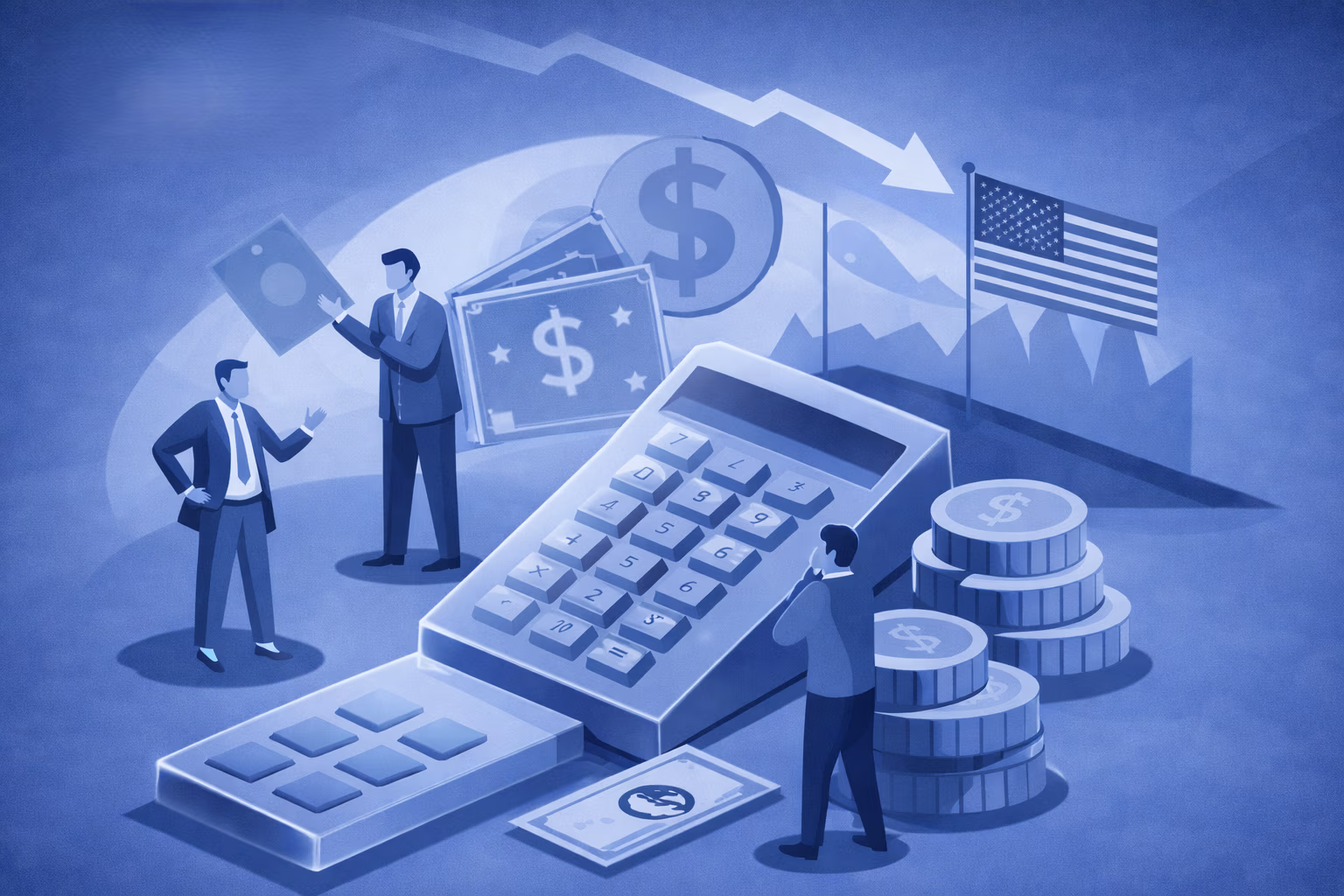
Inflation remains one of the most visible drivers of behavioral change.
The report highlights how rising costs- particularly food prices and utilities - are shaping consumer sentiment and purchasing habits.
Rather than dramatically cutting spending, households are making smaller adjustments such as:
- Searching for deals and discounts
- Switching to lower-priced alternatives
- Cooking more meals at home
- Monitoring grocery spending closely
These behavioral shifts illustrate how consumers are adapting to inflation rather than withdrawing entirely from the market.
Changing Shopping Behaviors
Consumer purchasing habits are gradually evolving.
The report shows that changing shopping behaviors maintain nearly neutral sentiment, suggesting that consumers view adaptation as a practical response rather than a negative outcome.
Consumers are increasingly:
- Comparing prices across retailers
- Switching between brands for better value
- Evaluating product quality more carefully
- Delaying purchases until discounts appear
This shift reflects a broader move toward value-focused consumption, where affordability and transparency play a larger role in purchasing decisions.
Coping Mechanisms and Financial Adaptation
Despite widespread concerns, consumers are actively developing strategies to manage economic uncertainty.
Interestingly, the study shows coping mechanisms carrying a strongly positive sentiment score of +55, highlighting resilience within consumer behavior.
Common coping strategies include:
- Building financial reserves
- Developing additional income sources
- Learning new skills
- Reducing unnecessary expenses
These behaviors suggest that consumers are not simply reacting to economic pressure-they are actively preparing for potential disruptions.
Retirement and Long-Term Planning
While short-term economic concerns dominate many conversations, long-term planning remains a surprisingly optimistic theme.
The report finds retirement and long-term financial planning showing a strong positive sentiment score of +74, making it one of the most positive themes identified.
This optimism indicates that many consumers remain confident in their ability to plan for the future despite short-term uncertainty.
Common themes include:
- Retirement savings strategies
- Long-term investment planning
- Financial independence goals
This forward-looking mindset provides a counterbalance to the more negative themes surrounding economic uncertainty.
What These Signals Reveal About the Modern US Consumer
Taken together, these themes reveal a nuanced picture of American consumer behavior.
The current consumer environment is characterized by three major dynamics:
1. Low Institutional Trust
Consumers remain skeptical about policy responses and economic leadership.
2. Persistent Economic Pressure
Inflation, debt burdens, and housing challenges continue to influence everyday decisions.
3. Strong Behavioral Adaptation
Despite these pressures, consumers are actively adjusting their habits to maintain stability.
Rather than withdrawing from the economy entirely, many Americans are adopting value-focused strategies that allow them to maintain their quality of life while navigating uncertainty.
To explore the complete landscape of US consumer sentiment-including all 23 themes shaping economic behavior, trust dynamics, and spending decisions-download the full report. The study uncovers deeper insights across financial pressures, digital influence, lifestyle changes, and future consumer expectations.
Why Large-Scale Consumer Signals Matter
Traditional research methods often rely on surveys alone. While valuable, surveys capture only part of the picture.
The US Grand Consumer Study integrates survey insights with large-scale digital conversations, creating a broader view of consumer sentiment and behavior.
By analyzing over half a million online conversations, researchers can detect emerging patterns earlier and understand how people naturally discuss economic realities.
This approach helps uncover:
- Early signals of behavioral change
- Emerging consumer concerns
- Real-time sentiment shifts
For businesses, policymakers, and analysts, these signals provide a deeper understanding of how market dynamics are evolving.
The Bigger Picture
The themes discussed above represent only a portion of the signals uncovered in the study.
Across the full dataset, the report analyzes 23 themes influencing US consumer behavior, including topics such as student debt, healthcare affordability, social media influence, employment stability, and digital finance behavior.
Together, these themes provide a comprehensive map of the forces shaping the modern US consumer.
Understanding these signals is essential for organizations seeking to navigate an economic environment defined by uncertainty, adaptation, and evolving expectations.


.avif)